
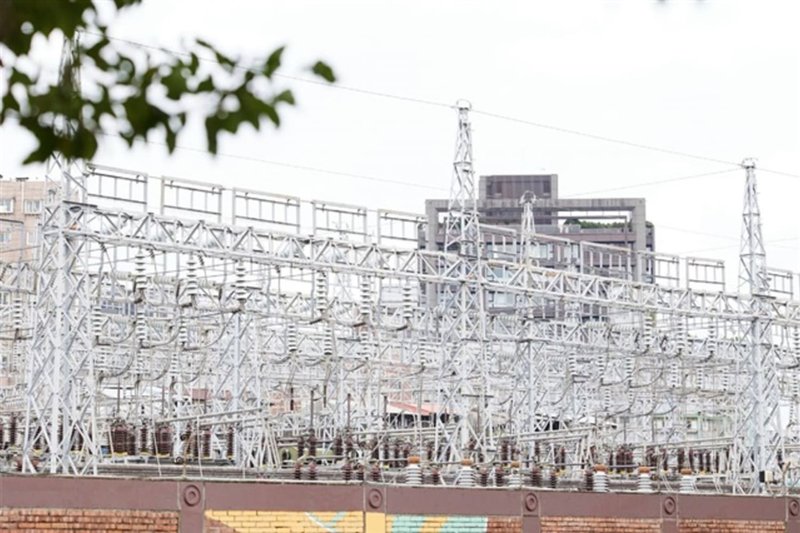
The race toward artificial intelligence has a new, silent adversary: the power grid. For years, the conversation focused on the availability of cutting-edge GPUs and accelerators, with the spotlight on supply chains and export restrictions. Today, anyone building large-scale data centers knows that the real bottleneck is no longer semiconductors, but the physical infrastructure that houses them: energy supply, cooling, permits, and buildable space.
The shift has concrete roots. A training cluster for frontier models can absorb tens of megawatts – comparable to the power consumption of a small town. Routing such loads onto the grid is not instantaneous: in many regions, interconnection queues stretch for years, and the costs of upgrading transmission backbones fall on operators. On top of that come environmental constraints, local opposition, and a regulatory framework that, especially in the West, was never designed for such rapid expansion.
Two opposing strategies are emerging. China has taken the path of central planning: the government designates dedicated industrial zones, builds tailor-made energy infrastructure, and coordinates public and private investments through five-year plans. Provinces compete to attract these computing hubs with incentives and accelerated procedures, creating fully integrated “computing parks.” Beijing can also impose selective energy rationing to protect strategic supply chains, ensuring that AI projects receive priority access to the grid.
In the United States, by contrast, the game is played at the local level, often town by town. Major cloud providers and tech companies negotiate with regional utilities and municipal authorities in a fragmentation that drags out timelines and generates conflicts. A data center project can stall for months in public hearings debating water consumption, noise emissions, and visual impact. There is no central authority setting priorities: the contest for infrastructure capacity becomes a market competition where whoever has the deepest pockets and strongest legal teams wins – but not necessarily whoever holds the better strategic vision.
For anyone evaluating on-premise deployment, this scenario demands a rethink. Bringing a model in-house is no longer just a matter of buying servers with enough GPUs; it means checking whether the premises have the electrical capacity, appropriate cooling, and – in some cases – the zoning permits to increase power draw. The real Total Cost of Ownership (TCO) includes components that go far beyond hardware and are heavily dependent on local context. From a data sovereignty perspective, the autonomy promised by self-hosted infrastructure clashes with the physical limits of the territory where it is operated. AI-RADAR offers analytical frameworks to map these trade-offs, but local variables remain decisive.
The structural effect is an unexpected convergence: the AI race is turning into a matter of energy policy and territorial planning, much like large transportation networks or power plants. Whoever can solve the electricity problem – and its social acceptance – will control the next phase of development. Chips, meanwhile, are becoming abundant again; energy is not.








💬 Comments (0)
🔒 Log in or register to comment on articles.
No comments yet. Be the first to comment!