
While the thermometer of European tech funding rounds marks another week above two billion euros, the gaze of those designing AI infrastructure shifts from the single check to the direction the continent is taking. It’s not just about capital: it’s a bet on digital sovereignty.
Market pulse
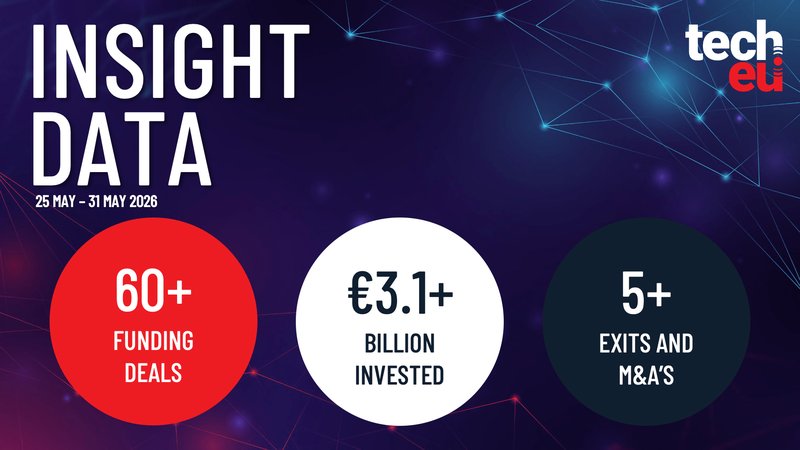
Last week Tech.eu tracked over 75 venture capital deals, totaling more than €2.1 billion. In Germany, Stark pocketed €500 million, while French health insurer Alan secured a €480 million round. On the hardware front, Dutch chip equipment maker Nearfield Instruments raised $380 million – a detail that rings several bells for anyone following the evolution of components for Large Language Model inference and training. On the M&A side, German House of Gaia Group acquired Codio Impact, and Polish player LiveKid expanded into Latin America by buying Aldea.
The most relevant data point for on-premise AI, however, comes from public choices. The UK government has allocated £60 million to university artificial intelligence labs, with the stated goal of “making AI cheaper.” And from Nexus Luxembourg 2026 emerges a clear ambition: a small country aiming to become a European hub for regulated AI that, for this very reason, increasingly finds a home on local infrastructure.
The silent push for sovereignty
In a continent where GDPR has raised the bar for data protection, on-premise deployment has never been just an engineering matter. Eye-popping funding rounds do not only finance conversational interfaces; they fuel the construction of entire stacks where data residency and direct model control become competitive factors. When the UK invests £60 million to lower the costs of AI, the message is that reducing TCO also comes from optimizing models and hardware capable of running outside the big public clouds. Nearfield Instruments, with its chip-making machinery, indirectly helps make the components behind local inference more accessible.
For those today evaluating whether to bring Large Language Models in-house, the trade-offs are well known: upfront CapEx for GPUs and storage versus recurring cloud OpEx; management complexity versus reduced latency and no data egress fees. But with each funding wave that rewards those building tools for local processing – from chip makers to orchestration startups – the balance shifts. It is no coincidence that many on-premise serving frameworks, such as vLLM and Ollama, are maturing, simplifying pipelines that once required dedicated teams.
The university lab as on-premise antechamber
The British initiative aims to make AI “cheaper.” Translated for the practitioner: more efficient models that run on consumer or entry-level hardware, increasingly aggressive quantization techniques (INT8, FP8) that shrink VRAM footprints, and architectures that slash the cost per processed token. All this directly feeds self-hosting possibilities, even for mid-sized organizations that do not want to entrust sensitive data to external data centers. The university lab thus becomes the testing ground for innovations that, after a maturation path, land in enterprise racks.
Beyond the headlines: what it means for infrastructure
Every major funding round, every acquisition, and every government initiative writes a piece of the European AI roadmap. Reading last week’s events against the grain reveals a continent starting to lay the building blocks of an AI that is not only regulated but also locally executable. For those designing on-premise deployments, the landscape is rapidly evolving and demands a careful analysis of trade-offs between performance, data residency, and total costs. AI-RADAR offers tools and analytical frameworks to navigate this very juncture, helping to map options without chasing temporary fads.









💬 Comments (0)
🔒 Log in or register to comment on articles.
No comments yet. Be the first to comment!