Artificial intelligence speaks CUDA. It’s the proprietary dialect through which Nvidia has dominated training and inference for over a decade, making its GPUs the only sensible choice for most workloads. Alibaba, through its chip design unit T-Head, has decided to write an alternative grammar — and give it away to the community.
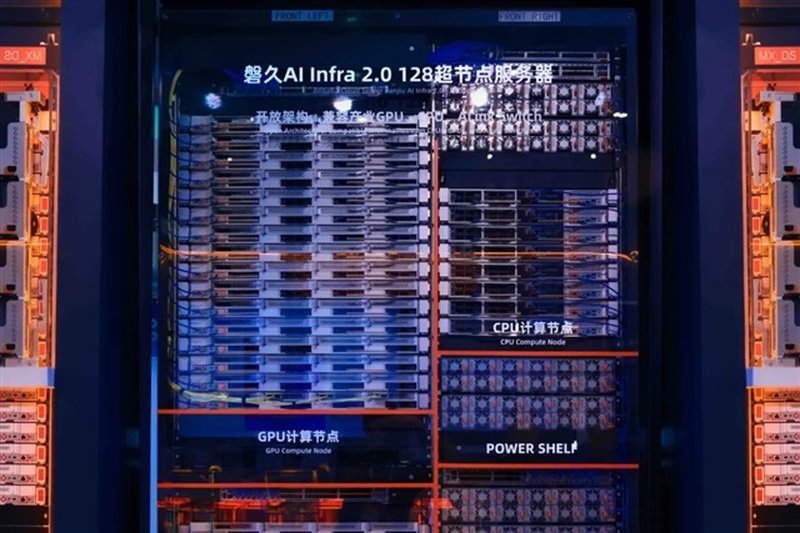
At the WAIC in Shanghai, the company announced the open-source release of SAIL, the complete software stack for its Zhenwu series of AI chips. This isn’t a partial toolkit or a shallow compatibility layer: T-Head describes an integrated stack that developers can adapt to mainstream frameworks, with the explicit goal of lowering migration barriers for those locked into the CUDA ecosystem. The news, reported by The Next Web, reshapes the map of hardware sovereignty in AI.
The software trap behind the hardware
Nvidia’s grip isn’t just about transistors or memory bandwidth. It’s the fruit of a two-decade investment in building a development environment that data scientists know inside out: CUDA, cuDNN, TensorRT, NCCL. Any alternative chip, however powerful on paper, must offer a portability path that doesn’t force a complete rewrite of pipelines. Alibaba’s choice is strategic: by open-sourcing SAIL, it turns its stack into an open platform that other silicon vendors or integrators can adapt, creating a network effect that could erode forced loyalty to CUDA.
For organizations evaluating on-premise deployment of LLMs, software lock-in is a concrete problem. Choosing Nvidia hardware means accepting that models, optimizations, and tools are chained to a single supplier, with direct impacts on TCO and long-term flexibility. A mature open-source alternative allows for control over the stack, reducing dependency risks and aligning with the data sovereignty requirements that drive many deployment decisions in regulated sectors.
What changes for on-premise and sovereignty
T-Head’s announcement comes at a time when demand for local AI infrastructure is surging, driven by privacy, latency, and customization requirements. Zhenwu chips are not yet widespread outside China, but opening the software stack suddenly makes them more credible candidates for hybrid and air-gapped environments. Developers and system integrators can examine the code, test compatibilities, and even contribute to expanding support for frameworks such as PyTorch or TensorFlow, lowering the risk of ending up with silicon rendered unusable by outdated or missing libraries.
Structurally, Alibaba’s move signals that AI competition is shifting from the single component to the entire software-hardware value chain. It’s no longer enough to produce an accelerator with good token performance: you need an ecosystem that convinces developers to switch. SAIL alone doesn’t solve the maturity problem of the Zhenwu ecosystem, but it raises the stakes: anyone competing with Nvidia today must play the openness card. AMD understood this with ROCm, and now a giant like Alibaba enters the field with an approach that could pave the way for other Asian manufacturers.
Who gains, in the short term, are teams architecting vendor-independent AI infrastructure. An open-source stack reduces the evaluation cost for alternative hardware and allows building inference pipelines that aren’t tied to a single GPU generation or vendor. The losers, at least initially, are those who built their value on ecosystem closure. But the real unknown remains execution: open source doesn’t automatically mean performant or well-maintained. The community will have to verify whether SAIL offers the same efficiency and support as established tools.
In a market where on-premise AI is becoming a pillar of digitalization strategies, the direction is clear: hardware diversification runs through software freedom. Alibaba is taking a shot, and it’s doing so with a move that could accelerate the commoditization of AI compute platforms, reshaping incentives for the entire industry.






💬 Comments (0)
🔒 Log in or register to comment on articles.
No comments yet. Be the first to comment!