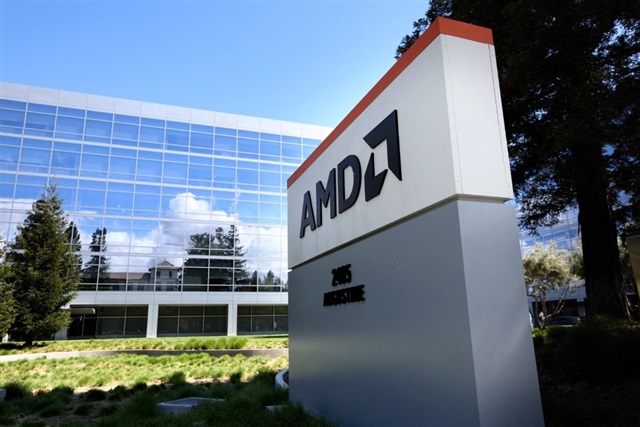
AMD Focuses on AI Memory Optimization
AMD has announced the acquisition of MEXT, a strategic move aimed at expanding its portfolio of tools for memory optimization in artificial intelligence. The operation underscores the growing importance of efficient hardware resource management, particularly VRAM, for the development and deployment of Large Language Models (LLMs) and other AI workloads. With this integration, AMD aims to provide its customers with more robust and performant solutions, capable of maximizing the utilization of existing infrastructure.
The AI market is rapidly evolving, and the ability to execute increasingly complex models efficiently has become a critical success factor. The acquisition of MEXT fits into this vision, allowing AMD to improve the efficiency of its software and hardware stacks, offering a competitive advantage in a sector dominated by ever-tightening computational requirements.
The Memory Challenge in the LLM Era
Memory optimization represents a crucial challenge in the AI landscape, especially with the escalation of model sizes. Increasingly complex LLMs require vast amounts of VRAM for training and inference, often exceeding the capabilities of individual GPUs or making large-scale deployment prohibitively expensive. Tools like those developed by MEXT can help reduce the memory footprint of models through advanced techniques, enabling the execution of larger models or greater batch sizes on existing hardware.
This is particularly relevant for AMD's GPU architectures, such as those based on ROCm, where software efficiency can unlock new performance and broaden the range of possible applications. The integration of these optimization technologies can result in significant improvements in throughput and reductions in latency, fundamental aspects for production AI workloads.
Implications for On-Premise Deployments and TCO
For companies evaluating on-premise LLM deployments, memory efficiency directly translates into a more favorable Total Cost of Ownership (TCO). Reducing the need for additional hardware or extending the useful life of existing infrastructure is a key factor in containing operational and capital costs. The ability to run complex models in self-hosted or air-gapped environments, while maintaining data sovereignty and regulatory compliance, heavily depends on the ability to optimize every available gigabyte of VRAM.
In contexts where horizontal scalability is limited or costly, vertical optimization through smarter memory management becomes indispensable. AI-RADAR, for example, offers analytical frameworks on /llm-onpremise to evaluate the trade-offs between different deployment strategies, highlighting how software optimization can influence these critical decisions for CTOs and infrastructure architects.
Future Prospects and Competition in the AI Sector
AMD's acquisition of MEXT reflects a broader trend in the industry: competition in AI is no longer solely about silicon, but also about the vertical integration of software and hardware. Offering a complete ecosystem that includes optimization tools can differentiate vendors and accelerate the adoption of their platforms. This move positions AMD to compete more effectively with rivals who already boast mature software ecosystems.
As the demand for AI computational capabilities continues to grow, solutions that allow maximizing the utilization of existing resources will become increasingly valuable. Investing in memory optimization technologies is a logical step for AMD to strengthen its position as a key provider of artificial intelligence solutions, both in the cloud and, particularly, in on-premise environments.







💬 Comments (0)
🔒 Log in or register to comment on articles.
No comments yet. Be the first to comment!