
The Return of CPUs in the AI Era
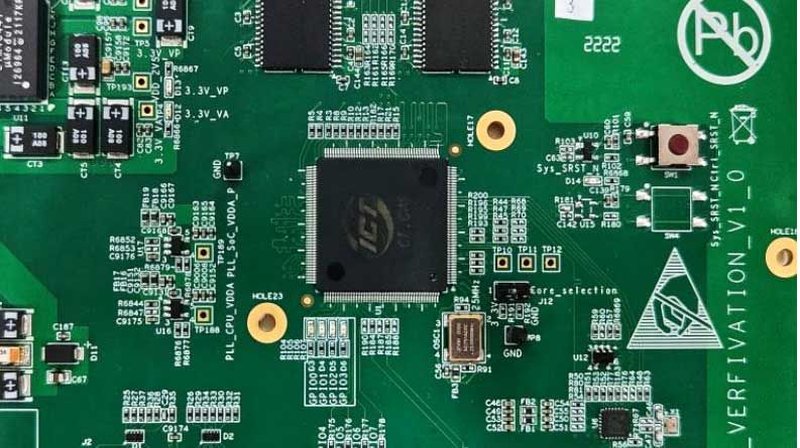
The technology landscape has recently witnessed a significant repositioning of semiconductor giants, with AMD reaching a new all-time high in its market capitalization and Intel achieving a 25-year peak. These remarkable results are directly linked to a growing and insatiable demand for CPUs, an unexpected phenomenon for many, but one rooted in the evolution of artificial intelligence, particularly in the agentic AI segment.
Traditionally, the focus for the most intensive AI workloads, such as training and inference of Large Language Models (LLM), has been almost exclusively on GPUs, thanks to their inherently parallel architecture suited for such tasks. However, the emergence of agentic AI is redefining infrastructural priorities, bringing CPUs back into the spotlight for multiple aspects of AI deployments, both in the cloud and, especially, in self-hosted environments.
Agentic AI and the Demand for Traditional Processors
Agentic AI refers to artificial intelligence systems capable of planning, reasoning, and acting autonomously to achieve complex goals. These agents often require not only the ability to perform inference on language models but also to manage a wide range of sequential computational tasks and orchestration. This includes data preprocessing, managing decision logic, interacting with external databases and APIs, and coordinating multiple AI models or components.
In these scenarios, CPUs excel due to their versatility and ability to handle single-threaded or fine-grained parallel workloads, where GPUs might be over-provisioned or less efficient. The demand for CPUs is therefore not in direct competition with that for GPUs for purely parallel computing, but rather complementary, creating a need for balanced hardware stacks that can support the entire lifecycle of an AI agent, from perception to action.
Implications for On-Premise Deployments and TCO
For organizations evaluating on-premise deployment strategies, the increased demand for CPUs in agentic AI has significant implications. The choice of a self-hosted infrastructure is often driven by the need for data sovereignty, compliance requirements, security in air-gapped environments, or tighter control over the Total Cost of Ownership (TCO). In this context, the ability to optimize CPU utilization becomes crucial.
A well-designed on-premise AI infrastructure must consider not only GPUs for LLM inference and fine-tuning but also an adequate provision of CPUs to manage orchestration, support services, and agentic workloads. This requires careful analysis of CapEx versus OpEx trade-offs, balancing computing power with energy and maintenance costs. For those evaluating on-premise deployments, AI-RADAR offers analytical frameworks on /llm-onpremise to assess these trade-offs and build resilient, high-performing local stacks.
Future Outlook and Infrastructural Strategies
The trend showing AMD and Intel benefiting from the demand for CPUs in agentic AI underscores a fundamental point: the artificial intelligence ecosystem is continuously evolving and requires a holistic approach to infrastructure. There is no one-size-fits-all solution for all AI workloads; rather, companies must adopt flexible strategies that integrate different types of hardware, from high-performance GPUs to general-purpose CPUs, and specialized edge solutions.
The ability to manage and optimize the use of these heterogeneous resources will be a key factor for the success of AI projects. Deployment decisions, whether on-premise, cloud, or hybrid, will increasingly need to consider the full spectrum of computational requirements, ensuring that each component of the hardware stack is appropriately sized for its specific role, maximizing efficiency and control over data and operational costs.







💬 Comments (0)
🔒 Log in or register to comment on articles.
No comments yet. Be the first to comment!