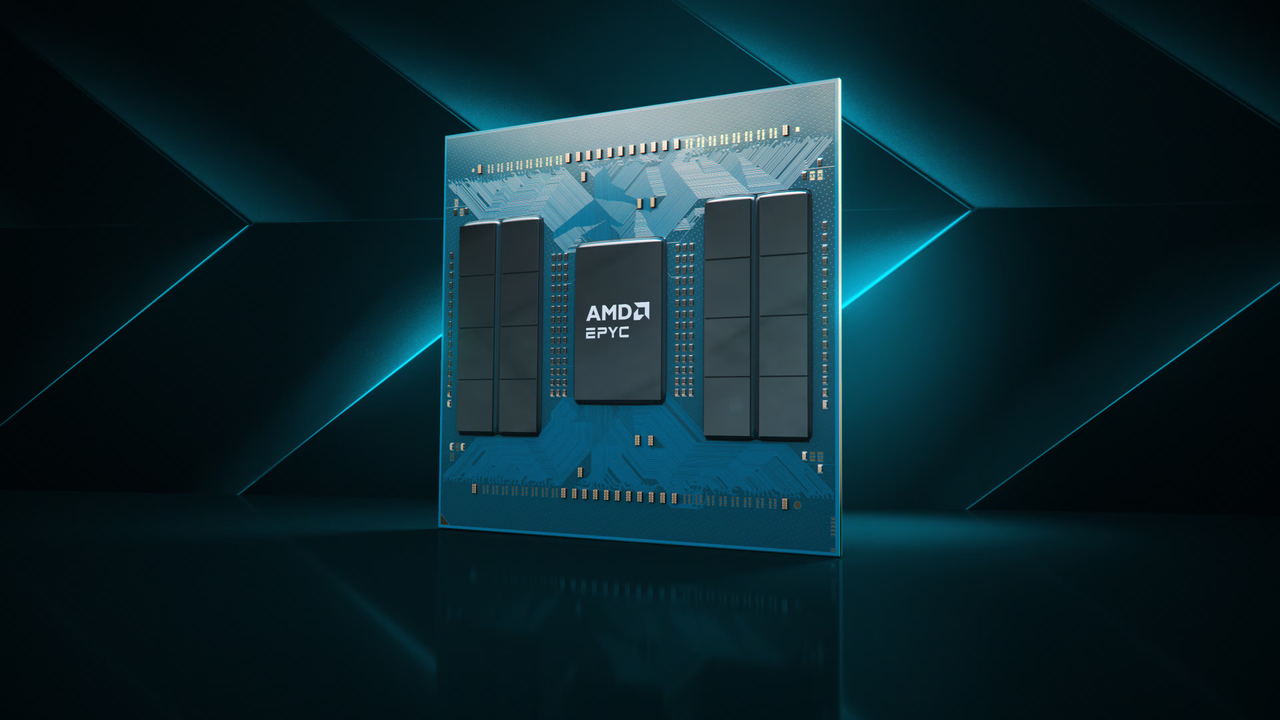
AMD Aims for Specialization with Next-Generation EPYC Processors
AMD is outlining a clear strategy for its EPYC processors, aiming for significant expansion and specialization of its offerings. The company has already confirmed the development of the Zen 7 architecture, signaling a long-term commitment to the server sector. This move is designed to address the growing and diverse demands of modern workloads, particularly those related to artificial intelligence and hyperscale environments.
The evolution of data centers and IT infrastructures requires increasingly targeted solutions. A processor's ability to adapt to specific workloads can make a difference in terms of operational efficiency and total cost of ownership (TCO). AMD, with its future generations of EPYC, intends to offer precisely this flexibility, responding to a continuously transforming market.
Technical and Strategic Detail: Customization for AI and Hyperscale
AMD's strategy focuses on greater customization of EPYC processors. Future lineups, including the Zen 6 and Zen 7 architectures, will be optimized for a broad range of AI workloads. This implies a particular focus on performance for inference and, potentially, for training Large Language Models (LLM) and other complex models, where speed and efficiency are critical parameters.
Concurrently, optimization for hyperscale environments suggests a focus on energy efficiency, compute density, and scalability, which are crucial aspects for large cloud service providers and large-scale on-premise infrastructures. Customization can manifest in specific core, cache, interconnect, and integrated accelerator configurations, designed to maximize throughput and reduce latency in specific scenarios, ensuring that the hardware aligns with application requirements.
Deployment Implications for On-Premise and Cloud
For organizations evaluating the deployment of AI workloads, whether in the cloud or on-premise, AMD's approach offers new perspectives. The availability of more specialized EPYC CPUs could allow for a better match between hardware and application requirements, potentially reducing TCO and improving overall infrastructure performance. This is particularly true for intensive workloads that benefit from silicio-level optimizations.
In an on-premise context, where data sovereignty and control over infrastructure are priorities, having hardware options optimized for specific AI workloads can simplify the design and management of architectures. This is particularly relevant for sectors with stringent compliance requirements or for air-gapped environments. For those evaluating on-premise deployments, complex trade-offs need to be considered, and analytical frameworks like those offered on /llm-onpremise can help assess the costs and benefits of different solutions, providing a solid basis for strategic decisions.
Future Outlook in the Server Processor Market
AMD's commitment to developing architectures like Zen 7 underscores the rapid evolution of the server processor market. The growing demand for computing power for artificial intelligence is pushing manufacturers to constantly innovate, offering increasingly targeted and high-performing solutions. This strategic direction from AMD, focused on specialization and customization, reflects the need to move beyond a "one-size-fits-all" approach for server processors.
The goal is to provide IT operators with the tools to build more efficient and resilient infrastructures, capable of managing the complexity of future AI and cloud workloads. The ability to adapt hardware to the specific needs of each workload will become an increasingly decisive factor for the success of deployment strategies and for the optimization of computational resources.



💬 Comments (0)
🔒 Log in or register to comment on articles.
No comments yet. Be the first to comment!