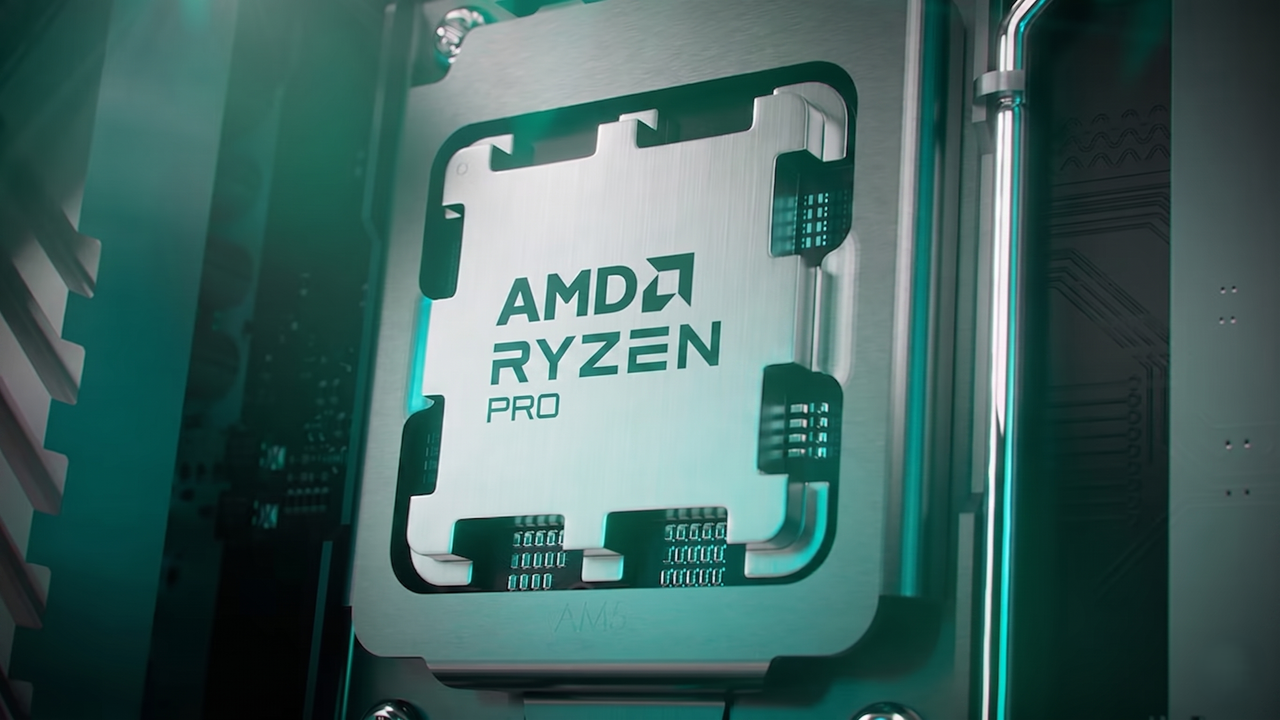
AMD Expands Ryzen 9000 PRO Lineup: 3D V-Cache and up to 170W TDP for Workstations
AMD has announced the expansion of its Ryzen 9000 PRO processor line, introducing six new SKUs aimed at strengthening its offering in the professional workstation segment. This strategic move marks a significant development: for the first time, 3D V-Cache technology is integrated into this CPU series, promising a substantial performance increase in specific workloads. The introduction of these chips responds to the growing demand for powerful and reliable computing solutions for enterprise environments, where data management and the execution of complex applications are absolute priorities.
The new Ryzen 9000 PRO processors are designed to meet the needs of professionals working in fields such as computer-aided design (CAD), digital content creation, financial analysis, and increasingly, the development and Inference of small-scale artificial intelligence models. The availability of these new units through OEM partners is expected later this year, offering companies new options for upgrading or implementing local computing infrastructures.
Technical Details and 3D V-Cache Implications
The core of the innovation in this new Ryzen 9000 PRO series lies in the integration of 3D V-Cache technology. This solution, already well-regarded in other AMD processor lines, allows for vertically stacking an additional amount of L3 cache directly onto the processor die. The effect is a drastic reduction in latency and an increase in bandwidth for accessing frequently used data, a critical factor for applications that benefit from large amounts of cache, such as LLM workloads and complex dataset analysis.
The new models feature a Thermal Design Power (TDP) that can reach up to 170W. This value indicates the maximum amount of heat generated by the processor under load conditions, a fundamental parameter for designing cooling systems and for evaluating the overall power consumption of the workstation. For infrastructure architects and DevOps leads, understanding TDP is essential for planning power and thermal dissipation in a self-hosted environment, ensuring stability and optimal performance even under prolonged stress.
On-Premise Context and TCO
The introduction of more powerful workstation CPUs with 3D V-Cache has direct implications for on-premise Deployment strategies, especially for companies managing AI workloads. Running LLMs and other complex models on local hardware offers significant advantages in terms of data sovereignty, regulatory compliance, and security. Keeping sensitive data within the corporate perimeter, in air-gapped or self-hosted environments, is a priority for sectors such as finance, healthcare, and public administration.
From a Total Cost of Ownership (TCO) perspective, the initial investment in high-performance workstations can translate into long-term savings compared to the recurring operational costs associated with cloud services. The ability to perform Inference and, in some cases, even Fine-tuning of smaller models directly on a workstation reduces dependence on external infrastructures and allows for more granular control over resources. For those evaluating the trade-offs between on-premise Deployment and cloud solutions, AI-RADAR offers analytical Frameworks on /llm-onpremise to support informed decisions.
Future Prospects for Professional Workstations
The expansion of the Ryzen 9000 PRO line with 3D V-Cache underscores the continuous evolution of the workstation market, increasingly focused on providing advanced computing capabilities for emerging challenges. The ability to process large volumes of data and execute complex algorithms locally becomes a distinguishing factor for companies seeking to maintain a competitive edge and innovate rapidly.
These new AMD processors offer a solid foundation for workstations that can serve as distributed computing nodes or as development and testing environments for AI applications, reducing latency and improving Throughput for end-users. AMD's focus on the PRO segment, with an emphasis on performance and reliability requirements, reflects a clear understanding of enterprise market dynamics and the growing importance of local computing in the era of artificial intelligence.







💬 Comments (0)
🔒 Log in or register to comment on articles.
No comments yet. Be the first to comment!