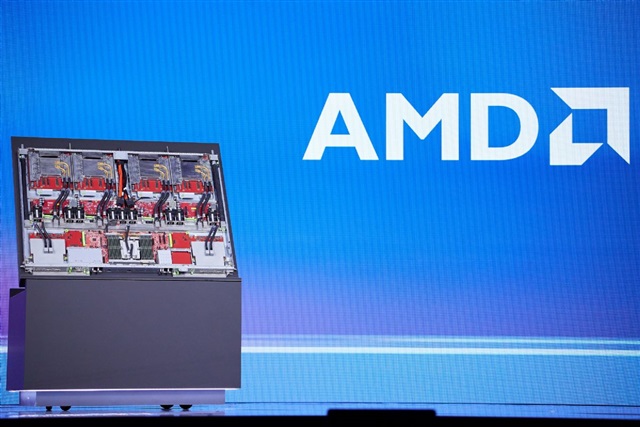
Helios, the supercomputer fired up at the Cyfronet academic center in Poland, is more than just a jewel of European high‑performance computing. It is the most tangible proof yet that the challenge to CUDA is moving from theory into real‑world infrastructure. In an industry where Nvidia has called the shots for over a decade with its proprietary ecosystem, seeing a system built on AMD Instinct MI250X GPUs climb the Top500 rankings and handle production AI workloads signals that the wind is shifting.
Helios is no ordinary machine. It packs thousands of MI250X accelerators, EPYC processors, and the HPE Slingshot interconnect, all orchestrated by the ROCm stack and the HIP runtime designed to automatically translate CUDA code. Until recently, this combination was deemed suitable only for traditional scientific simulations, while machine learning remained Nvidia territory. Now, thanks to the maturation of ROCm and native integration with PyTorch and TensorFlow, the same hardware can tackle training and inference of Large Language Models with timelines and costs that are starting to become competitive.
This shift is not just technical; it is structural. Anyone designing on‑premise AI deployments — companies, research centers, public administrations — has always had to deal with the rigidity of Nvidia’s offering, which dictates precise hardware choices and a TCO that is often hard to contain. The emergence of a credible alternative redraws the incentives. First, it reduces lock‑in: if ROCm allows running similar workloads without overhauling the code, it becomes possible to diversify suppliers, negotiate better terms, and adopt more modular architectures. Second, it gives power back to those investing in local infrastructure, because the availability of multiple vendors stabilizes supply chains and mitigates the risks tied to the chronic GPU shortage.
There is a third effect, less visible but decisive for the European landscape. Helios is hosted in Poland, partly funded by EU money, and embodies an idea of digital sovereignty that extends beyond data to the hardware layer. Being able to train LLMs on non‑Nvidia silicon within boundaries regulated by GDPR is a powerful argument for institutions and companies with strict compliance obligations. It is no coincidence that other European supercomputers are following the same path with AMD architectures.
For Nvidia, Helios’s rise is not yet an existential threat, but a signal that shatters the invisibility of an uncontested superiority. The company still dominates large cloud infrastructures and holds an advantage in software maturity and libraries. However, if AMD manages to replicate this experience on a broader scale — not only in HPC centers but also in enterprise datacenters — the market will head toward a duopoly which, as the history of x86 servers teaches, tends to lower prices and accelerate innovation.
On a technical level, the implications for anyone evaluating an on‑premise investment today are immediate. The MI250X specifications — HBM2e memory, high bandwidth, and support for FP16/INT8 quantization — are parameters that, despite still‑evolving software optimizations, are starting to look eye‑to‑eye with corresponding Nvidia products. Those choosing the AMD route must, however, reckon with a less mature ecosystem, requiring integration skills and a willingness to contribute to a rapidly growing community. It is not yet a path suitable for everyone, but it is an option that only a year ago was not even on the radar of AI infrastructure planners.
In short, Helios is not just a faster supercomputer. It is a testbed that accelerates the handover from a monopoly to a contestable market, with all that entails in terms of freedom of choice, cost control, and technological independence. For those dealing with on‑premise AI, it is time to watch the evolution of the AMD ecosystem with renewed attention — not as a laboratory curiosity, but as a strategic piece in the infrastructure puzzle.





💬 Comments (0)
🔒 Log in or register to comment on articles.
No comments yet. Be the first to comment!