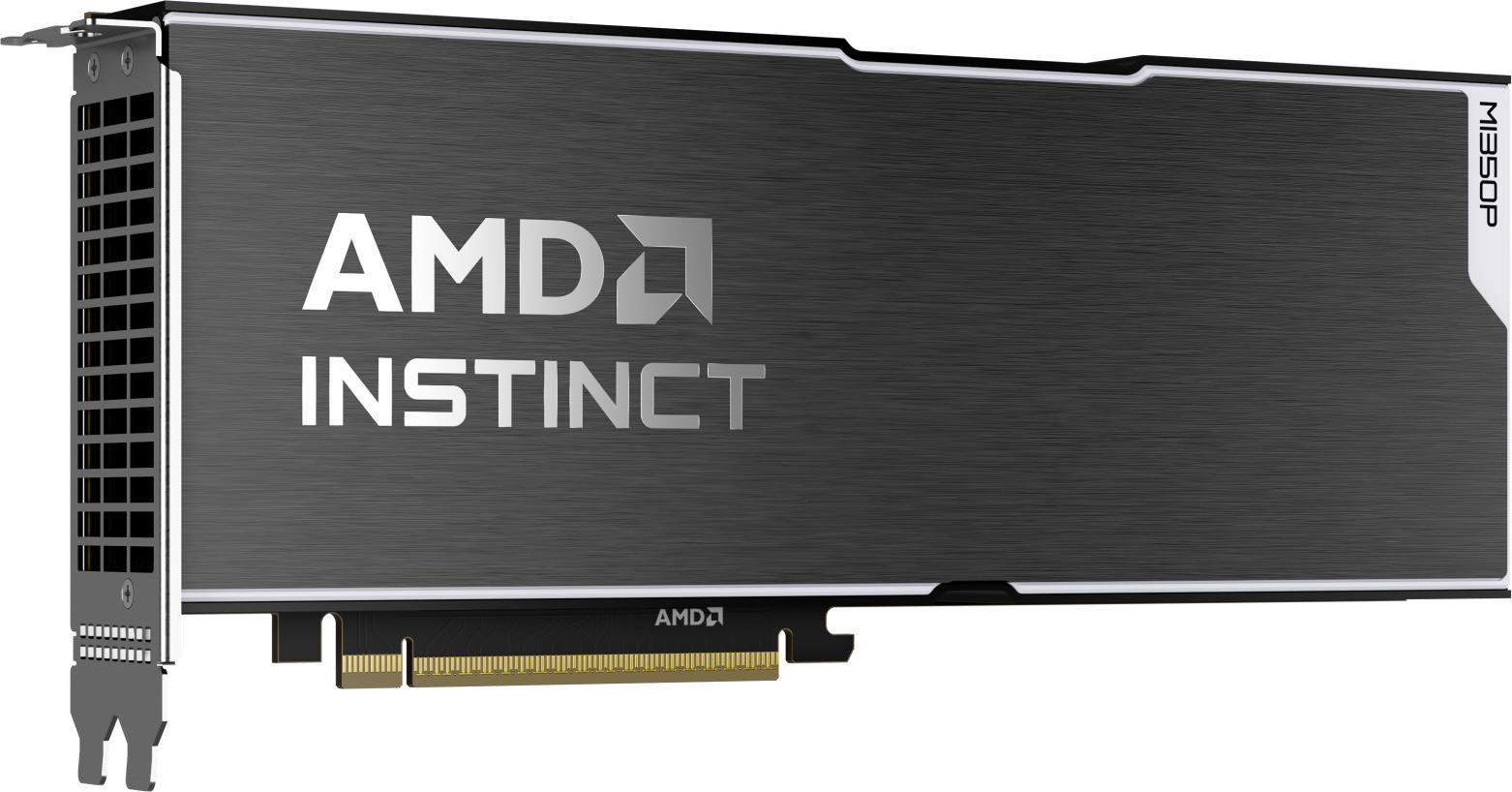
AMD Instinct MI350P: CDNA 4 Brings AI Acceleration to Traditional PCIe Servers
AMD has recently expanded its offering of artificial intelligence accelerators with the introduction of the Instinct MI350P. This new component represents a PCIe version of its flagship MI350 accelerators, designed to meet the needs of a specific segment of the enterprise market. AMD's move underscores the importance of providing flexible solutions that adapt to existing infrastructures, allowing companies to integrate advanced AI computing capabilities without the need for a complete hardware overhaul.
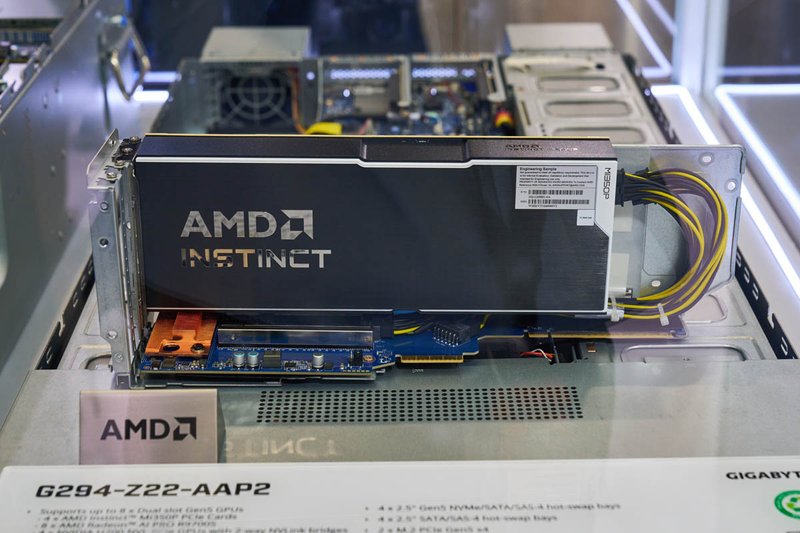
The MI350P is engineered for customers looking to fit a modern AI accelerator into a traditional PCIe server. This characteristic makes it particularly appealing for on-premise deployments, where compatibility with legacy hardware and infrastructure cost management are critical factors. The accelerator positions itself as a strategic solution for organizations aiming to maintain control over their data and AI workloads, avoiding exclusive reliance on external cloud services.
Technical and Architectural Details
The AMD Instinct MI350P accelerator integrates the CDNA 4 architecture, the latest iteration of AMD's technology dedicated to high-performance computing and artificial intelligence. The CDNA architecture was specifically developed to optimize performance in Large Language Models (LLM) training and inference workloads and other AI applications, offering significant improvements in throughput and energy efficiency compared to previous generations.
The MI350P is described as a configuration equivalent to half of an MI350X. Although the source does not specify precise details on VRAM or the number of compute units, this indication suggests a balance between power and compatibility with the PCIe form factor. PCIe cards, in fact, operate within stricter power and cooling constraints compared to OAM (Open Compute Project Accelerator Module) or SXM modules, which are typically used in high-density configurations. The choice of the PCIe form factor allows for broader adoption, enabling integration into standard servers without significant modifications to cooling or power infrastructure.
Implications for On-Premise Deployments
The introduction of the MI350P has significant implications for on-premise deployment strategies of AI workloads. Many companies, particularly those with stringent data sovereignty or regulatory compliance requirements, prefer to keep their LLMs and AI pipelines within their own data centers. The availability of accelerators in a PCIe form factor facilitates this transition, allowing existing servers to be upgraded with state-of-the-art AI capabilities.
This approach can help optimize the Total Cost of Ownership (TCO), as it reduces the need for investments in new specialized server infrastructures. For CTOs, DevOps leads, and infrastructure architects evaluating self-hosted alternatives versus the cloud for AI/LLM workloads, the MI350P offers a way to leverage existing hardware while maintaining full control over the deployment environment. AI-RADAR provides analytical frameworks on /llm-onpremise to evaluate the trade-offs between different deployment strategies, including aspects related to performance, costs, and security.
Future Outlook and Market Context
AMD's strategy with the MI350P reflects a broader trend in the AI accelerator market: the need to offer diversified solutions that meet a wide range of enterprise needs. While high-density modules like the MI350X are ideal for supercomputers and large training clusters, PCIe cards like the MI350P are crucial for inference and fine-tuning in more distributed enterprise environments or those with space and power constraints.
Competition in the AI accelerator sector is growing rapidly, with major players seeking to differentiate themselves not only by pure performance but also by the flexibility and compatibility of their offerings. AMD's ability to bring the CDNA 4 architecture into a widely adopted format like PCIe positions the company as a key provider for organizations looking to modernize their on-premise AI capabilities. This market evolution promises to offer greater choice and more targeted solutions for the complex deployment challenges of LLMs.








💬 Comments (0)
🔒 Log in or register to comment on articles.
No comments yet. Be the first to comment!