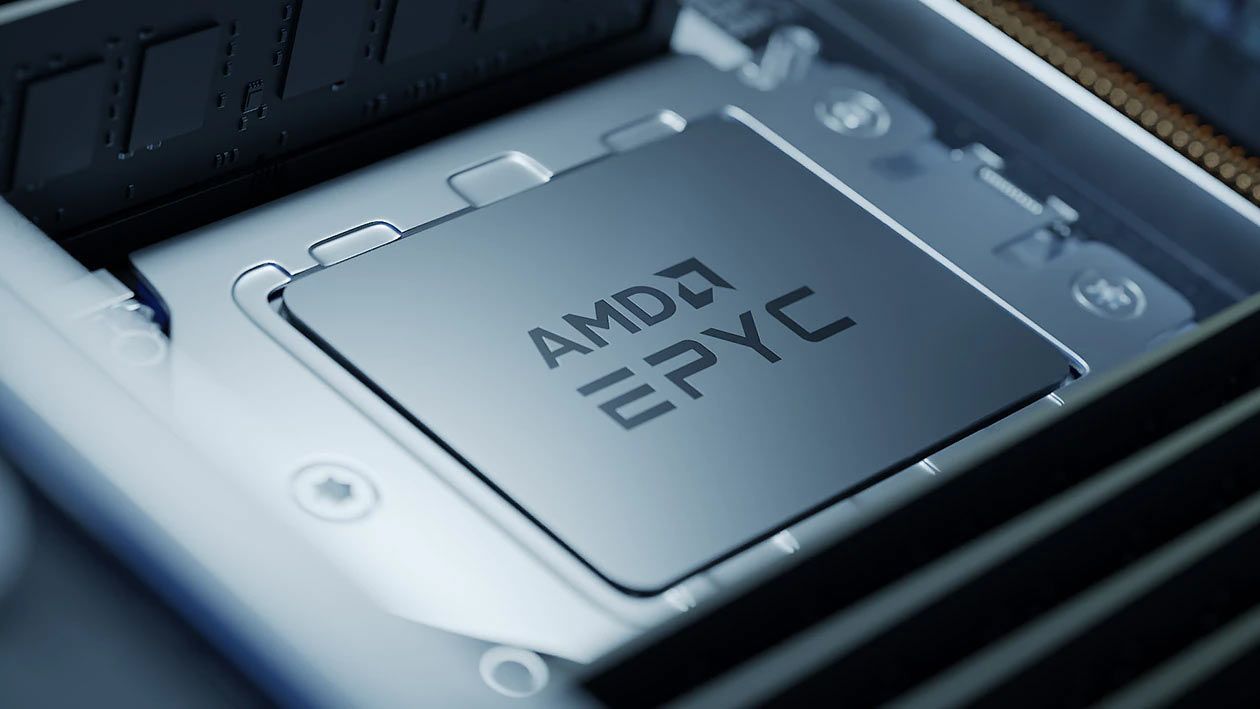
AMD Fires Back with Zen 6 'Venice': A Direct Challenge to Nvidia
AMD has put the spotlight on the future of data center processors, presenting the first performance estimates for its upcoming EPYC Zen 6 CPU, codenamed 'Venice'. The announcement, which includes a direct comparison with Nvidia's Vera platform, positions 'Venice' as a potentially dominant solution in the high-density workload segment.
According to AMD's projections, the Zen 6 'Venice' processor, featuring 256 cores, is expected to outperform Nvidia's competition by 3.3 times in terms of rack-level performance. These figures, while still preliminary and based on internal estimates, suggest an aggressive strategy by AMD to consolidate its market share in server infrastructure, a crucial sector for Large Language Models (LLM) deployments and other AI applications.
Technical Details and the Comparison with Nvidia Vera
At the core of AMD's proposal is the Zen 6 'Venice' processor, distinguished by its 256-core architecture. This configuration aims to maximize parallel processing capability, a crucial factor for modern high-performance computing applications and AI-related workloads, including Large Language Models (LLM) during inference or smaller-scale training.
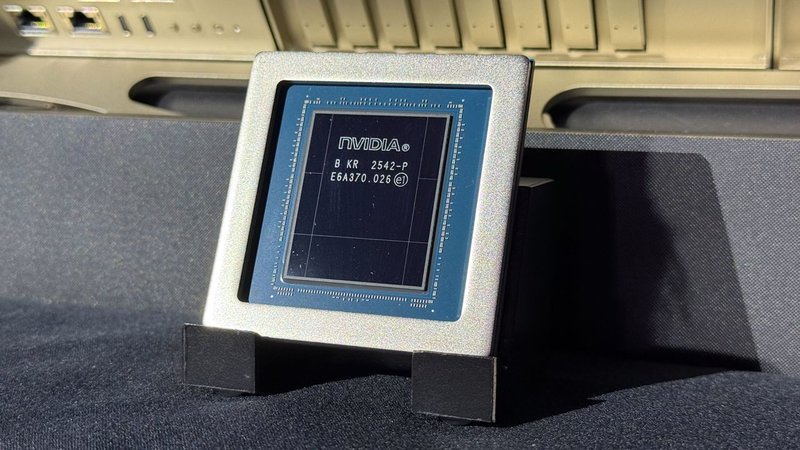
The direct comparison with Nvidia's Vera platform is significant. Although specific details of "Vera" were not elaborated by AMD in this context, the indication of a 3.3x advantage in rack-level performance suggests a focus on efficiency and compute density per unit of data center space. This is a fundamental aspect for companies evaluating the Total Cost of Ownership (TCO) of their on-premise infrastructures, where space and energy consumption optimization are priorities.
Implications for On-Premise Deployments and Data Sovereignty
For CTOs, DevOps leads, and infrastructure architects considering on-premise deployments, the emergence of high-core-count CPUs like AMD's Zen 6 'Venice' opens new possibilities. The ability to process large volumes of data and complex workloads directly within their own data centers can enhance data sovereignty and ensure greater control over security and compliance, increasingly critical aspects in the AI era.
Rack-level performance is a key indicator for infrastructure planning. A 3.3x improvement could translate into a reduction in the number of servers required to meet specific performance targets, positively impacting operational costs and energy consumption. This is particularly relevant for air-gapped environments or scenarios where latency is critical, and reliance on external cloud services is not an option.
Future Outlook and Trade-offs in the AI Chip Market
It is important to note that the benchmarks presented by AMD are "estimated." The market eagerly awaits independent tests to validate these claims and fully understand 'Venice's positioning relative to existing and future solutions. The choice between different CPU and GPU architectures for AI/LLM workloads always involves a thorough analysis of trade-offs between initial cost, performance, energy consumption, and scalability.
While Nvidia is often associated with GPUs for AI acceleration, its presence in the CPU segment (such as with Grace and integrated platforms) indicates growing competition. AMD's offering with 'Venice' aims to provide a robust CPU solution that can compete effectively, offering viable alternatives for deployment strategies that prioritize self-hosted hardware and direct control over infrastructure.





💬 Comments (0)
🔒 Log in or register to comment on articles.
No comments yet. Be the first to comment!