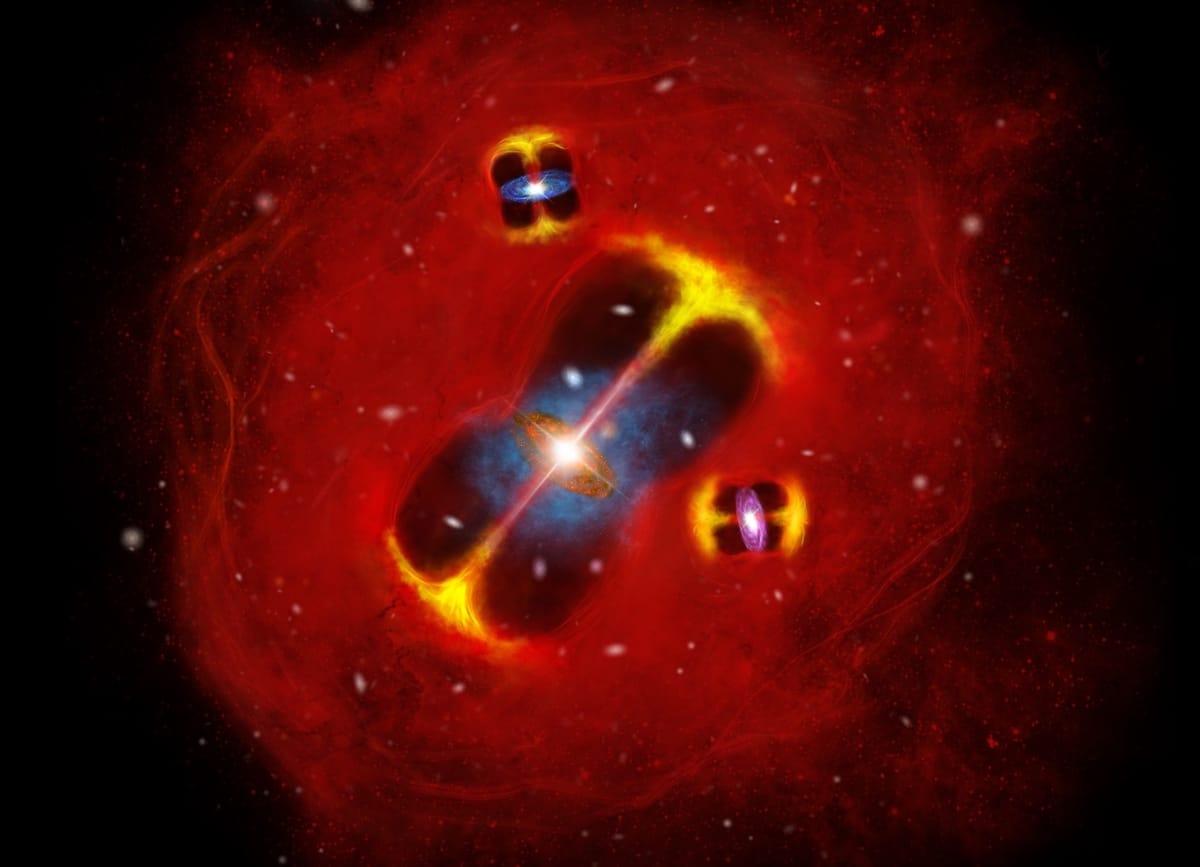
Un enigma cosmico dall'alba dei tempi
Un team di astronomi ha individuato un'antica riserva di gas, risalente a oltre 12 miliardi di anni fa, all'interno di un ammasso galattico primordiale chiamato SPT2349-56. La temperatura di questo gas è inspiegabilmente elevata, raggiungendo valori simili a quelli del nucleo solare, un dato che sfida le attuali teorie cosmologiche.
Temperature inattese nell'universo giovane
Secondo i modelli, il gas presente negli ammassi galattici primordiali dovrebbe essere significativamente più freddo rispetto a quello osservato nelle galassie moderne, riscaldato nel corso di miliardi di anni dalle interazioni gravitazionali. La scoperta di SPT2349-56, con il suo gas caldissimo, mette in discussione questa visione.
Dazhi Zhou, responsabile dello studio, ha espresso sorpresa per i risultati, sottolineando come la temperatura e l'abbondanza del gas caldo superino le aspettative teoriche per un ammasso in fase di formazione. Questa anomalia costringe i tecnici a riconsiderare i modelli di evoluzione delle strutture cosmiche.
Osservazioni e implicazioni future
Le osservazioni sono state effettuate tramite l'Atacama Large Millimeter/submillimeter Array (ALMA) in Cile, che ha permesso di misurare la temperatura del gas intergalattico tramite la rilevazione della distorsione che provoca sulla luce più antica dell'universo.
La fonte di questo calore rimane sconosciuta, ma si ipotizza che possa essere legata all'elevata attività dell'ammasso, caratterizzato da un tasso di formazione stellare 5.000 volte superiore a quello della Via Lattea e da potenti getti di materia emessi dai nuclei galattici.
Ulteriori osservazioni saranno necessarie per confermare se SPT2349-56 rappresenta un'eccezione o se il gas super-caldo è più comune negli ammassi primordiali di quanto si pensasse. Questa scoperta si aggiunge alle recenti osservazioni del telescopio spaziale James Webb, che hanno rivelato galassie massicce in epoche ancora più remote, aprendo nuove prospettive sulla formazione dell'universo.
Un cambio di paradigma
Secondo Zhou, queste scoperte suggeriscono che i processi di formazione galattica nelle prime fasi dell'universo fossero più violenti ed energetici di quanto precedentemente ipotizzato. Le galassie primordiali avrebbero avuto un impatto maggiore sull'ambiente circostante, plasmando l'universo in modi ancora da comprendere appieno.







💬 Commenti (0)
🔒 Accedi o registrati per commentare gli articoli.
Nessun commento ancora. Sii il primo a commentare!