
The Alliance for Drone Autonomy: Amprius and Matternet
Amprius Technologies, a Fremont-based company pioneering high-energy-density silicon anode batteries, has announced a strategic partnership with Matternet. The latter is one of the few companies in the drone delivery sector to have obtained both Type Certification and Production Certification from the FAA (Federal Aviation Administration), a milestone that underscores its seriousness and operational reliability.
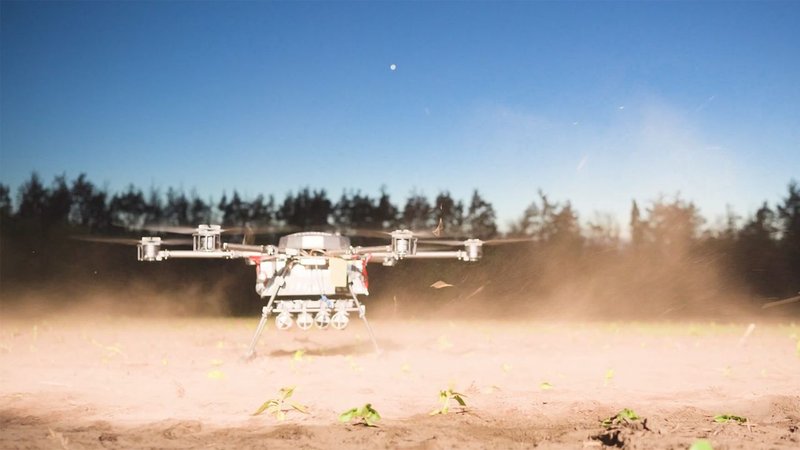
The collaboration focuses on Amprius supplying its innovative SiCore® lithium-ion cells for Matternet's autonomous delivery drones. This move is set to substantially enhance the drones' capabilities, particularly by extending their flight endurance, a critical factor for the effectiveness and sustainability of aerial delivery operations.
Innovation in Silicon Anode Batteries for Edge Computing
Silicon anode batteries represent a significant leap forward compared to traditional lithium-ion batteries. Silicon, in fact, has a much higher theoretical energy storage capacity than graphite, the material commonly used in anodes. This translates into a remarkably higher energy density, allowing for lighter batteries with greater capacity for the same volume, or maintaining small dimensions while increasing autonomy.
For edge computing systems, such as autonomous drones, energy efficiency is a fundamental constraint. Higher energy density means devices can operate longer or carry heavier payloads, including the computing modules necessary for the Inference of complex AI models directly onboard. This reduces reliance on frequent recharging and expands the operational range, key elements for the large-scale adoption of drone-based solutions.
Impact on Autonomous Systems and Data Sovereignty
The extended drone autonomy, made possible by silicon anode batteries, has profound implications for the deployment of autonomous systems and AI deployment strategies. Drones with greater endurance can perform longer and more complex missions, collecting more data or covering wider areas. This is particularly relevant for scenarios where connectivity is limited or non-existent, making onboard data processing indispensable.
Running AI models directly on drone hardware (edge AI) not only reduces latency but also strengthens data sovereignty. Sensitive information can be processed and, if necessary, anonymized or aggregated locally, without the need to be transmitted to remote cloud servers. This approach is fundamental for sectors such as logistics, security, or precision agriculture, where regulatory compliance and information protection are priorities. For those evaluating on-premise or edge deployments, hardware energy efficiency is a critical factor in calculating TCO and defining operational capabilities.
Future Prospects and the Role of Hardware in Distributed AI
The partnership between Amprius and Matternet highlights a broader trend in the technology sector: the increasing importance of specialized hardware to enable new capabilities in distributed AI. As Large Language Models (LLM) and other AI models become more sophisticated, their efficient execution requires not only optimized algorithms but also a physical infrastructure capable of supporting such workloads in increasingly diverse contexts, from the edge to the data center.
Advancements in battery technologies are a prime example of how innovation at the component level can unlock the potential of entire categories of applications. For CTOs and infrastructure architects, understanding these developments is crucial for planning deployment strategies that balance performance, costs, and data sovereignty requirements. The ability to power autonomous devices with greater energy efficiency will pave the way for a new generation of AI-powered services and applications, pushing the boundaries of innovation in on-premise and distributed contexts.





💬 Comments (0)
🔒 Log in or register to comment on articles.
No comments yet. Be the first to comment!