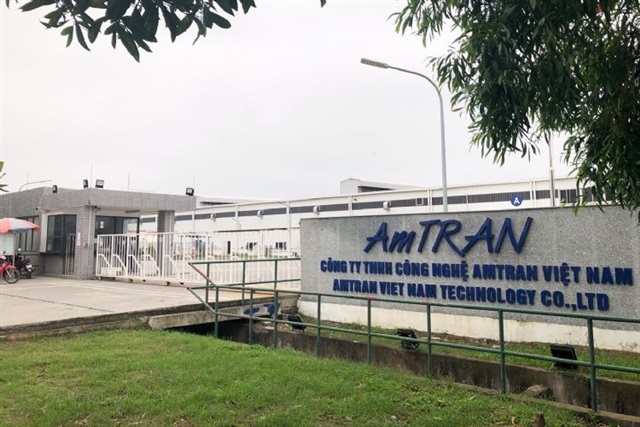
Amtran's Strategy and Financial Results
Amtran, a player in the technology landscape, recently announced a notable increase in its revenues, reporting double-digit growth. This outcome has been directly linked to a business strategy that prioritizes the development and commercialization of higher-value products. The decision to shift focus towards more lucrative and technologically advanced market segments appears to have paid off, highlighting how strategic choices can directly influence a company's financial performance in a dynamic industry.
This type of strategic repositioning is often a response to evolving market demands and the pursuit of higher margins. For many tech companies, "higher-value products" can mean investing in research and development for innovative solutions, improving the quality and functionality of existing products, or entering niche markets with higher barriers to entry and less price competition.
Market Context and the Demand for Added Value
Amtran's move fits into a broader market context where the demand for high-value technological solutions is constantly growing. This is particularly evident in the artificial intelligence sector and with Large Language Models (LLM), where companies seek not just products, but genuine solutions that can offer tangible competitive advantages. The demand is shifting from generic consumer goods to complex systems, specialized hardware, and optimized software for intensive workloads.
Enterprises, especially those operating with sensitive data or requiring granular control over their infrastructure, are looking for solutions that ensure data sovereignty, regulatory compliance, and high performance. This includes the adoption of specific hardware for LLM Inference and Fine-tuning, such as GPUs with high VRAM, and high-speed storage solutions, often deployed in self-hosted or air-gapped environments.
Implications for On-Premise Deployments
The focus on higher-value products has direct implications for deployment decisions, particularly for those evaluating on-premise solutions. Companies investing in high-end hardware and software to manage critical AI workloads often do so to maintain complete control over their data and infrastructure. This approach allows for optimizing TCO in the long term, despite potentially higher initial CapEx, and ensures compliance with stringent regulations.
The choice of higher-value products in this context translates into the adoption of bare metal servers, advanced cooling systems, and low-latency network interconnects—all crucial elements for supporting the throughput and performance demands of modern LLMs. For those evaluating on-premise deployments, significant trade-offs exist between cloud flexibility and the long-term cost control/optimization offered by self-hosted solutions. AI-RADAR offers analytical frameworks on /llm-onpremise to evaluate these trade-offs, providing tools for informed decisions.
Future Prospects in the Technology Landscape
Amtran's strategy of focusing on higher-value products is an indicator of how the technology market is evolving. Companies that successfully identify and meet the needs of specialized niches, offering solutions that go beyond mere commodities, are those poised to thrive. This includes innovation in areas such as AI hardware, LLM deployment platforms, and data security and sovereignty solutions.
In an era where artificial intelligence is redefining business operations, the ability to provide products and services that support robust and scalable infrastructures, whether on-premise or in hybrid configurations, will become a critical success factor. Amtran's revenue growth, in this sense, can be seen as a signal that the market rewards investment in quality, innovation, and solutions tailored to the complex needs of modern enterprises.








💬 Comments (0)
🔒 Log in or register to comment on articles.
No comments yet. Be the first to comment!