Anthropic and the AI Model Crisis
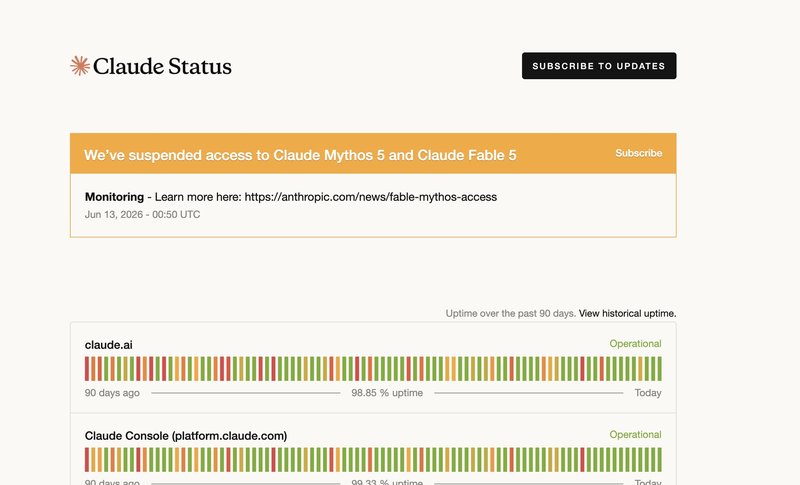
Anthropic, a leading developer of Large Language Models (LLMs), has scheduled a crucial meeting in Washington with officials from the U.S. Commerce Department. The objective is to resolve the escalating controversy surrounding the suspension of its Fable 5 and Mythos 5 models, a situation that is becoming one of the ugliest AI policy fights in recent U.S. history.
The meeting, confirmed by authoritative sources such as Reuters and Bloomberg, follows a week of escalation. The dispute, initially confined to cybersecurity concerns related to model implementation and security, has rapidly transformed into a broader and more complex political confrontation over artificial intelligence policies, raising fundamental questions about the control and governance of these emerging technologies.
Implications for LLM Deployment
Episodes like the one involving Anthropic highlight the increasing interconnectedness between technological development and regulatory frameworks. For companies evaluating LLM deployment, whether in self-hosted or cloud environments, regulatory stability and policy clarity are critical factors. The suspension or restriction of models can have significant repercussions on infrastructure planning, vendor selection, and operational continuity, introducing a non-negligible element of risk.
The choice between an on-premise deployment and cloud-based solutions, for example, can be profoundly influenced by such uncertainties. A self-hosted approach offers greater control over data sovereignty and compliance, aspects that become critical when AI model policies are rapidly evolving or subject to disputes. However, this autonomy also requires a higher initial investment in dedicated hardware, such as GPUs with adequate VRAM and computing power, and the employment of specialized internal expertise for infrastructure management and optimization.
Data Sovereignty and Control
The issue of data sovereignty is central to many discussions related to AI, especially in complex geopolitical contexts. In a landscape where models can be subject to governmental reviews, restrictions, or suspensions, the ability to keep data and AI workloads within one's jurisdictional boundaries or on fully controlled infrastructures becomes a competitive advantage and, in many cases, an indispensable compliance requirement.
Organizations operating in highly regulated sectors, such as finance, healthcare, or defense, are particularly sensitive to these aspects. The possibility of using open source models, performing fine-tuning on bare metal infrastructures, or ensuring air-gapped environments, can effectively mitigate the risks associated with political decisions or sudden regulatory changes impacting proprietary models or those offered as a service by external cloud providers. This approach guarantees greater control over the data and model lifecycle.
Future Prospects and Trade-offs
The current situation underscores the need for companies to adopt a flexible and resilient strategy for AI adoption. The evaluation of Total Cost of Ownership (TCO) should not be limited to hardware and software costs but must also include risks related to regulatory uncertainty, dependence on external providers, and potential operational disruptions. A holistic view of TCO is fundamental for informed decisions.
For those evaluating on-premise deployment, AI-RADAR offers analytical frameworks on /llm-onpremise to assess the trade-offs between control, performance, security, and costs. The ability to navigate an evolving regulatory landscape while maintaining technological agility and compliance will be a key factor for success in the strategic implementation of artificial intelligence in any enterprise context.








💬 Comments (0)
🔒 Log in or register to comment on articles.
No comments yet. Be the first to comment!