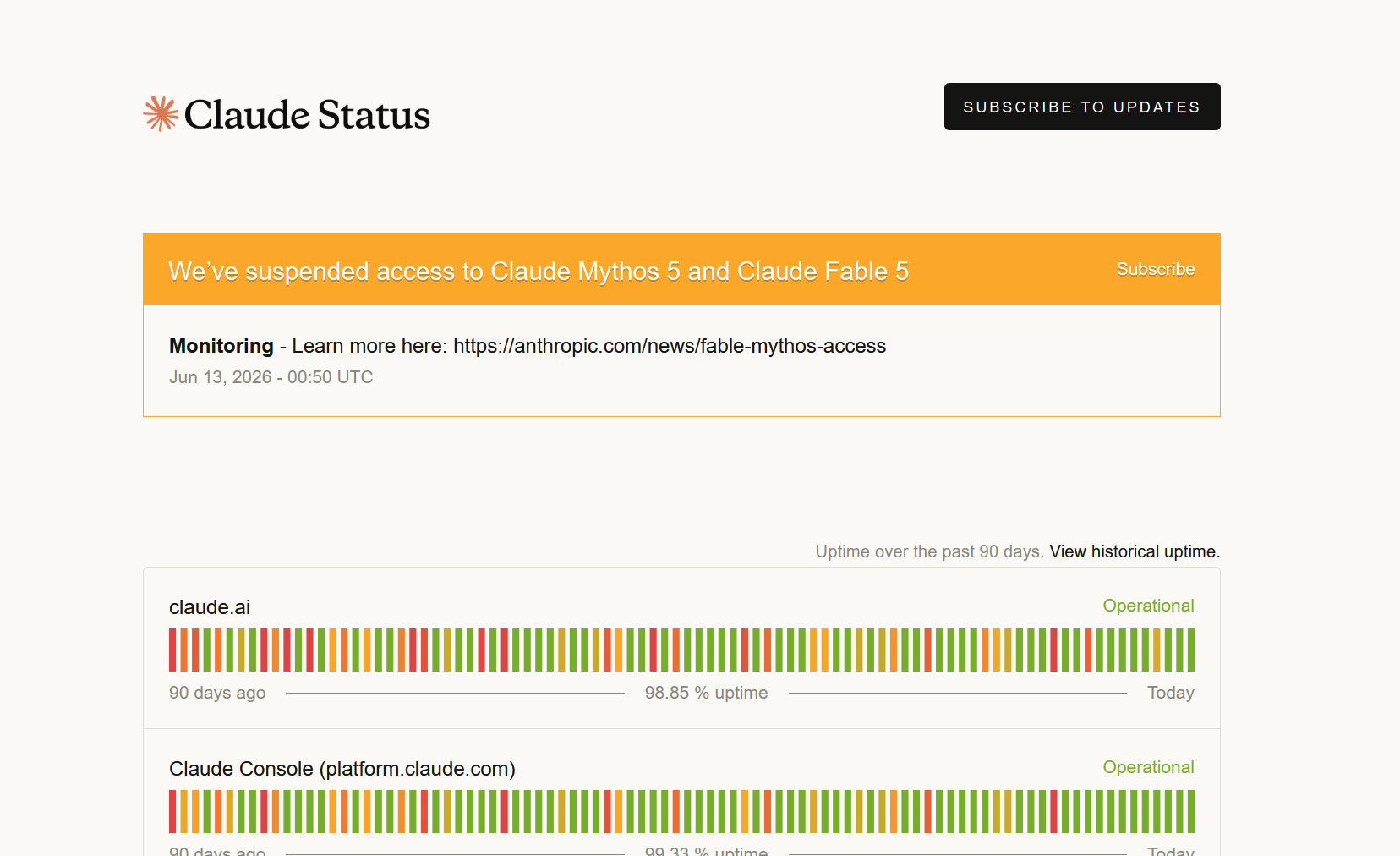
Anthropic Halts Access to Fable 5 and Mythos 5: An Industry Wake-Up Call
Over the weekend, Anthropic suspended access to its Large Language Models (LLMs) Fable 5 and Mythos 5. This decision, prompted by export control concerns, has sent ripples through the tech industry, serving as a stark reminder of the complexities and risks associated with relying on external providers for critical infrastructure and models.
This incident highlights how geopolitical and regulatory factors can directly impact the availability of fundamental technological resources. For companies integrating LLMs into their operational pipelines, stability and continuity of access are non-negotiable requirements, and interruptions of this nature can have significant repercussions on long-term projects and strategies.
The Context of Export Control and Data Sovereignty
Export control regulations are legal instruments governing the transfer of goods, software, and technology between countries, often for national security or foreign policy reasons. In the context of artificial intelligence, this can include pre-trained models, training data, or even access to inference platforms. Anthropic's decision suggests that its models, or the infrastructure they reside on, might have been deemed subject to such restrictions in certain jurisdictions.
This scenario reignites the debate on data sovereignty and the need for organizations to maintain control over their digital assets. The possibility that an external provider could block access to essential tools due to regulatory constraints beyond the direct control of the end-user underscores the strategic advantages of on-premise or self-hosted deployments. Such approaches help mitigate risks associated with unexpected interruptions and ensure compliance with local and sectoral regulations, such as GDPR, which demand stringent management of data location and access.
Implications for LLM Deployments and TCO
For CTOs, DevOps leads, and infrastructure architects, the Anthropic incident offers further insight into the trade-offs between adopting cloud-based solutions and investing in on-premise infrastructure. While cloud platforms offer scalability and reduced initial operational costs, they can introduce critical dependencies and vulnerabilities to third-party decisions or changes in the global regulatory landscape.
The evaluation of Total Cost of Ownership (TCO) for AI/LLM workloads must therefore extend beyond the direct costs of hardware and licenses, also including the risks associated with loss of control and potential service interruptions. On-premise deployments, while requiring a greater initial investment in hardware (such as GPUs with adequate VRAM for inference and fine-tuning) and internal expertise, offer unparalleled control over security, latency, and operational continuity. This is particularly true for air-gapped environments or companies with extremely stringent compliance requirements.
The Need for Full Ownership and Control
The event involving Anthropic serves as a reminder to the industry: full ownership and control of the entire technology pipeline, from models to bare metal servers, are crucial elements for resilience and strategic autonomy. Organizations operating in regulated sectors or handling sensitive data are increasingly compelled to consider self-hosted alternatives for their AI workloads with greater attention.
AI-RADAR specifically focuses on these dynamics, providing analysis and frameworks to evaluate on-premise LLM deployments, local stacks, and specific hardware for inference and training. The goal is to support decision-makers in choosing architectures that prioritize data sovereignty, operational control, and optimized TCO, reducing reliance on unpredictable external factors. The ability to keep one's systems operational, regardless of geopolitical fluctuations or third-party decisions, is becoming a distinguishing factor and a competitive advantage.








💬 Comments (0)
🔒 Log in or register to comment on articles.
No comments yet. Be the first to comment!