Anthropic Focuses on Dedicated Infrastructure for its LLMs
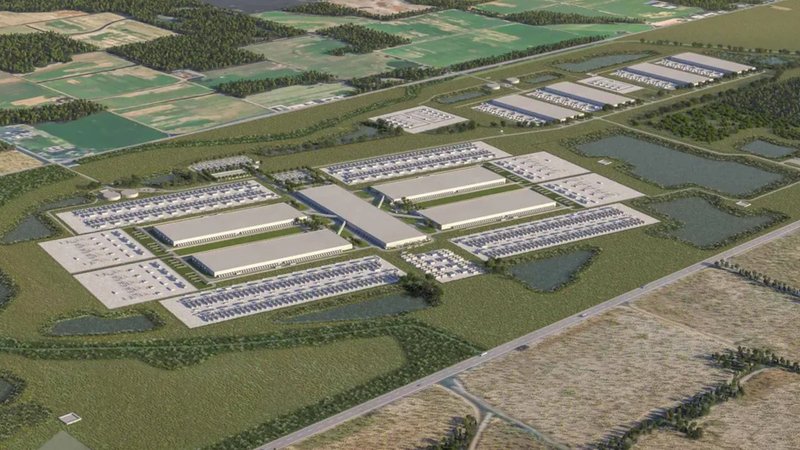
Anthropic, a leading player in the Large Language Models (LLM) landscape, is exploring new strategic directions for its infrastructure management. According to recent reports, the company is evaluating direct data center leases, a move that indicates a significant strengthening of its infrastructure investment. This initiative, supported by Google, underscores the growing importance of granular control over hardware and the deployment environment for large-scale AI operations.
The decision to opt for dedicated data centers, rather than relying solely on standard public cloud services, reflects an emerging trend among companies developing and managing complex LLMs. The goal is often twofold: to optimize performance and long-term costs, while ensuring greater data sovereignty and security for processed data. For intensive workloads such as AI model training and inference, the underlying infrastructure becomes a critical success factor.
The Advantages of Direct Hardware Control
Direct data center leasing or adopting a self-hosted approach offers organizations like Anthropic several strategic advantages. Firstly, it allows for unprecedented control over hardware, including the selection of specific GPUs (such as NVIDIA A100 or H100) and the configuration of high-bandwidth networks, essential for distributed parallelism in LLM training. This control translates into greater performance predictability, reducing latency and increasing throughput compared to a multi-tenant environment.
Secondly, an on-premise or dedicated data center deployment can lead to a lower Total Cost of Ownership (TCO) in the long run, especially for constant and intensive workloads. While the initial investment (CapEx) may be higher, recurring operational costs associated with intensive cloud usage can quickly outweigh the benefits of flexibility. Furthermore, data sovereignty and regulatory compliance are crucial aspects for many companies, and dedicated infrastructure facilitates adherence to stringent requirements, even in air-gapped environments.
The Role of Google's Support in a Hybrid Context
Google's support in Anthropic's infrastructure strategy is a key element worth noting. While Google Cloud is a robust platform for AI, the fact that Anthropic is exploring direct data center leases suggests a collaboration that goes beyond simple IaaS provision. This support could manifest in various forms: from access to specific Google hardware technologies, such as TPUs, to engineering expertise for infrastructure optimization, or even a hybrid model combining dedicated resources with cloud flexibility for variable workloads.
This synergy highlights how even AI industry giants are seeking customized infrastructure solutions to maximize the efficiency and scalability of their models. It is not necessarily an abandonment of the cloud, but rather an evolution towards hybrid or multi-cloud architectures, where the most critical and costly resources are managed with more direct control, while the cloud can be used for less sensitive tasks or demand spikes.
Implications for Tech Decision-Makers
Anthropic's move offers important insights for CTOs, DevOps leads, and infrastructure architects who are evaluating deployment options for their AI/LLM workloads. The choice between on-premise, cloud, or a hybrid model is never trivial and depends on a multitude of factors, including TCO, performance requirements, data sovereignty, and operational complexity. Anthropic's example demonstrates that, for the most demanding applications, an investment in dedicated infrastructure can be a winning strategic choice.
For those evaluating on-premise deployments, analytical frameworks are available on AI-RADAR at /llm-onpremise to compare the trade-offs between different options. The trend is clear: as LLMs become larger and more pervasive, the management of the underlying infrastructure evolves, pushing towards solutions that optimally balance control, cost, and performance. The ability to orchestrate an environment that supports the fine-tuning and inference of complex models, while maintaining necessary flexibility, will be a key differentiator in the near future.








💬 Comments (0)
🔒 Log in or register to comment on articles.
No comments yet. Be the first to comment!