
Having the most powerful model is no longer enough: what matters now is how it reaches users. That’s the interpretation Anthropic, the company behind the Claude model, has put forward in an analysis reported by DIGITIMES, shifting the focus from raw performance to what it calls the “delivery” of artificial intelligence.
This redefines the landscape for anyone assessing on-premise deployment, because the center of gravity moves from chasing ever-larger models — often inaccessible outside hyperscale data centers — toward designing delivery pipelines that balance latency, cost, security, and compliance. In this context, hardware specifications cease to be a technical afterthought: VRAM, memory bandwidth, and the ability to run local inference with aggressive quantization become competitive levers on par with transformer architecture.
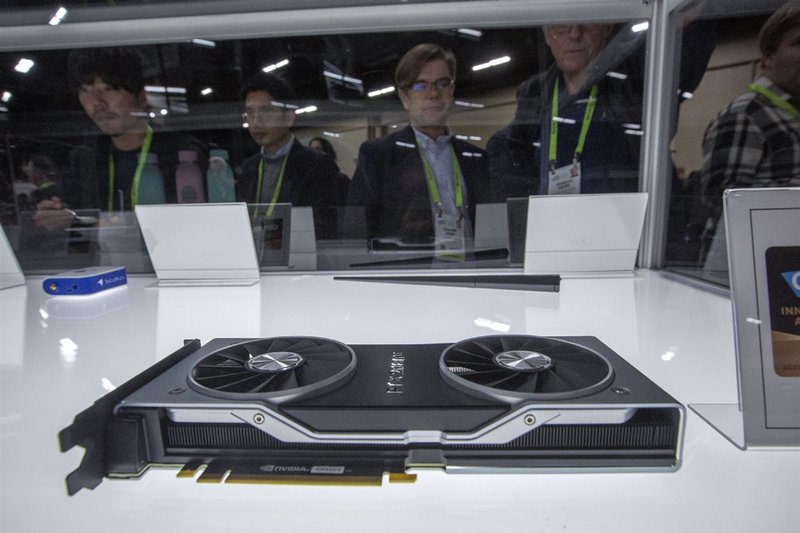
For infrastructure providers, the signal is clear: demand will fragment, rewarding those who offer hybrid and self-hosted solutions, not just cloud APIs. Chip makers that enable efficient inference on enterprise racks — from NVIDIA’s latest GPUs to specialized accelerators — gain strategic weight. Conversely, labs focused exclusively on model pre-training risk becoming commodity suppliers unless they vertically integrate distribution.
A convergence between the application layer and infrastructure is taking shape: the organizations best positioned will be those able to orchestrate open-source or proprietary LLMs on environments that guarantee data sovereignty, reducing dependence on closed ecosystems. Anthropic’s insight, while stopping short of a technical roadmap, points to a market where value accumulates around the ability to bring AI to the data, rather than forcing data to travel to the AI.
For decision-makers weighing the TCO of on-premise infrastructure, the analytical framework AI-RADAR offers at /llm-onpremise becomes a tool for navigating this transition, evaluating not just raw performance but the full deployment lifecycle. If the future of competition lies in delivery, then the next wave of innovation might not be a new benchmark record, but one fewer server in the data center of an organization that finally controls its own data.








💬 Comments (0)
🔒 Log in or register to comment on articles.
No comments yet. Be the first to comment!