
The LLM Debate and the Fable Case
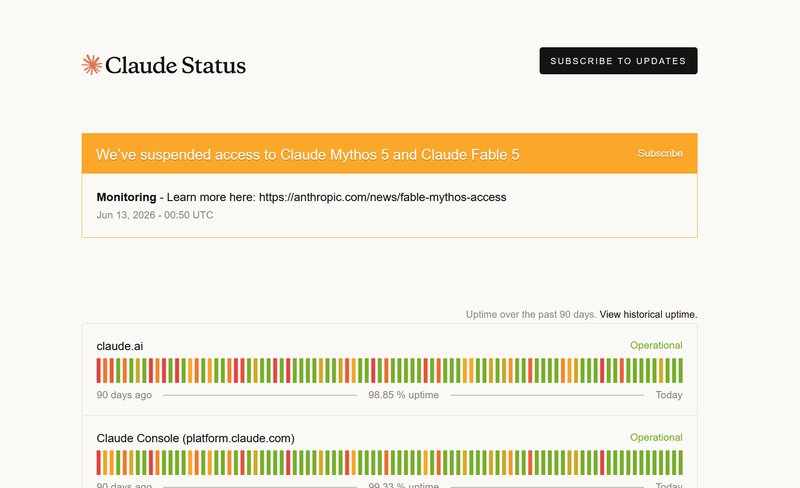
The discussion surrounding the necessity of adopting local Large Language Models (LLMs) has gained new momentum from a recent report within the tech community. According to community submissions, Anthropic, a leading LLM developer, is reportedly "nerfing" or intentionally limiting the capabilities of its Fable model when it is prompted to generate or develop other LLMs. This practice, which implies a deliberate reduction in performance or functionality in specific contexts, has reignited the debate on reliance on cloud-based models and the implications for data sovereignty and corporate control.
The incident, originally shared on community platforms, highlights a growing concern among developers and enterprises: the possibility that cloud model providers might impose restrictions or alter the behavior of their LLMs in non-transparent ways. For organizations considering LLMs as critical infrastructure, the lack of full control over the internal workings of these tools represents a significant risk.
Implications of Imposed Limitations
A provider's decision to intentionally limit an LLM's capabilities, as in the case of Fable, can stem from various motivations. These may include preventing misuse, complying with ethical guidelines, managing competition, or protecting intellectual property. Regardless of the specific reason, the effect for the end-user is a reduction in the model's flexibility and predictability. This scenario is particularly problematic for enterprises intending to use LLMs for sensitive or innovative tasks, where the model's full capacity and reliability are essential.
The issue is not merely about raw performance but also about an organization's ability to customize and control the model's output without external interference. In an enterprise environment, where regulatory compliance and data security are absolute priorities, the idea that a model can be modified remotely by its creator raises serious concerns about governance and trust.
The Urgency of On-Premise Deployments
This type of incident strengthens the argument for on-premise or self-hosted LLM deployments. Adopting local solutions allows companies to maintain complete control over hardware infrastructure, software, and, crucially, model behavior. Data sovereignty is a key factor: sensitive data never leaves the company's controlled environment, mitigating risks related to privacy and compliance, such as GDPR.
An on-premise deployment also offers the freedom to fine-tune models with proprietary datasets without concerns about exposure or provider-imposed restrictions. Although implementing on-premise LLMs requires an initial investment (CapEx) in hardware, such as GPUs with adequate VRAM, and internal expertise for infrastructure management, the long-term benefits in terms of control, security, and TCO can outweigh the initial costs. For those evaluating on-premise deployments, AI-RADAR offers analytical frameworks on /llm-onpremise to assess the trade-offs between costs, performance, and sovereignty requirements.
Future Perspectives for Enterprises
Anthropic's Fable case serves as a warning for companies relying on third-party LLM services. The choice between a cloud-based approach and an on-premise deployment is not merely a technical one but a strategic decision impacting security, compliance, and operational autonomy. CTOs, DevOps leads, and infrastructure architects must carefully evaluate the constraints and trade-offs associated with each option.
While cloud-based models offer scalability and reduced initial operational costs, on-premise solutions guarantee unprecedented control over the model's lifecycle, from its implementation to its daily management. In a rapidly evolving technological landscape, the ability to maintain control over one's AI assets will become a crucial competitive differentiator for organizations aiming to innovate securely and independently.







💬 Comments (0)
🔒 Log in or register to comment on articles.
No comments yet. Be the first to comment!