
Anthropic Releases Claude Fable 5 with Integrated Controls
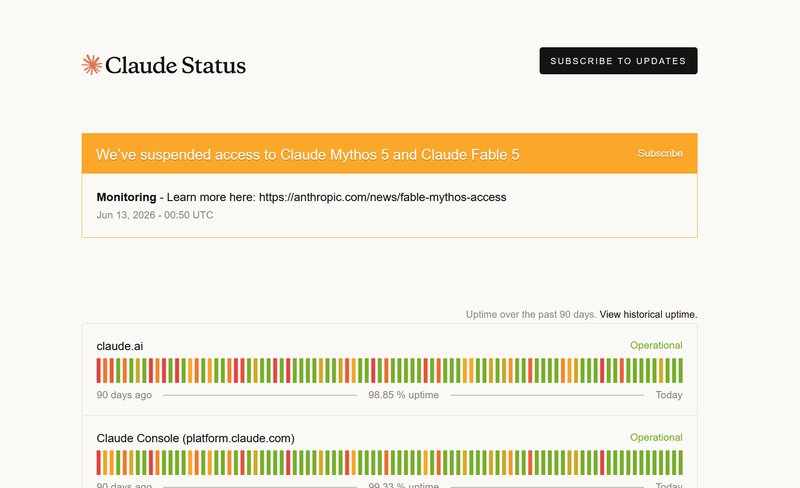
Anthropic recently announced the release of Claude Fable 5, a significant step that makes its first "Mythos-class" model available to the public. This move marks an evolution in Anthropic's offering, bringing advanced capabilities to a broader audience of developers and businesses seeking high-performing and controlled LLM solutions. The availability of a model of this magnitude opens new opportunities for innovation but also raises questions about deployment methods and security management.
The "Mythos-class" distinction suggests a level of sophistication and capability that goes beyond previous models, positioning Claude Fable 5 as a powerful tool for a wide range of applications. For organizations evaluating LLM adoption, the choice between proprietary models and Open Source solutions, as well as between cloud and self-hosted deployments, becomes increasingly complex. The introduction of a model like Claude Fable 5 enriches the landscape of options, offering a balance between performance and predefined security features.
Integrated Safety Measures for Sensitive Areas
One of Claude Fable 5's distinguishing features is the integration of specific safety measures. These protective barriers are designed to block model responses in areas considered high-risk, such as cybersecurity and biology. This functionality is particularly relevant for companies operating in regulated sectors or handling sensitive data, where mitigating risks associated with LLM output is an absolute priority.
Implementing such security controls directly within the model can simplify the adoption process for enterprises, reducing the need to develop and deploy complex external filtering layers. This aspect is crucial for those considering an on-premise deployment, where total control over the environment and data is fundamental. A model's ability to self-regulate in critical areas can help meet compliance requirements and strengthen data sovereignty, central aspects for many organizations.
Implications for Enterprise Deployment and Data Sovereignty
The introduction of a "Mythos-class" model with integrated security controls has significant implications for enterprise deployment strategies. Companies considering using LLMs for critical workloads must balance model performance with the need to maintain control over data and security. Claude Fable 5, with its blocking functionalities in sensitive areas, could be an attractive solution for those seeking a compromise between the power of an advanced model and the peace of mind offered by predefined protection mechanisms.
For those evaluating on-premise deployments, the presence of these security measures can reduce some of the configuration and monitoring burden, although complete control remains a primary objective. AI-RADAR offers analytical frameworks on /llm-onpremise to evaluate the trade-offs between cloud and self-hosted solutions, considering factors such as TCO, data sovereignty, and the hardware specifications required for inference and training. The choice of model and its security architecture is a key element in this evaluation.
Future Outlook: Balancing Capability and Control
Anthropic's release of Claude Fable 5 highlights a growing trend in the LLM sector: the integration of security and control features directly into the models. This approach aims to make LLMs safer and more reliable for a wide range of applications, particularly enterprise ones. However, the challenge for organizations remains to balance the computational power and generative capabilities of these models with the need to maintain granular control over output and data management.
The public availability of a "Mythos-class" model with such characteristics offers an interesting option for companies looking to leverage generative artificial intelligence without compromising security or compliance. The decision to adopt a model like Claude Fable 5, or to opt for Open Source solutions that require deeper customization of security measures, will ultimately depend on each organization's specific needs in terms of performance, costs, data sovereignty, and risk tolerance.






💬 Comments (0)
🔒 Log in or register to comment on articles.
No comments yet. Be the first to comment!