Anthropic and the Export Control Issue
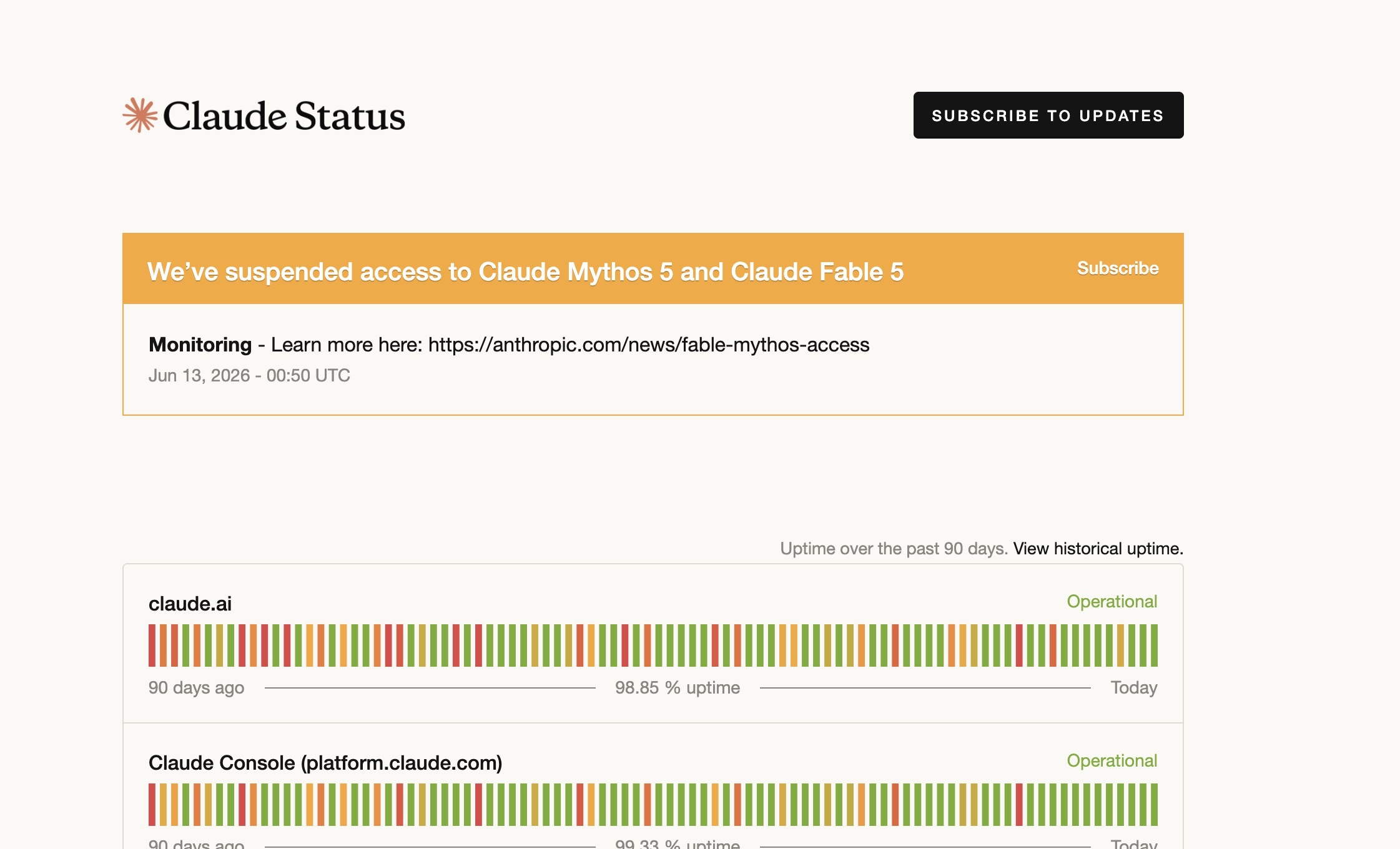
Anthropic, a leading player in the Large Language Models (LLM) landscape, recently announced the suspension of access to its Fable 5 and Mythos 5 models. The decision, communicated over the weekend, was prompted by specific concerns related to export control. This episode underscores a growing complexity in the sector, where geopolitical dynamics and international regulations can directly impact the availability and use of advanced technologies.
The interruption of access to models of this magnitude represents a significant event, which immediately generated discussions within the tech community. Although the specific details of the export control concerns have not been made public, Anthropic's move highlights how even LLM providers must navigate an increasingly stringent regulatory landscape, especially for technologies that may be considered "dual-use."
LLMs as Dual-Use Technologies and Regulatory Implications
Large Language Models, given their versatility and advanced capabilities, are increasingly classified as dual-use technologies. This means that, while having beneficial civilian applications, they can potentially also be used for military purposes or in sensitive contexts. This classification subjects them to rigorous export control regimes, aimed at preventing the proliferation of critical technologies to unauthorized actors or nations.
Managing such regulations is complex and requires LLM providers to carefully evaluate not only the technical aspects of their models but also the geopolitical context in which they are released and used. Restrictions can apply not only to the software or the model itself but also to access to computing infrastructure, training data, or even collaboration with foreign entities. This scenario compels companies to adopt a proactive approach to compliance, to avoid sudden interruptions like the one observed with Fable 5 and Mythos 5.
The Impact on On-Premise Deployment and Data Sovereignty
For organizations evaluating LLM deployment, the Anthropic episode serves as a clear warning. Dependence on external models or services, even when seemingly "Open Source" or easily accessible, can entail significant risks in terms of operational continuity and data sovereignty. A sudden interruption of access, due to external factors such as export controls, can paralyze critical projects and workflows.
This strengthens the argument for self-hosted and on-premise deployment strategies, where companies maintain full control over infrastructure, data, and models. Adopting an air-gapped or otherwise strictly controlled approach minimizes exposure to external geopolitical and regulatory risks, ensuring that AI workloads can operate without unexpected interruptions. The evaluation of the Total Cost of Ownership (TCO) for on-premise deployments must therefore include not only hardware and software costs but also the value of operational resilience and compliance. For those evaluating these options, AI-RADAR offers analytical frameworks on /llm-onpremise to explore the trade-offs.
A Future Outlook for the AI Sector
Anthropic's action highlights a growing trend: AI technology, and Large Language Models in particular, is increasingly at the center of regulatory and geopolitical attention. Companies developing and using these models must prepare for an environment where compliance and risk management will be as crucial as technical innovation. This implies greater attention to model provenance, usage licenses, and potential geographical restrictions.
In a context where data sovereignty and control over one's own infrastructure become priorities, the ability to deploy and manage LLMs in controlled and secure environments is no longer just a competitive advantage but a strategic necessity. The sector is called upon to develop solutions that balance openness and collaboration with the need for compliance and security, ensuring that innovation can proceed responsibly and resiliently.








💬 Comments (0)
🔒 Log in or register to comment on articles.
No comments yet. Be the first to comment!