
Apple's Surprise: AI Demand Drives Mac Beyond Expectations
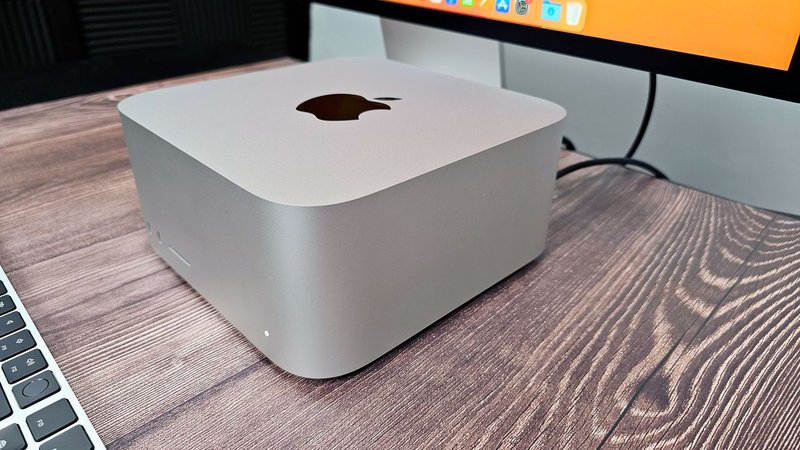
Apple recently expressed surprise at an unexpected surge in demand for its Mac computers, attributing this significant growth to the adoption of artificial intelligence workloads. The company announced that it anticipates facing supply constraints for the Mac mini, Mac Studio, and the mysterious Mac Neo models in the coming quarter. This statement highlights an emerging trend in the technological landscape: a growing preference for executing AI operations directly on local hardware.
The interest in AI on client devices and workstations is not new, but its acceleration is redefining market expectations. For businesses and developers, the ability to process AI models locally offers distinct advantages, from data sovereignty to reduced latency, crucial aspects for sensitive applications and environments with stringent requirements.
The Role of Local Hardware in the AI Ecosystem
The "AI-driven" demand for Macs underscores the increasing appeal of local hardware for the development and Inference of artificial intelligence models. Apple Silicio chips, known for their unified memory architecture, offer energy efficiency and memory bandwidth that can be particularly advantageous for AI workloads, especially for running smaller Large Language Models (LLM) or for Fine-tuning existing models. This configuration allows for managing large datasets and complex models without the need to constantly transfer data between CPU and GPU, reducing bottlenecks and improving overall performance.
While data centers based on high-end GPUs like NVIDIA H100s remain the standard for large-scale LLM training, Macs with Apple Silicio are positioning themselves as competitive solutions for on-premise or edge deployment scenarios. Their ability to perform Inference efficiently and support local AI development Frameworks makes them valuable tools for teams that require flexibility and direct control over their infrastructure.
Implications for On-Premise Deployments and Data Sovereignty
Apple's anticipated supply constraints for Mac mini, Mac Studio, and Mac Neo reflect demand exceeding forecasts, driven by specific needs of the AI sector. For CTOs, DevOps leads, and infrastructure architects, this trend confirms the validity of an approach that prioritizes on-premise deployment for certain AI applications. The choice to process sensitive data locally, for example, is often dictated by compliance requirements, data sovereignty regulations, or the need to operate in Air-gapped environments.
Total Cost of Ownership (TCO) considerations play a fundamental role in these decisions. Although the initial investment in hardware can be significant, the elimination of recurring operational costs associated with cloud services and the greater energy efficiency of modern chips can lead to substantial long-term savings. The ability to maintain complete control over the entire development and Deployment Pipeline, from data management to security, is a decisive factor for many organizations.
The Future of AI Between Cloud and Edge
Apple's surprise at the AI-driven demand for Macs is not an isolated event but an indicator of a broader evolution in the artificial intelligence landscape. While cloud computing continues to offer scalability and access to massive resources, the importance of AI processing at the edge and on-premise is constantly growing. This dichotomy between centralization and decentralization is shaping deployment strategies for businesses of all sizes.
For those evaluating Self-hosted alternatives versus cloud-based solutions for LLM workloads, it is essential to carefully consider the trade-offs between costs, performance, security, and control. AI-RADAR, for instance, offers analytical Frameworks on /llm-onpremise to support these evaluations, providing tools to analyze the constraints and opportunities of each approach. Apple's ability to meet this rapidly growing demand will be an important test for its supply chain and a barometer for the evolution of the local AI market.









💬 Comments (0)
🔒 Log in or register to comment on articles.
No comments yet. Be the first to comment!