
Applied Materials' Surge in the AI Market
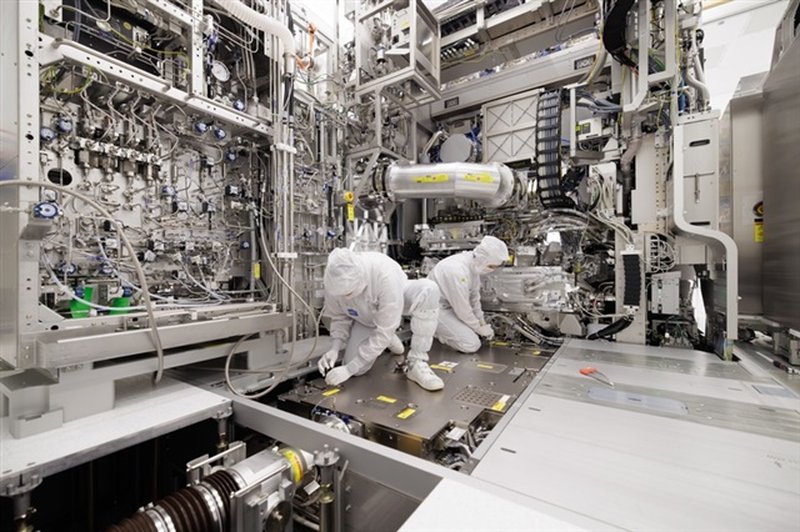
Applied Materials has reported a remarkable financial achievement, reaching its highest margin in 25 years. This milestone underscores a period of strong growth for the semiconductor industry, a critical sector for global technological advancement. The company, a supplier of chip manufacturing equipment, finds itself at the center of unprecedented demand.
This momentum is directly attributable to an "equipment boom," a phenomenon reflecting accelerating investments in artificial intelligence-dedicated infrastructure. The race to develop and deploy AI solutions is generating massive demand for advanced hardware components, from processors to memory, which in turn depend on the machines produced by companies like Applied Materials.
Agentic AI and its Hardware Implications
The engine behind this growth is identified as the emergence of "agentic AI." This category of artificial intelligence is distinguished by its ability to plan, execute, and monitor complex actions autonomously, often interacting with its environment and making sequential decisions. Unlike simpler models that respond to single prompts, AI agents require longer processing cycles and more sophisticated state and memory management.
The computational demands of agentic AI are significant. To support these workloads, companies require hardware with high computing capabilities, abundant VRAM, and high throughput. This includes latest-generation GPUs, high-speed storage solutions, and low-latency network interconnects. Such requirements drive the demand for cutting-edge manufacturing equipment capable of producing increasingly dense and performant silicon.
The Context of On-Premise Deployment and TCO
The increasing complexity and hardware requirements for agentic AI directly impact deployment decisions for enterprises. Many organizations, particularly those with stringent data sovereignty requirements, regulatory compliance, or the need for air-gapped environments, are evaluating or strengthening their self-hosted or bare metal deployment strategies. The ability to maintain complete control over the entire AI pipeline, from data management to inference, is a decisive factor.
In this scenario, the Total Cost of Ownership (TCO) of on-premise infrastructure becomes a crucial metric. While the initial investment (CapEx) can be high for purchasing servers, GPUs, and network equipment, careful planning can lead to lower operational costs (OpEx) in the long term compared to cloud-based models, especially for intensive and predictable AI workloads. For those evaluating on-premise deployments, AI-RADAR offers analytical frameworks on /llm-onpremise to assess these trade-offs.
Future Prospects for AI Infrastructure
Applied Materials' success reflects a broader trend: artificial intelligence is no longer a niche technology but a fundamental component of business strategies. The continuous evolution of Large Language Models (LLM) and the adoption of paradigms like agentic AI will continue to drive innovation and demand in the semiconductor and IT infrastructure sectors.
Companies looking to implement advanced AI solutions must carefully consider their hardware needs and deployment implications. The ability to scale infrastructure, manage costs, and ensure data security will remain a top priority, with the equipment market continuing to respond to these challenges with increasingly performant and specialized solutions.






💬 Comments (0)
🔒 Log in or register to comment on articles.
No comments yet. Be the first to comment!