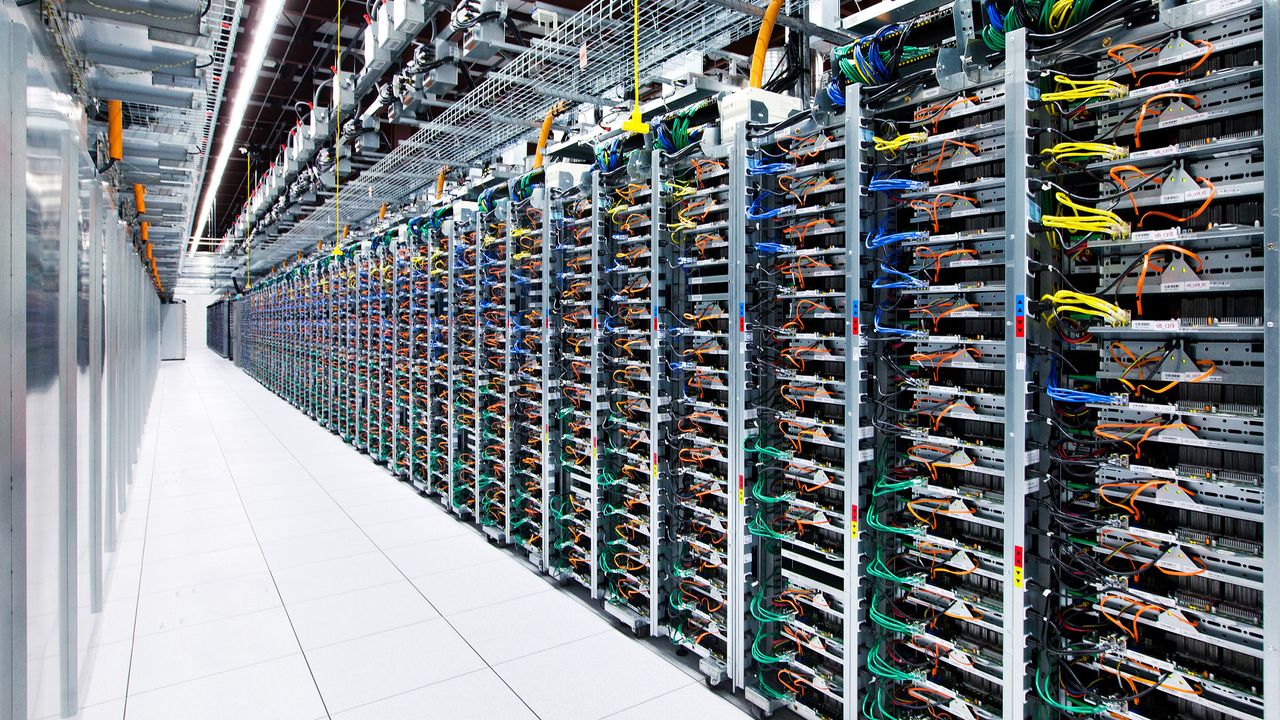
A historic overtaking is reshaping the balance of cloud and on-premise infrastructure: for the first time, servers based on Arm architecture account for over 45% of global data center revenue. The latest market data confirms an unprecedented acceleration tied to the expansion of generative AI and workloads for inference and training of large language models.
Arm's silent surge
Just a few years ago, x86 servers dominated unchallenged with market shares above 90%. Arm's rise, driven by processors like Amazon Web Services' Graviton and the recent Ampere Altra, has eroded that monopoly thanks to a key advantage: energy efficiency. At a time when power consumption has become a critical variable of Total Cost of Ownership (TCO), the low-power RISC design convinced hyperscalers first, then mid-sized enterprises.
The AI leverage effect
The decisive acceleration came from the AI race. GPU clusters training ever-larger models require dense compute nodes orchestrated by efficient CPUs. Many modern accelerators, such as NVIDIA Grace Hopper architectures, integrate Arm cores to reduce CPU-GPU communication bottlenecks. This has turned Arm platforms not just into an alternative, but often a mandatory choice in new AI-dedicated infrastructures.
What changes for on-premise adopters
For IT decision-makers evaluating on-premise deployment of AI workloads or seeking to host language models internally, this shift has concrete implications. On one hand, more mature Arm servers mean access to potentially lower-energy hardware, with positive effects on operational cost. On the other, questions remain about software compatibility: not all LLM frameworks run natively on Arm without adaptation, though the landscape is evolving rapidly, with projects like PyTorch and TensorFlow now optimized for the architecture.
AI-RADAR's perspective: open architecture and technological sovereignty
In a climate of increasing focus on data sovereignty and infrastructure control, hardware diversification is a strategic factor. Arm's ascendancy introduces greater competition in the server market, reducing dependency on a single x86 vendor. For those who intend to keep data on-site and operate in air-gapped environments, the ability to choose processors based on open specifications and with lower power consumption aligns budget constraints with compliance requirements. AI-RADAR will continue to track the impact of these developments on local deployment choices, offering analysis and tools to navigate trade-offs between performance, consumption, and architectural freedom.







💬 Comments (0)
🔒 Log in or register to comment on articles.
No comments yet. Be the first to comment!