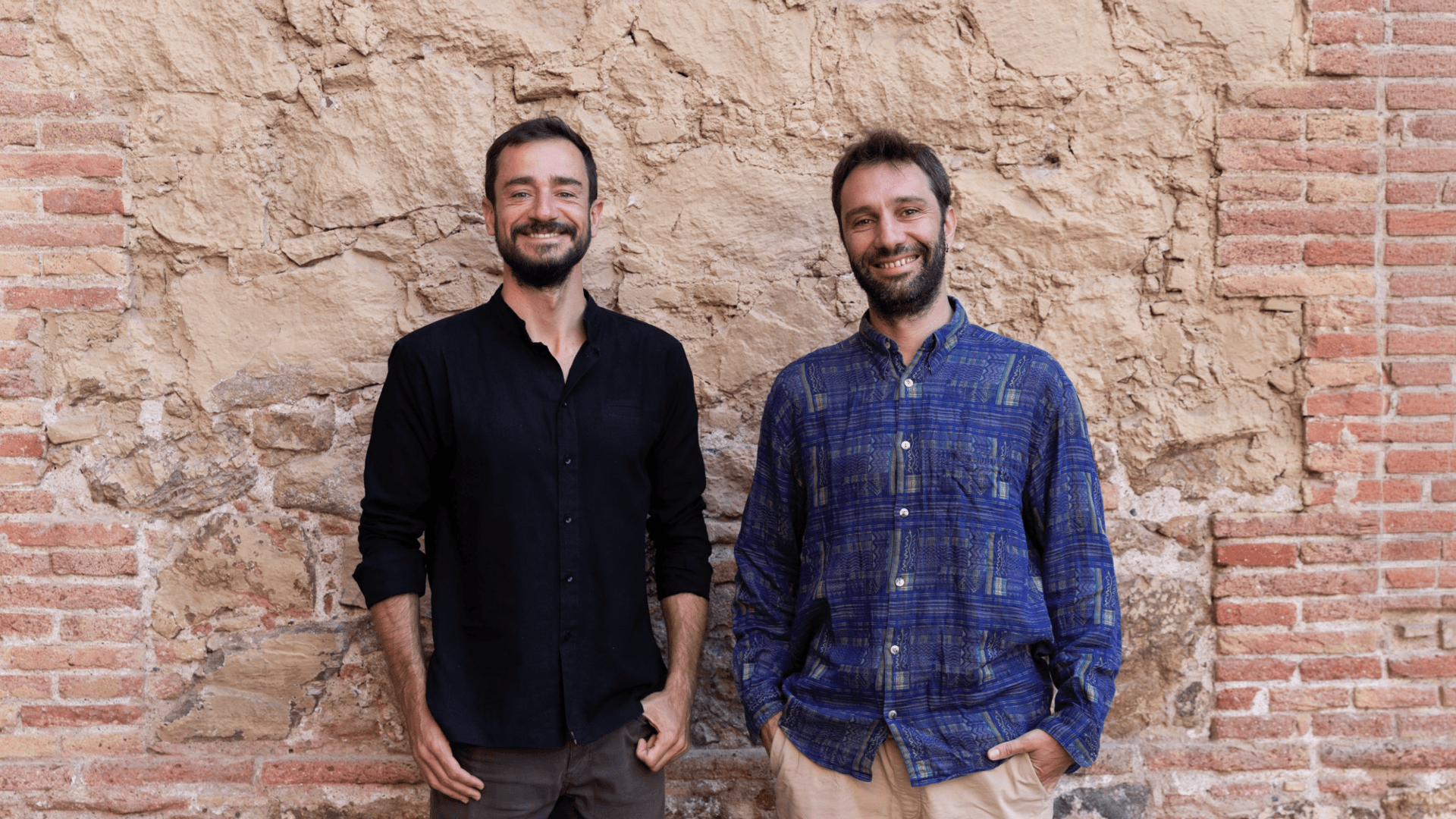
A million and four hundred thousand dollars may seem a modest figure in venture capital, but when it funds the construction of quantum repeaters, it becomes a tangible signal that the quantum internet is moving beyond pure speculation. Arq, a UK startup founded in 2025 by physicists Samuele Grandi and Emanuele Distante, has just closed a pre-seed round led by Ground State Ventures with participation from Big Sur Ventures. The goal is to accelerate the development of quantum memories based on rare-earth doped crystals, paired with photon-pair sources, to create repeaters capable of linking quantum computers over geographical distances.
The core innovation is multiplexing: the ability to store and transmit multiple photons simultaneously, increasing the speed and efficiency of communication over fiber optic networks. Compared to traditional approaches that handle one photon at a time, this method promises superior performance and lower costs—two critical factors for moving from laboratory prototypes to metropolitan-scale networks and, eventually, national ones.
But the real stake goes beyond speed. The quantum internet opens up scenarios of security and data sovereignty that classical infrastructures simply cannot match. Quantum key distribution, for instance, makes communications immune to eavesdropping, a feature that industries like finance, healthcare, and defense have long deemed essential. Here a parallel emerges with trends in artificial intelligence: just as many organizations are shifting LLM inference on-premise to retain control over sensitive data, quantum networks could enable distributed processing where computing nodes remain physically within corporate perimeters, connected by unbreachable channels. It is no coincidence that Arq cites finance and healthcare among its first use cases—these are the same environments driving demand for local, regulation-compliant AI under frameworks like GDPR.
The investment will be used to build a state-of-the-art laboratory and to refine the reproducibility and reliability of quantum memories, two aspects that have so far limited the scalability of these technologies. The promise of quantum-exclusive networks, as Distante calls them, could lower the barrier for companies wishing to experiment with quantum computing without relying on public clouds. This direction reshapes the balance between centralized service providers and private infrastructures, and will likely foster hybrid partnerships with research centers and telecom operators.
Arq is not alone in this race, but its focus on multiplexing with rare-earth crystals marks a different path from competitors betting on cold-atom or diamond-based repeaters. If the team can deliver the promised reproducibility, the $1.4 million round may be remembered as one of the first building blocks of an infrastructure that, within the next decade, will turn distributed quantum computing from an experiment into an operational reality.









💬 Comments (0)
🔒 Log in or register to comment on articles.
No comments yet. Be the first to comment!