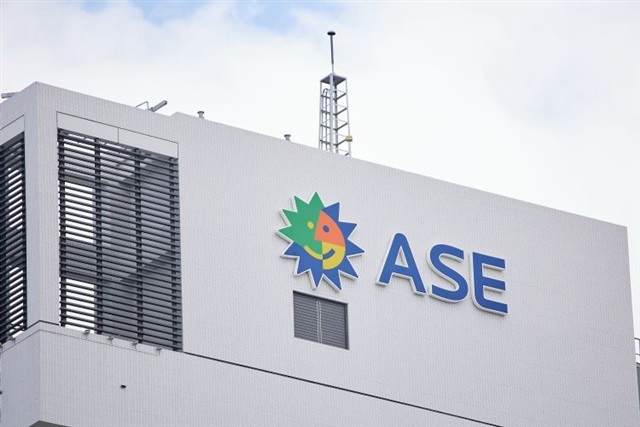
ASE Holdings, a Taiwanese semiconductor giant specializing in packaging and testing, posted record revenue in Q2 2026. And it’s not just that: the company is putting $40 million on the table to expand its presence in South Korea, just as demand for advanced packaging for artificial intelligence is exploding.
Behind the numbers lies a dynamic that directly affects anyone planning on-premise AI infrastructure. Packaging – the encapsulation of chips with memory and interconnects – has become the most pinched point in the supply chain. Without sufficient capacity for techniques like CoWoS (Chip-on-Wafer-on-Substrate), GPU and accelerator manufacturers struggle to deliver. Lead times lengthen for those wanting to build private computing clusters, whether in enterprise data centers, at the edge, or in air-gapped environments.
ASE’s decision to invest in South Korea is a structural signal. It’s not just about volumes; it’s about the geopolitics of technology. The concentration of advanced packaging in Taiwan has made the entire supply chain vulnerable to regional tensions and export restrictions. Diversifying to South Korea – already home to memory giants like Samsung and SK Hynix – means creating a second production leg, closer to customers who want to reduce unilateral dependency risk. For European and American companies evaluating on-premise deployments, there are concrete repercussions: greater supply resilience could translate into less erratic procurement cycles and, over the medium term, a more predictable TCO for self-hosted systems.
It’s not all geopolitics. Advanced packaging is a performance multiplier for LLM inference and training. Tight integration between logic die and high-bandwidth memory (HBM) is what allows increasingly large models to run with acceptable latencies. Every packaging bottleneck feeds directly into AI hardware availability, and thus into an organization’s ability to maintain data sovereignty by running workloads in-house rather than in the cloud.
ASE’s expansion in South Korea, therefore, is not just a market move. It’s a piece of a broader reshuffle, in which the capacity to manufacture and assemble AI chips spreads across multiple countries to avoid bottlenecks. For those building their own on-premise infrastructure, keeping an eye on these movements is crucial: you don’t design an AI cluster without knowing when and how the cards will arrive, and ASE’s bet could be one of the factors that determine real delivery times in 2026–2027.





💬 Comments (0)
🔒 Log in or register to comment on articles.
No comments yet. Be the first to comment!