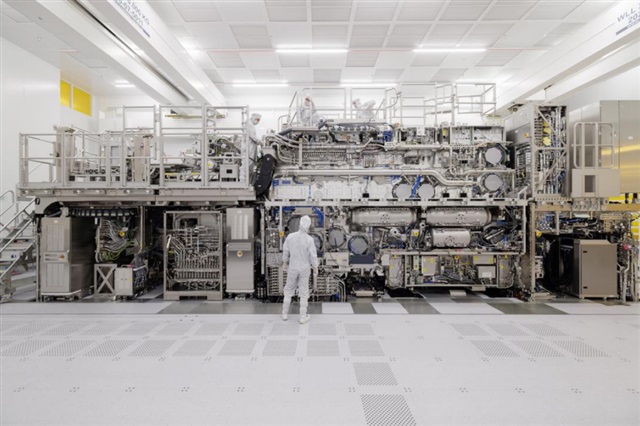
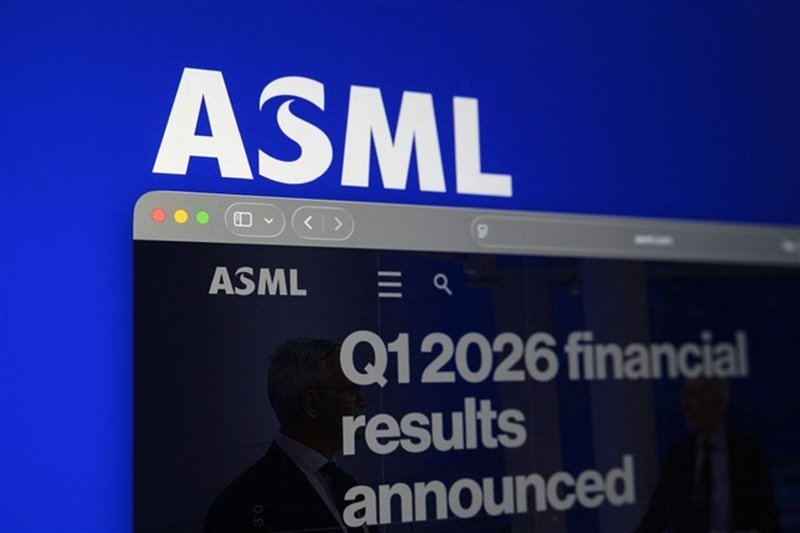
ASML, the Dutch company holding a near-monopoly on extreme ultraviolet (EUV) lithography machines, has raised its sales outlook for 2026, driven explicitly by the AI boom accelerating demand for advanced logic chips and high-bandwidth memory (HBM).
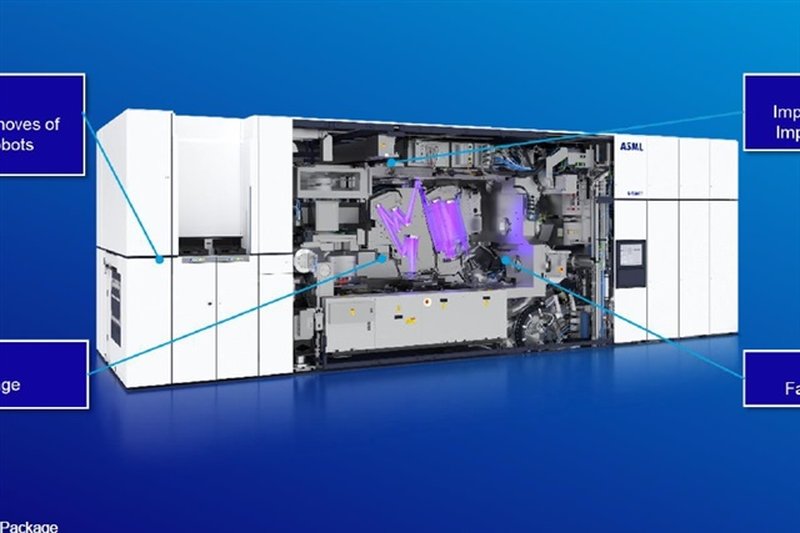
This isn’t just a financial indicator. It confirms a structural shift that concerns anyone evaluating the adoption of Large Language Models (LLMs) and AI workloads at the enterprise level. ASML’s EUV machines are currently the only technology capable of producing 5-nanometer and below nodes in volume, on which the most powerful GPUs and accelerators from NVIDIA, AMD, and major custom chip makers are fabricated. Even the migration of HBM – a critical component for GPU bandwidth – to more advanced lithography processes passes inevitably through ASML.
The acceleration signals that the pressure on the supply chain isn’t a temporary spike. Orders for EUV systems are placed years in advance, and the raised outlook implies that semiconductor manufacturers expect a much more aggressive capacity expansion than previously anticipated. For those planning on-premise AI infrastructure, this has second-order implications: on one hand, potentially broader chip supply in the medium term, which could reduce GPU lead times and ease Total Cost of Ownership (TCO) pressures; on the other, even fiercer competition for early volumes, as hyperscalers and cloud providers have contractual power and reserve production slots far ahead.
Then there’s the technology sovereignty angle. ASML’s position as sole supplier for advanced lithography is a geopolitical bottleneck. Every upward revision strengthens the company’s strategic role and, indirectly, the entire AI ecosystem’s dependence on a single chokepoint. This is a factor that enterprises concerned with data sovereignty and operational continuity should build into their risk analysis: the ability to rely on inference and training hardware produced at scale ultimately hinges on political and logistical decisions revolving around a handful of machines.
In short, ASML’s more optimistic outlook isn’t just good news for shareholders. It tells how AI demand is reshaping the physical foundations of computing, and that those evaluating self-hosted deployment strategies need to look beyond GPU pricing all the way to the semiconductor production chain to understand costs, risks, and opportunities.





💬 Comments (0)
🔒 Log in or register to comment on articles.
No comments yet. Be the first to comment!