ASML's denial: "Inaccurate and damaging rumors"
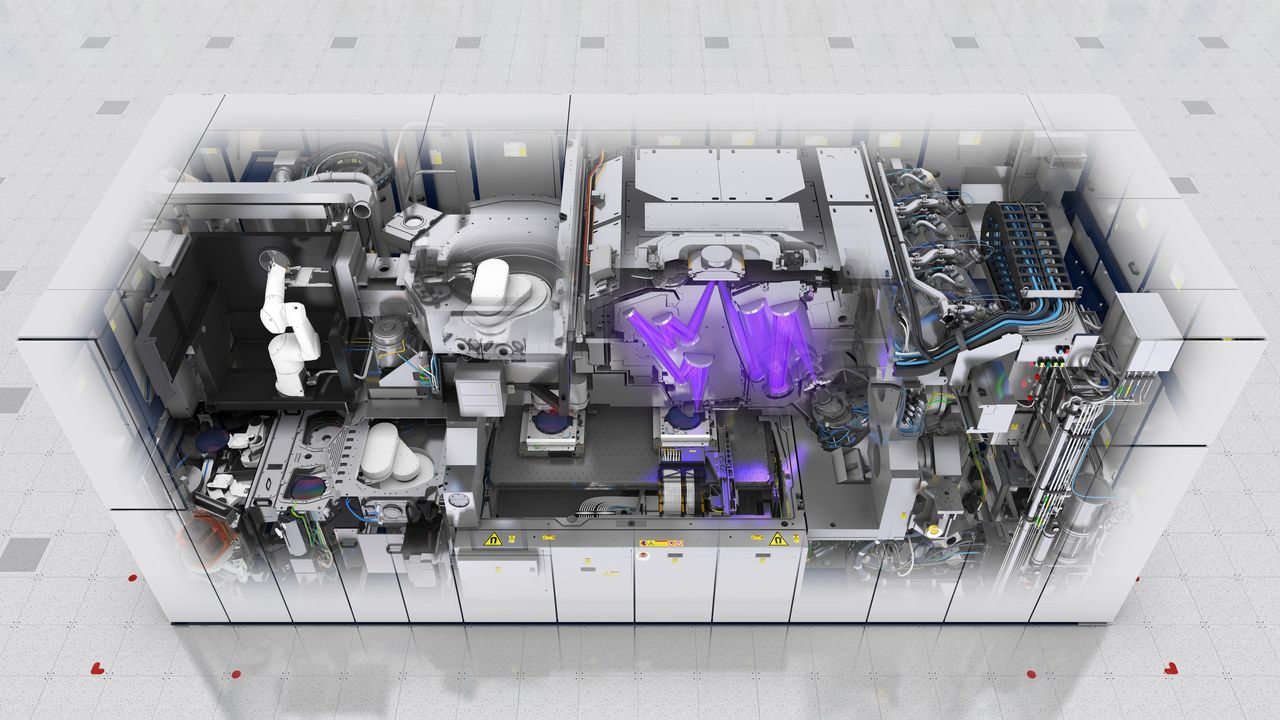
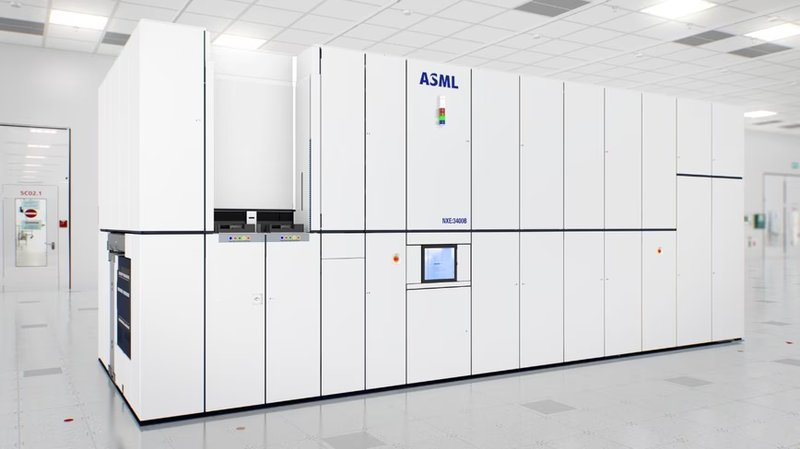
ASML, the Dutch lithography giant, has categorically denied the claims in a US government report that its extreme ultraviolet (EUV) lithography machines were shipped to China. In an official statement, the company called the information "rumors that are inaccurate and damaging to our reputation."
The event fits into the broader context of restrictions on exporting strategic technologies to Beijing, a front where Washington exerts constant pressure. ASML's EUV tools are considered a technological linchpin: without them, producing chips at advanced nodes (5 nanometers and below) is virtually impossible.
Why EUV lithography is the heart of AI chips
EUV lithography uses light at a wavelength of 13.5 nm to etch circuits onto silicon wafers, enabling smaller and denser transistors. These processes underpin GPUs, CPUs, and AI accelerators – essential components for running large-scale LLMs and machine learning workloads.
Without a steady flow of advanced chips, the entire AI ecosystem – especially on-premise deployments that rely on dedicated hardware – would face bottlenecks, affecting lead times, costs, and availability.
Semiconductor geopolitics: export controls and their effects
Since 2019, the United States has progressively tightened rules on exporting dual-use technologies to China, including EUV tools. ASML, which essentially holds a monopoly on these machines (each costing hundreds of millions of dollars and taking years to build), has never obtained licenses to sell them to Chinese customers. The US report, if verified, would thus constitute a serious breach.
ASML's denial does not fully ease tensions: competition between powers for control of the chip supply chain is now a cornerstone of global industrial strategy. For those managing data centers and AI infrastructure, the question is no longer just "which GPU to choose?" but "how reliable is the supply chain that delivers it?"
Implications for on-premise AI deployment
For organizations evaluating bringing LLM inference and training in-house (on-premise or air-gapped), hardware availability is a critical TCO factor. Any restrictions on the export of chip manufacturing tools can slow the entire production pipeline, affecting prices and extending component lead times.
The news, even if denied, serves as a reminder that technological sovereignty starts with production capacity. In Europe, the Chips Act aims to bolster local manufacturing, but the road is long. For IT decision-makers, adopting a flexible approach – evaluating alternative hardware or diversified sourcing strategies – may become an essential part of planning.
A broader perspective: the race for chip sovereignty
Beyond the specific case, the ASML affair shows how geopolitics is reshaping the semiconductor sector. Dependency on a single supplier for critical machinery is a systemic risk, not only for governments but also for businesses that leverage AI as a competitive advantage.
AI-RADAR will continue to monitor these developments, providing readers with analytical tools to navigate supply chain complexities and evaluate the best configurations for on-premise deployment, with constant attention to data sovereignty and cost efficiency.







💬 Comments (0)
🔒 Log in or register to comment on articles.
No comments yet. Be the first to comment!