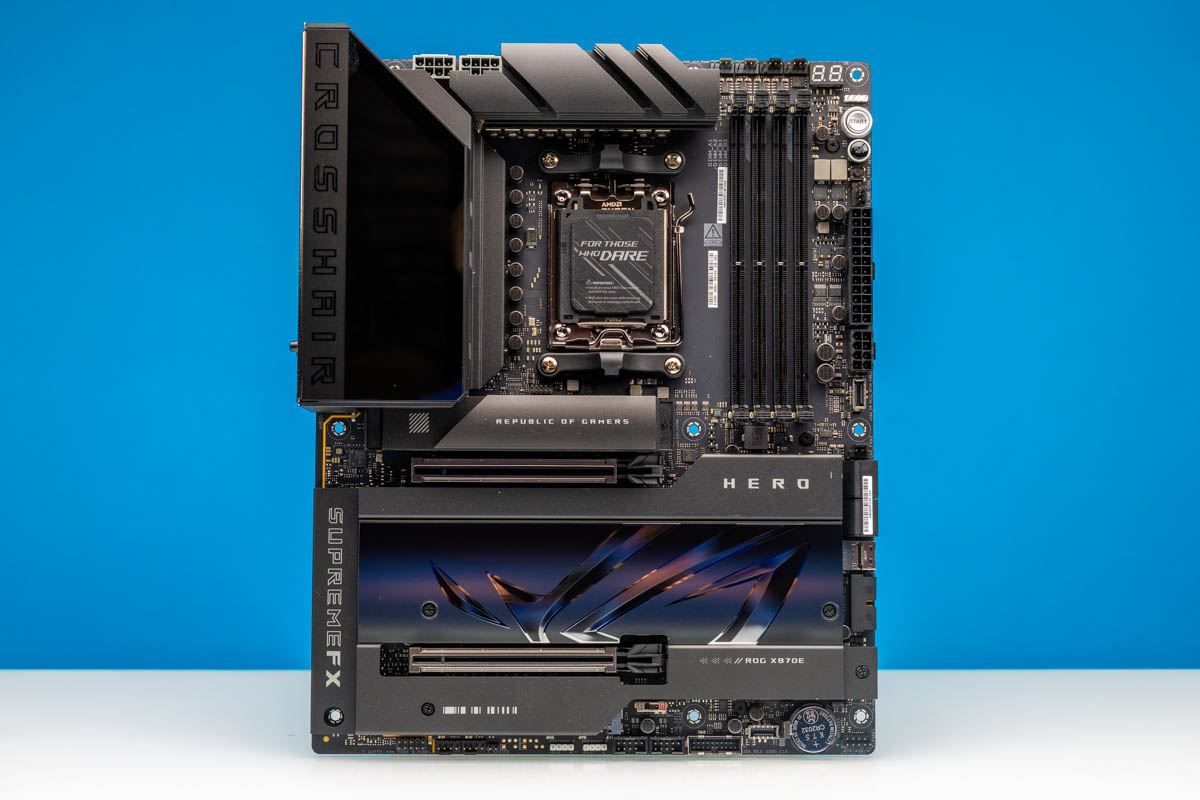
ASUS ROG Crosshair X870E Hero: Piattaforma AM5 per Carichi AI Locali
Nel panorama in rapida evoluzione dell'intelligenza artificiale, la scelta dell'hardware locale rappresenta un fattore critico per le aziende che puntano a mantenere il controllo sui propri dati e a ottimizzare i costi operativi. La scheda madre ASUS ROG Crosshair X870E Hero, progettata per il socket AMD AM5, emerge come una componente fondamentale in questo scenario, offrendo una base solida per la costruzione di server dedicati a carichi di lavoro AI e Large Language Models (LLM) on-premise. Questo "quick look" esplora il suo posizionamento e le implicazioni per gli architetti di infrastruttura e i responsabili DevOps.
Dettagli Tecnici e Implicazioni per l'AI
La piattaforma AMD AM5, su cui si basa la ASUS ROG Crosshair X870E Hero, supporta i processori Ryzen di ultima generazione, noti per le loro elevate prestazioni multi-core. Questa capacità è cruciale per l'esecuzione di LLM, dove la CPU può gestire l'orchestrazione dei carichi di lavoro, la pre-elaborazione dei dati e, in alcuni casi, l'inference di modelli più piccoli o la gestione di pipeline complesse. La scheda madre integra inoltre il supporto per la memoria DDR5, che garantisce una larghezza di banda superiore rispetto alle generazioni precedenti, essenziale per il rapido trasferimento di grandi dataset e per alimentare le GPU dedicate all'inference o al fine-tuning.
Un aspetto distintivo delle schede madri di fascia alta come la Crosshair X870E Hero è la ricchezza di funzionalità. Sebbene la fonte non specifichi ogni singola caratteristica, è prassi comune per questi modelli offrire un'alimentazione robusta per CPU e RAM, slot PCIe Gen5 per schede grafiche ad alte prestazioni (come le GPU NVIDIA o AMD per l'AI), e un'ampia connettività per lo storage NVMe ad alta velocità. Questi elementi sono indispensabili per configurazioni multi-GPU o per sistemi che richiedono un throughput elevato per l'elaborazione dei dati, elementi chiave per un deployment AI efficace.
Il Contesto del Deployment On-Premise
Per CTO e responsabili IT che valutano alternative self-hosted rispetto alle soluzioni cloud, una scheda madre come la ASUS ROG Crosshair X870E Hero rappresenta il cuore di un'infrastruttura locale. Il deployment on-premise offre vantaggi significativi in termini di sovranità dei dati, permettendo alle aziende di mantenere i propri asset informativi all'interno dei confini aziendali, rispettando normative stringenti come il GDPR o requisiti specifici per ambienti air-gapped. Questo approccio garantisce un controllo granulare sull'intero stack tecnicico, dalla sicurezza fisica all'ottimizzazione software, aspetti spesso più complessi da gestire in un ambiente cloud condiviso.
Inoltre, la costruzione di un'infrastruttura locale può portare a un TCO (Total Cost of Ownership) più favorevole nel lungo periodo, specialmente per carichi di lavoro AI intensivi e prevedibili. Sebbene l'investimento iniziale in hardware possa essere superiore, l'eliminazione dei costi ricorrenti legati all'utilizzo delle risorse cloud, unita alla possibilità di personalizzare l'hardware per specifiche esigenze di performance (ad esempio, ottimizzando la VRAM delle GPU o la latenza di rete), può tradursi in risparmi significativi e in una maggiore efficienza operativa. Per chi valuta deployment on-premise, AI-RADAR offre framework analitici su /llm-onpremise per valutare questi trade-off.
Prospettive Future e Considerazioni Finali
La disponibilità di piattaforme hardware robuste e ricche di funzionalità come la ASUS ROG Crosshair X870E Hero sottolinea la crescente maturità dell'ecosistema per l'AI locale. La capacità di assemblare sistemi potenti con componenti standard, ma di alta qualità, democratizza l'accesso a capacità di calcolo avanzate per l'AI, rendendole accessibili anche a organizzazioni che non desiderano o non possono affidarsi esclusivamente al cloud. La scelta di una scheda madre di questo calibro è quindi una decisione strategica che influenza non solo le prestazioni immediate, ma anche la scalabilità e la flessibilità future dell'infrastruttura AI.
È fondamentale considerare che la selezione di una scheda madre è solo un tassello di un puzzle più grande. La sua efficacia dipende dall'integrazione con CPU, GPU, memoria e soluzioni di storage adeguate, oltre a un'attenta pianificazione del software stack. L'obiettivo è sempre quello di bilanciare le esigenze di performance con i vincoli di budget e operativi, garantendo che l'infrastruttura AI sia non solo potente, ma anche sostenibile e sicura nel tempo.





💬 Commenti (0)
🔒 Accedi o registrati per commentare gli articoli.
Nessun commento ancora. Sii il primo a commentare!