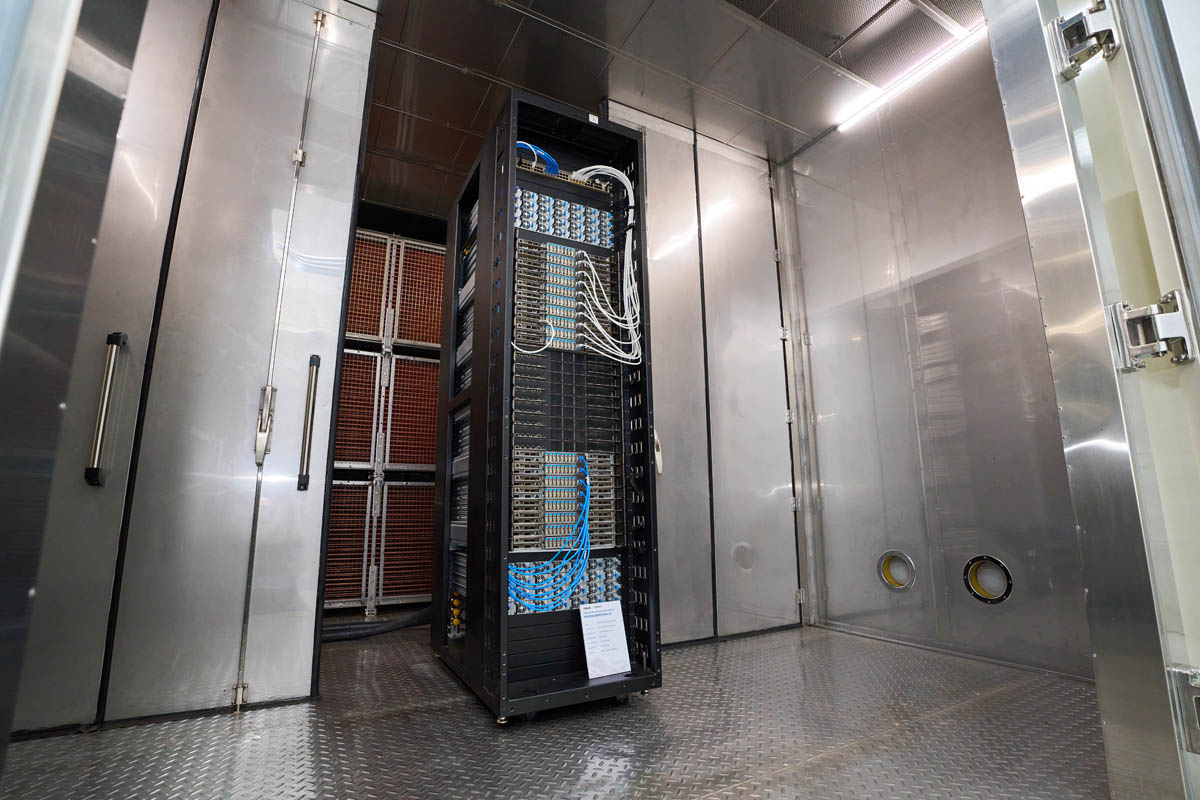
Stepping through the door of ASUS’s thermal lab, the first sensation is like entering a parallel universe of climate chambers, test benches, and a silence broken only by the hum of industrial fans. The goal of the visit – a technical tour reserved for a small group of insiders – is clear: to show just how much engineering goes into AI servers when they are subjected to extreme heat.
This is no minor detail. LLM workloads, especially during inference or fine-tuning, push GPUs and memory to consumption levels that can turn a rack into a heat source comparable to a small industrial oven within minutes. Without proper thermal management, throttling becomes inevitable: reduced clock speeds, rising latency, plummeting throughput. For those operating on-premise infrastructure, where every node is under direct control, thermal predictability is not a luxury – it’s the foundation for accurately calculating TCO and sizing the cooling plant.
Inside ASUS’s lab, testing consists of prolonged sessions at extreme temperatures, with gradients ranging from near-freezing to over 50 °C, simulating poorly cooled data centers or sudden load spikes. Engineers monitor server behavior during the most critical phases: cold boots, simultaneous GPU stress tests, repeated power cycles. High-resolution thermal cameras detect heat buildup spots that internal sensors would miss, guiding redesigns of heatsinks and airflow paths.
One aspect stands out: the growing focus on liquid cooling solutions, no longer reserved for supercomputers. During the tour, it became clear that direct liquid cooling on CPUs and GPUs is becoming standard even for machines destined for enterprise deployment, because it enables higher density and reduces reliance on air conditioning, cutting overall energy costs. It’s a sign that the AI server market is moving away from purely air-cooled approaches toward more efficient architectures – a shift that will directly impact anyone planning on-premise expansions.
For those who personally manage the hardware running LLMs, these testing methodologies are more than just an engineering curiosity. A server that survives grueling heat cycles without performance drops will maintain consistent tokens per second even on the hottest summer days, reducing the risk of unplanned downtime. In a world where data sovereignty demands keeping everything in-house, hardware choice cannot ignore a deep assessment of thermal resilience. The question that lingers after leaving the lab is whether such rigorous testing will become the norm for all vendors or remain a distinguishing feature for a select few.




💬 Comments (0)
🔒 Log in or register to comment on articles.
No comments yet. Be the first to comment!