
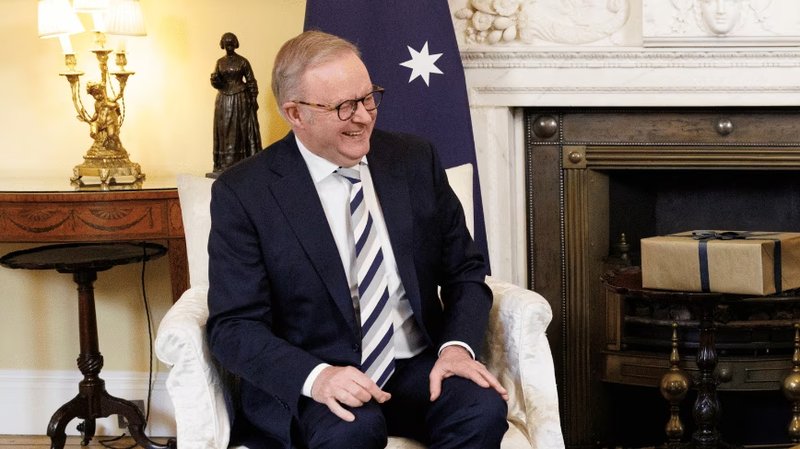
A few lines, delivered during a speech whose full text has not been released, are enough to outline a trajectory that blends energy sovereignty and copyright. Australian Prime Minister Anthony Albanese laid out two boundaries that, if turned into law, will redefine the operational perimeter for companies building AI infrastructure in the country. First: any large AI data centre constructed in Australia will have to feed more electricity into the grid than it draws. Second: Australian cultural output – books, music, journalism – is not free training material for models.
The announcement is not accompanied by already drafted bills, but it carries the weight of a policy intent that is unlikely to remain just talk. For the Labor government, it is about staking out a position on two red-hot fronts: the outsized energy appetite of generative AI and the global battle over copyright-protected content used for LLM training.
The energy challenge: more power out than in
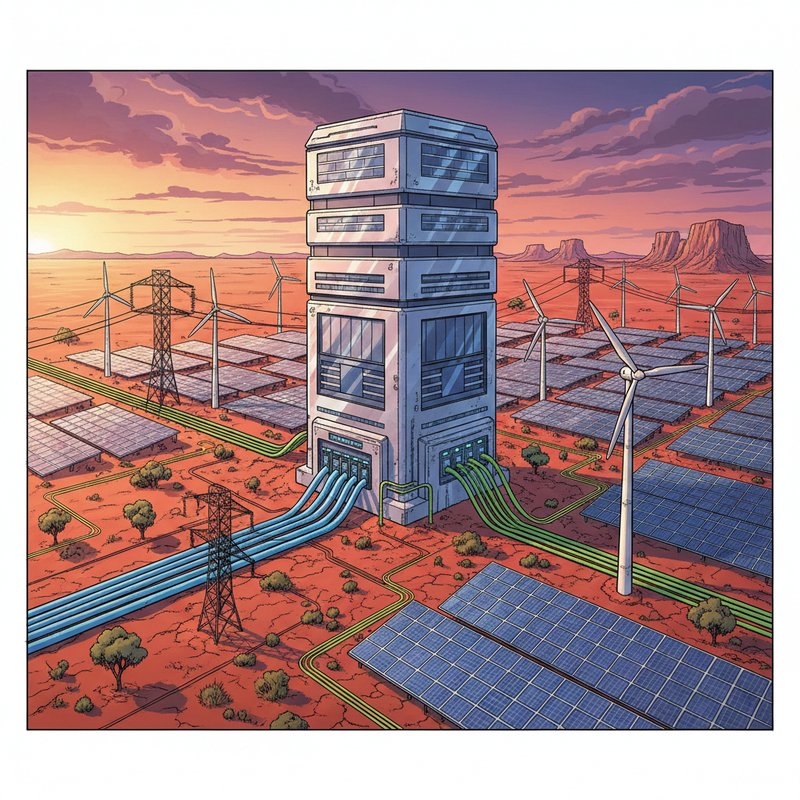
The demand for a net-positive energy balance – essentially, feeding more into the grid than is consumed – is an unprecedented constraint for commercial data centres. It means every new facility will have to produce locally, or procure, an amount of renewable energy that exceeds its own needs, and channel the surplus to the public grid. Purchasing green certificates or offsetting emissions elsewhere won’t cut it: you need physical, connected generation in excess.
For workloads that in intensive training configurations can already reach tens of megawatts, technical feasibility hinges on steady renewable sources and storage systems scaled to cover peaks. Such a requirement structurally shifts the total cost of ownership (TCO): it’s no longer just about buying GPUs and cooling racks, but about turning into an energy producer as well. The margins of those designing these plants will have to absorb investments in solar, wind, batteries, and bidirectional grid connections.
For on-premise deployment evaluations – where organisations keep control of hardware and data – this scenario introduces a new calculation layer. Anyone wanting to build a significant inference or training node on Australian soil will no longer be able to just size the UPS and the backup generator. They will have to integrate generation capacity that, in net terms, exceeds consumption. It’s a paradigm shift that could accelerate hybrid solutions, with sensitive workloads kept on locally self-sufficient infrastructure while the rest is distributed to cloud regions with less stringent constraints.
Training and copyright: the boundary of Australian data
Albanese didn’t mince words: the nation’s creative output is not material to be plundered for datasets. The statement lands in a landscape where lawsuits against OpenAI, Stability AI, and other players have cast doubt on the practice of scraping texts and images from the web without explicit licences. Australia, with a significant publishing and music ecosystem, intends to mark its territory.
From a data sovereignty standpoint, the message has a ripple effect. If protected content cannot be freely used for training, major model providers may be forced to geographically segregate datasets or negotiate collective licences with local collecting societies. For a company weighing a self-hosted deployment, compliance becomes a design factor: keeping the entire pipeline – from data curation to inference – on its own machines within national borders reduces the legal exposure risk compared to training on a multi-region cloud, where content provenance is harder to trace.
Taken together, the two announcements describe a strategy that goes beyond regulation: it seeks to reshape the relationship between AI infrastructure and the territory. The surplus-energy requirement effectively rules out “parasitic” data centres, while the protection of local intellectual output moves the cost of training from free-for-all to a licensing logic. For those building LLMs on-premise, the message is that sovereignty will be not just technological, but also energy-driven and cultural.







💬 Comments (0)
🔒 Log in or register to comment on articles.
No comments yet. Be the first to comment!