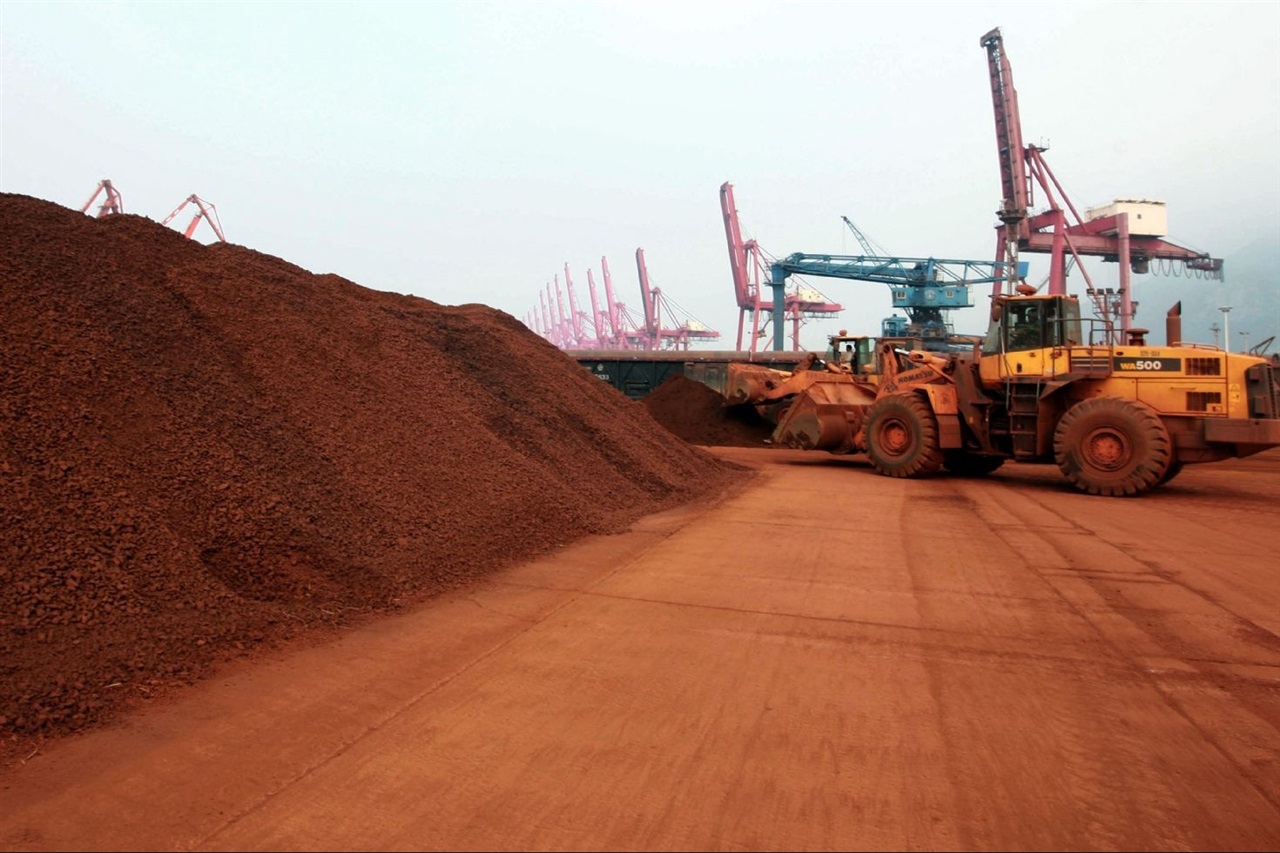
The Australian government has revoked the voting rights of minority shareholders linked to Beijing in a major rare-earth mine. The stated goal is to reduce China’s strategic leverage over materials that have become essential for the digital transformation and, less conspicuously, for the large-scale artificial intelligence ecosystem.
While the AI debate focuses on models, datasets, and computing power, one link in the chain often remains in the shadows: the physical availability of hardware components. Rare earths — such as neodymium and dysprosium — are critical ingredients for the permanent magnets used in hard drives, data center cooling systems, and certain semiconductor manufacturing stages. Without a stable supply, the infrastructure needed to run on-premise LLMs or train next-generation models becomes vulnerable.
The Australian move signals a turning point. It is no longer just about cybersecurity or data protection: technological sovereignty is played out upstream, in the ability to extract and process raw materials without depending on actors who can wield them as a geopolitical weapon. For companies evaluating self-hosted AI deployments, TCO calculations will increasingly have to include risk scenarios tied to mineral supply chains. A disruption in neodymium access can translate into delays in GPU server deliveries, price increases, and ultimately an inability to scale on-premise infrastructure.
The Australian episode shows that Western governments are taking rare-earth dependency seriously. It is not an isolated case: extraction projects in Europe and North America are receiving public funding precisely to diversify sources. For those building local AI stacks, this means the hardware landscape could become more fragmented but also more resilient. The challenge for operators will be to balance the geographical origin of components with performance metrics and immediate availability, integrating a new “mineral sovereignty” factor into their procurement criteria.
Ultimately, Canberra’s decision is not just about a single mine: it is a signal that the geopolitics of raw materials has officially entered the AI equation. Ignoring it would be like designing a data center without considering the stability of the electricity grid.





💬 Comments (0)
🔒 Log in or register to comment on articles.
No comments yet. Be the first to comment!