
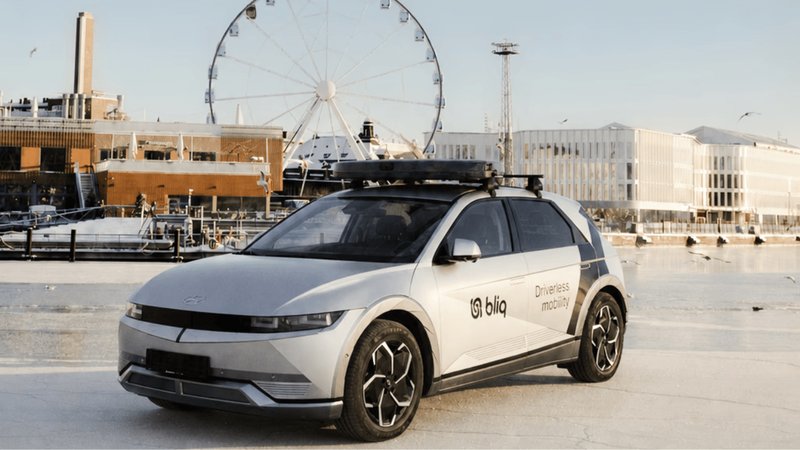
It’s no longer just a matter of rules, but of physics. Finland’s transport agency has authorized Bliq.ai to operate its driverless vehicles on public roads, effective immediately. After Estonia, Finland becomes the second EU country to grant such approval – and does so with a precise choice: the debut happens during the harshest season, a Helsinki winter.
Snow covering lane markings, icy sensor lenses, darkness degrading image quality: driving autonomously in a Scandinavian January is the engineering equivalent of a daily crash test. There is no room for shortcuts. For a self-driving system, the combination of poor visibility and unpredictable grip puts not only the sensor suite but equally the on-board computing power under extreme stress.
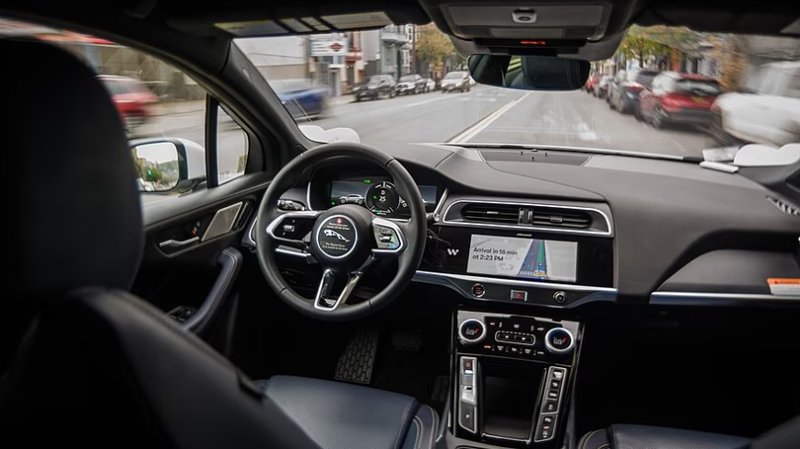
Here the news speaks directly to those working on local inference, far from data centers. Bliq.ai’s vehicles make real-time decisions without leaning on the cloud for the processing of driving inputs. Environment perception, trajectory planning, and reaction to sudden events are handled entirely by the hardware installed in the car, because the latency of a mobile connection would be simply incompatible with the urgency of braking on ice. This means that each vehicle is, in effect, a mini inference cluster on wheels: specialized chips – presumably systems like NVIDIA Orin or equivalents – running deep learning models on visual and lidar streams, while keeping raw data inside the vehicle.
From this flow several second-order implications that reach beyond the permit’s announcement. The first concerns the consolidation of edge AI for safety-critical applications. When a national regulator clears public operation, it is implicitly certifying that the local architecture is robust, reliable and predictable enough not to require constant remote oversight. It’s a stamp of approval that shifts the threshold for the entire sector: if the edge model works under extreme conditions, the cloud becomes less central for on-board decision-making and more useful only for asynchronous model training or updated map delivery.
The second implication touches on data sovereignty. Even a self-driving car generates a constant stream of information about its surroundings: faces, license plates, urban geometries. Letting this data travel outside the vehicle would raise issues under Europe’s GDPR. Finland’s approval, in a country historically sensitive to digital privacy, signals that on-board processing can be considered an adequate safeguard for regulatory compliance, weakening the case for those who would like to centralize autonomous vehicle data collection.
A third-order consequence involves supply-chain incentives. Hardware vendors for edge computing – from NVIDIA to Qualcomm, including manufacturers of high-bandwidth memory – see growing pressure on miniaturization and energy efficiency, precisely because the Finnish ice baptism makes clear that thermal throttling or energy consumption that eats into the vehicle’s range cannot be tolerated. Conversely, those who bet on a connected automation model dependent on the cloud for most critical computations must reckon with a European precedent that points in the opposite direction: computing autonomy, local resilience, and temporary on-board storage.
Thus Finland’s decision is more than a bureaucratic permission. It is a real-world proving ground that shifts the debate about AI architectures toward on-device deployment. And it reminds us that, when environmental conditions are tough, latency is measured in centimeters, and data protection becomes a system requirement, local processing is no longer an option: it is the default architecture.






💬 Comments (0)
🔒 Log in or register to comment on articles.
No comments yet. Be the first to comment!