A New Chapter for Industrial Monitoring with AVIAN
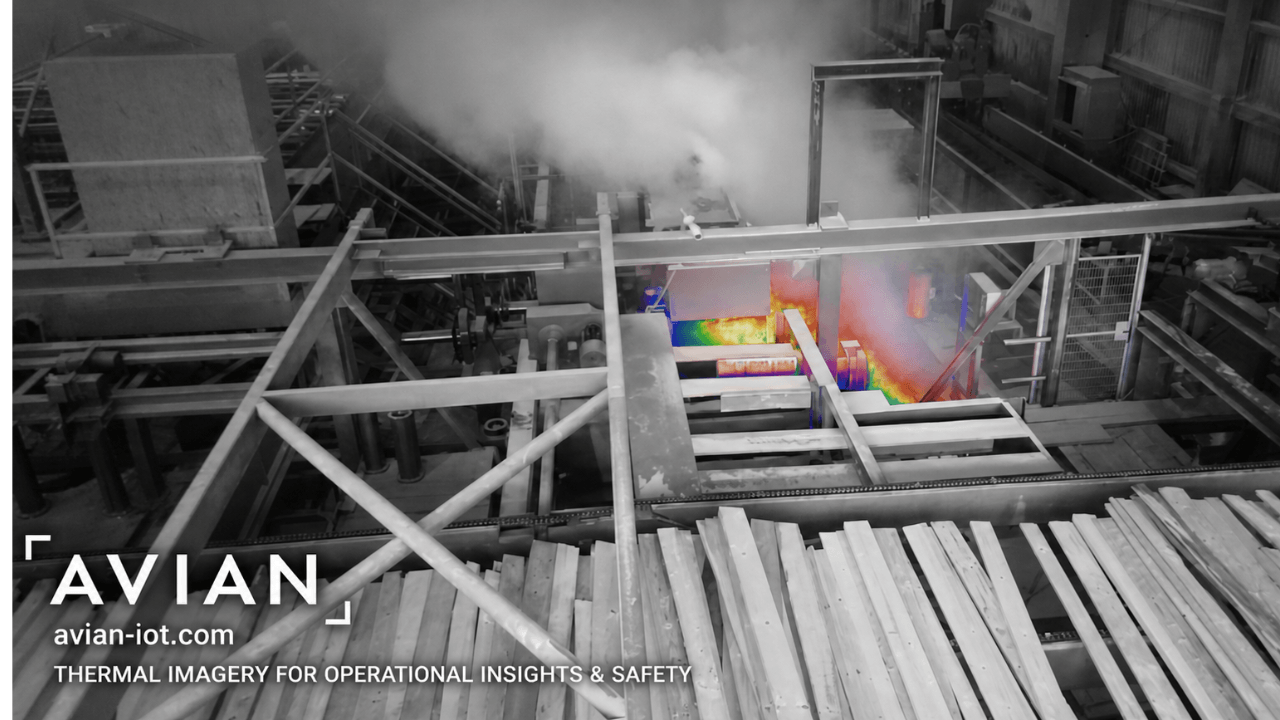
AVIAN, a Swiss company specializing in artificial intelligence for the industrial sector, has announced the completion of a $2.6 million pre-seed funding round. The operation, led by Founderful, marks a significant step for the expansion of its continuous thermal monitoring technology, designed to protect high-risk industrial facilities from fires and unforeseen failures. In a context where insurance markets are tightening and aging equipment increases failure rates, solutions like AVIAN's become crucial for operational resilience.
The traditional approach to thermal safety has often relied on periodic inspections, with technicians using handheld thermal cameras for quarterly checks. This method, however, has an inherent limitation: the critical time window, specifically the hours when a component begins to overheat before failing, is easily missed. Many thermal solution providers stop at hardware sales, leaving operators to independently manage setup, monitoring, and escalation. AVIAN aims to overcome these shortcomings by offering an integrated solution that goes beyond a mere sensor.
"Always-On" Thermal Intelligence Serving Industry
AVIAN adopts a different philosophy: the sensor is merely one component of a broader solution, not the final product. The platform is designed to function as an "always-on" reliability layer, ensuring customers are up and running in minutes, not months. AVIAN's thermal cameras continuously monitor critical components that most often become ignition points, such as motors, bearings, conveyors, presses, and electrical cabinets. The system learns the "normal" operating patterns specific to each plant.
From this baseline, the system focuses on detecting "drift," which are the early anomalous heat patterns that emerge before a failure. Smart alarms filter out routine heat sources, preventing teams from chasing false positives, and notifications are sent to the appropriate personnel with sufficient lead time to intervene. This prevents an overheated component from escalating into downtime or, worse, a fire. AVIAN also generates automated predictive maintenance reports and offers 24/7 human support, ensuring constant and proactive monitoring.
Concrete Impact and Growth Prospects
Every alarm event is reviewed, and the data is fed back into the AI models, continuously improving the detection capability across the entire fleet of systems and ensuring that each new site benefits from AVIAN's accumulated field experience. The system's effectiveness has been demonstrated in several real-world cases: in Switzerland, a pellet press fire was detected early, preventing millions of dollars in damage. In Germany, AVIAN flagged a small electrical fire near a multi-million-dollar machine, protecting both the asset and the subsequent 6-18 months of production that would have been lost awaiting a replacement.
AVIAN, a ten-person team based in Zurich, was bootstrapped and profitable for two years before seeking investment. This strategic decision allowed the company to build a solution that operators could truly trust. "Most operators don't need another camera. At 3 a.m., they need to know that a bearing is running hot before it ignites the dust around it," stated Drew Hanover, Co-Founder and CTO of AVIAN. The company raised funds to accelerate growth, expand engineering and deployment capacity, and scale beyond its original sector (wood products) into recycling, chemical processing, oil and gas, and maritime. AVIAN is on track to surpass $1 million in ARR in 2026, having already prevented over $50 million in damages and with approximately 50 active sites across 9 countries.
Implications for Industrial Infrastructure and Data Sovereignty
AVIAN's strategy, which emphasizes rapid deployment and "always-on" operation directly within facilities, offers significant insights for technical decision-makers evaluating AI solutions for industrial workloads. The ability to process thermal data in real-time and generate intelligent alarms on-site reduces latency and increases the effectiveness of interventions. This approach is particularly relevant for environments requiring high standards of security and operational continuity, where data sovereignty and regulatory compliance are priorities. Keeping sensitive data processing within the plant's perimeter, or at least at its "edge," can be a fundamental requirement for many companies.
For CTOs, DevOps leads, and infrastructure architects, choosing solutions like AVIAN highlights the trade-offs between on-premise and cloud deployment. While the source does not specify the exact architecture of the AI backend, the critical and real-time nature of the monitoring suggests the need for robust local or hybrid infrastructure. Preventing millions in damages and reducing downtime translates into a significantly lower TCO (Total Cost of Ownership) compared to the costs associated with catastrophic incidents. For those evaluating on-premise deployments for AI/LLM workloads, AI-RADAR offers analytical frameworks on /llm-onpremise to assess these trade-offs, considering factors such as latency, security, and data control.







💬 Comments (0)
🔒 Log in or register to comment on articles.
No comments yet. Be the first to comment!