1) TL;DR (3–5 bullets)
- Barclays estimates that humanoid robots could offset 60% of China’s projected workforce decline by 2035.
- The bank expects China’s workforce to fall by 37 million workers over the next decade.
- To mitigate this demographic impact, Barclays projects a need for up to 24 million humanoid robots.
- The research note frames humanoid robots as a macroeconomic tool to stabilize labor supply in the face of long-term demographic headwinds.
2) The spotlight story (deeper analysis)
A research note from Barclays, a major British bank, advances a bold projection about how China might respond to its looming demographic crunch. According to the article, Barclays expects China to see a reduction of 37 million workers over the next ten years. To offset the resulting labor shortage, the bank argues that humanoid robots could cover 60% of that shortfall by 2035.
To reach that level of coverage, Barclays estimates that up to 24 million humanoid robots would be needed. The article does not detail the methodology behind these figures, but the order of magnitude is clear: tens of millions of human workers, and tens of millions of robots as a potential counterweight.
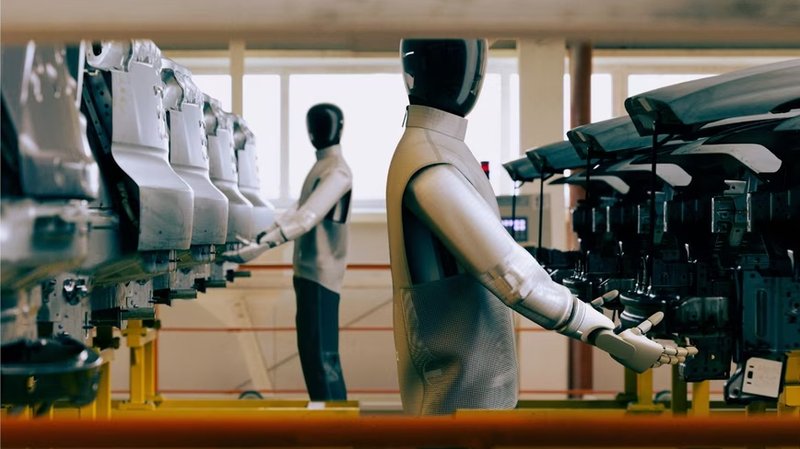
What makes this noteworthy for AI-Radar readers is the repositioning of humanoid robots from speculative or niche products to macroeconomic actors. This is not simply about automating a few factories or warehouses. Instead, Barclays is treating humanoid platforms as a potential structural response to demographic change, similar in scope to large-scale policy shifts or major infrastructure projects.
The choice to focus on humanoid robots specifically, rather than generic industrial robots, is also significant. Humanoid systems are designed to operate in environments already built for humans, handling tasks that are varied and often unstructured. For a country facing a broad-based decline in working-age population, the ability to deploy a relatively general-purpose robotic workforce could, in theory, reduce the need to redesign everything around fixed automation.
Although the article’s excerpt does not include technical details, the scenario implicitly assumes rapid progress in embodied AI over the next decade. To make 24 million humanoids economically viable and socially acceptable, their control software, perception systems, and safety mechanisms would need to reach a high level of reliability in real-world environments. It also assumes that manufacturing capacity can scale to produce robots at that volume and that enterprises can integrate them into existing workflows.
The Barclays note therefore hints at a future in which the AI and robotics stack becomes a central lever in macroeconomic planning. If policymakers and corporate strategists in China take this framing seriously, it could influence national strategies around automation, industrial policy, and labor regulation. It could also shape how investors view the long-term addressable market for humanoid platforms and the AI models that power them.
3) Are we sure? (skeptical lens)
The article offers only a brief summary of the Barclays research note, so several key pieces of information are missing and must be treated as uncertain.
- The methodology behind the 60% offset figure is not described. We do not know how Barclays maps tasks to robots, how many human-equivalent work hours each robot is assumed to deliver, or how utilization and downtime are modeled.
- The basis for the estimate of up to 24 million robots is not explained. The excerpt does not state whether Barclays assumes a specific robot-to-worker ratio, whether multiple robots cover a single role across shifts, or whether productivity gains per robot exceed those of a single human worker. Any interpretation of this mapping is inferred.
- There is no information about which sectors are considered suitable for humanoid substitution by 2035. Whether Barclays envisions deployments mainly in manufacturing, logistics, services, or care work is not stated, leaving sectoral implications unclear.
- Cost, energy usage, and infrastructure constraints are not discussed in the excerpt. Without these details, it is impossible to judge how practical the projected deployment scale is, or whether it relies on aggressive assumptions about cost declines. This is uncertain.
Because of these gaps, the figures should be treated as indicative of a directional thesis rather than as a precise forecast. The key signal is that a major financial institution is beginning to quantify humanoid robots as a tool for national-level labor planning, not that the specific numbers are guaranteed.
4) Why it matters (practical implications)
For AI and robotics developers, Barclays’ projection reframes embodied AI and humanoid platforms as potential components of national labor infrastructure. If this framing gains traction, technical roadmaps may be influenced by requirements for scale, reliability, and interoperability that are closer to utility infrastructure than to typical consumer or industrial products.
Humanoid control systems will need to handle diverse, semi-structured tasks with high reliability. That puts pressure on research into generalizable embodied policies, robust perception in cluttered environments, and safe, predictable behavior around humans. Fleet management, remote supervision, and integration with enterprise resource planning will become as important as the core robotics algorithms.
For policymakers, the Barclays note suggests that automation strategy could be explicitly linked to demographic forecasts. Governments might treat humanoid robotics as a tool to maintain productivity in aging societies, which in turn would raise questions about regulation, labor law, social safety nets, and education policy. If the goal is to deploy millions of humanoids, standards for safety, data handling, and human–robot interaction become central.
For businesses, particularly in China, the analysis hints at a future in which large-scale humanoid deployment is not optional but necessary to sustain operations as the labor pool shrinks. Early movers in designing processes, physical layouts, and software systems that accommodate humanoid workers could gain an advantage if Barclays’ scenario or something like it materializes.
5) What to watch next (2–4 signals)
- Any publication of deeper methodological details from Barclays or similar institutions, clarifying how they arrive at the 60% offset and 24 million robot figures.
- Policy documents, speeches, or plans in China that mention humanoid robots explicitly as part of demographic or productivity strategy.
- Large pilot programs or procurement announcements that target humanoid deployments at meaningful scale, especially in sectors already strained by labor shortages.
- Moves by major robotics and AI companies to explicitly court the Chinese market with humanoid platforms positioned as solutions to demographic decline.
6) Sources (bullet list of selected URLs)
- https://ai-radar.it/article/barclays-i-robot-umanoidi-possono-compensare-il-60-del-calo-della-forza-lavoro-cinese



💬 Commenti (0)
🔒 Accedi o registrati per commentare gli articoli.
Nessun commento ancora. Sii il primo a commentare!