
The AI Memory Race: Big Tech Funds SK Hynix
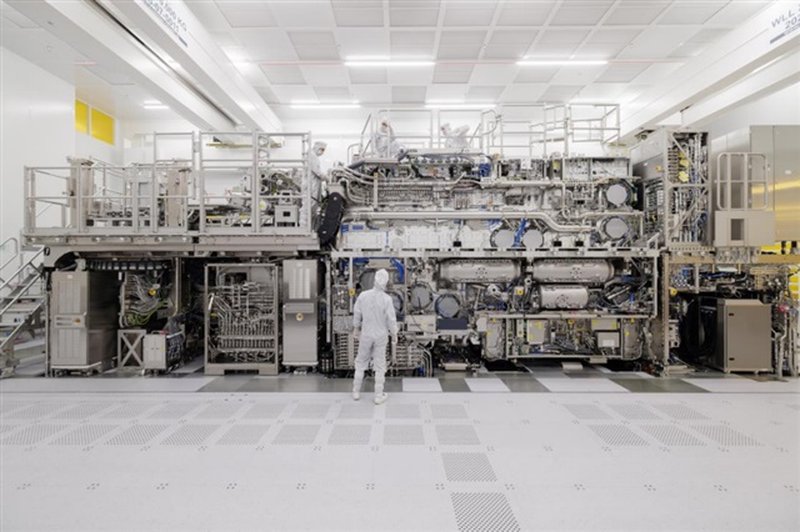
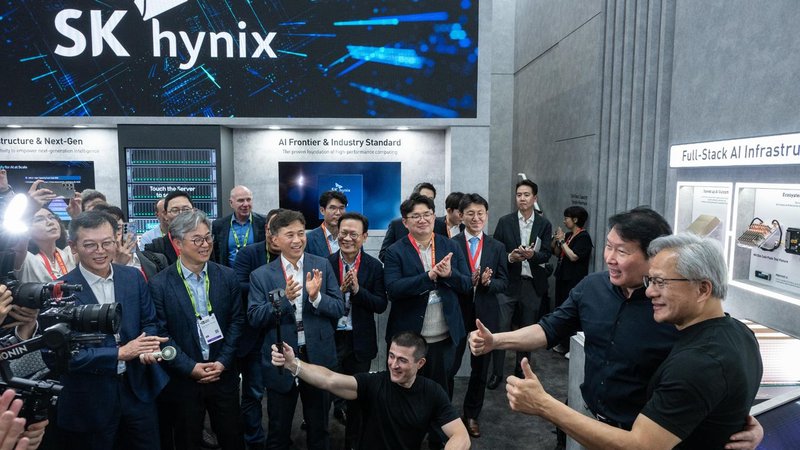
The artificial intelligence sector is experiencing exponential growth, fueled by the rapid evolution of Large Language Models (LLMs) and the increasing demand for computing power. In this scenario, the availability of high-performance memory has become a critical factor. According to recent reports, major tech companies are reportedly offering direct funding to SK Hynix, one of the world's largest chip manufacturers, to support the construction of new fabrication plants (fabs) and the acquisition of expensive Extreme Ultraviolet (EUV) lithography tools.
This initiative underscores the intensity of the "AI memory race," a market segment where demand outstrips supply and manufacturing capacity is strategic. Direct investment by Big Tech is not only a sign of the AI sector's dependence on these components but also an attempt to secure a stable and prioritized supply in a highly competitive environment. The ability to produce advanced memory, such as High Bandwidth Memory (HBM), is crucial for powering the inference and training of the most complex AI models.
The Strategic Role of Fabs and EUV Tools
Semiconductor fabrication plants, or fabs, are highly complex and expensive facilities, with construction costs potentially reaching tens of billions of dollars. Their construction takes years and requires precision engineering. EUV tools, in particular, represent cutting-edge technology for producing chips with increasingly smaller geometries, essential for increasing memory density and performance. These machines are manufactured by an extremely limited number of suppliers, making them a critical bottleneck in the global supply chain.
Big Tech's funding offer to SK Hynix highlights the understanding that the availability of specialized hardware is a prerequisite for innovation and large-scale AI deployment. Without adequate memory production capacity, the development of new LLMs and the expansion of AI infrastructures could face significant slowdowns. This scenario directly impacts companies evaluating AI solutions, whether cloud-based or on-premise, as memory availability and cost directly influence the Total Cost of Ownership (TCO) and system performance.
Implications for On-Premise Deployment and Data Sovereignty
For organizations considering on-premise LLM deployment, hardware supply chain stability is paramount. The ability to acquire GPUs with sufficient VRAM and adequate HBM is a decisive factor for the feasibility and efficiency of a local AI infrastructure. Limited supply or volatile pricing can make the TCO of self-hosted solutions prohibitive, pushing companies towards cloud alternatives which, however, may involve compromises in terms of data sovereignty and control.
Big Tech's investment in SK Hynix may, in the long run, help stabilize memory supply, indirectly benefiting those who opt for on-premise infrastructures. Ensuring access to critical components is essential for maintaining control over one's data and complying with stringent regulatory requirements, especially in regulated sectors. For those evaluating on-premise deployments, AI-RADAR offers analytical frameworks on /llm-onpremise to assess the trade-offs between costs, performance, and control.
Future Prospects in an Evolving Market
Big Tech's move is a clear indicator of how the industry is responding to the challenges of continuously growing AI demand. It is likely that we will see further consolidation or strategic partnerships along the semiconductor supply chain as the competition for hardware resources intensifies. The ability to innovate in memory production and scale rapidly will be a key differentiator for chip manufacturers.
In the future, the balance between technological innovation, production capacity, and supply chain stability will define the pace of artificial intelligence development. Today's decisions regarding investments in fabs and EUV tools will have significant repercussions on the availability and cost of AI infrastructures for years to come, influencing the deployment strategies of companies of all sizes and sectors.





💬 Comments (0)
🔒 Log in or register to comment on articles.
No comments yet. Be the first to comment!