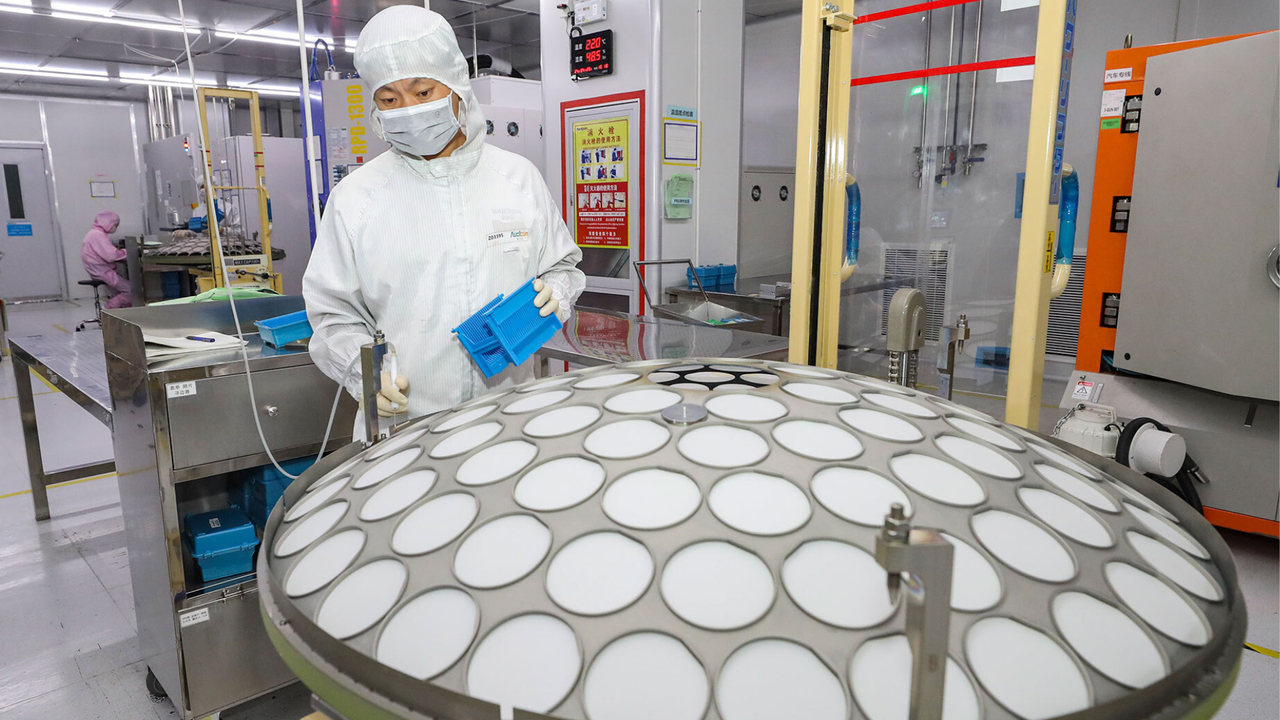
Strategic Block: Washington Halts Lumileds Acquisition
The United States government recently exercised its veto power, blocking a $239 million offer from China's largest LED chipmaker to acquire Lumileds, a Dutch lighting company. This decision, which prevented a Chinese entity from purchasing a European firm, underscores Washington's growing scrutiny of transactions involving technologies deemed strategic or sensitive.
This move is set against a global backdrop of heightened geopolitical competition, where control over critical technology supply chains has become a key element of national security and economic competitiveness. Chip production, in particular, is at the heart of this dynamic, given its ubiquity in sectors ranging from mobile telephony to automotive, LED lighting, and, crucially, artificial intelligence infrastructure.
The Geopolitical Context and the Semiconductor Supply Chain
The US intervention is not an isolated incident but reflects a broader trend of governments seeking to safeguard their technological capabilities and reduce dependence on potentially vulnerable supply chains. Chips, although the source specifically mentions those for LEDs, phones, and cars, are the backbone of almost every modern technological system, including the servers and GPUs required for training and inference of Large Language Models (LLMs).
The decision to block the Lumileds acquisition can be interpreted as an attempt to prevent the transfer of know-how or the consolidation of dominant positions in sectors considered vital. This scenario creates an environment of uncertainty for companies that rely on an integrated global supply chain, forcing them to reconsider their sourcing strategies and evaluate the risks associated with geopolitical fragmentation.
Implications for Technological Sovereignty and On-Premise Deployments
For CTOs, DevOps leads, and infrastructure architects evaluating on-premise deployments for AI/LLM workloads, events like the Lumileds acquisition block have significant implications. The stability and security of the semiconductor supply chain are fundamental to ensuring the long-term availability of necessary hardware, such as GPUs with high VRAM specifications, essential for LLM inference and fine-tuning.
Data sovereignty and compliance, often primary drivers for choosing self-hosted or air-gapped solutions, are closely tied to the ability to procure reliable hardware components without interruption. Supply chain disruptions or government restrictions can impact not only initial costs (CapEx) but also the overall Total Cost of Ownership (TCO), introducing delays, additional costs for supplier diversification, or, in the worst case, limiting access to key technologies. Planning a robust infrastructure requires careful evaluation of these geopolitical risks.
Future Outlook and Resilience Strategies
The blocking of the Lumileds acquisition is a reminder that technology investment and deployment decisions cannot be made in isolation from the geopolitical context. Companies operating with sensitive AI workloads, which demand maximum control over data and infrastructure, must develop resilience strategies that include supplier diversification and the evaluation of regional manufacturing options, where feasible.
The ability to maintain an efficient and secure on-premise infrastructure increasingly depends on the stability of global supply chains. For those evaluating on-premise deployments, AI-RADAR offers analytical frameworks on /llm-onpremise to assess the trade-offs between costs, performance, sovereignty, and supply chain risks. In a landscape where technological control is a national priority, strategic infrastructure planning becomes an exercise in balancing innovation and security, with a constant eye on global dynamics.







💬 Comments (0)
🔒 Log in or register to comment on articles.
No comments yet. Be the first to comment!