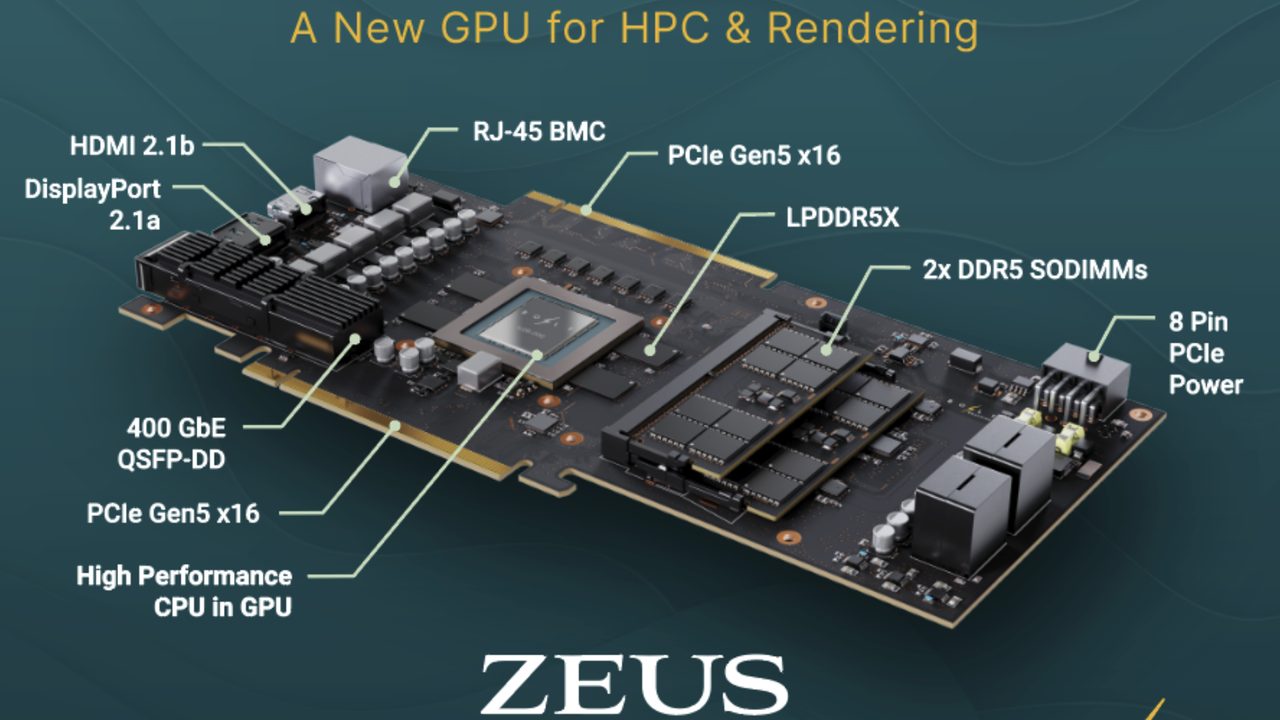
Bolt Graphics: il chip Zeus su TSMC 12nm punta a ridurre i costi di calcolo di 17 volte
Introduzione
Bolt Graphics, un nuovo attore nel panorama dell'hardware per l'intelligenza artificiale, ha annunciato un passo significativo nel suo percorso di sviluppo. L'azienda ha completato il "tape-out" del suo primo chip di test GPU, denominato Zeus 1c26-032. Questo prototipo è stato realizzato utilizzando il processo produttivo a 12 nanometri di TSMC, un'indicazione chiara dell'approccio strategico dell'azienda.
Il dato più rilevante emerso dall'annuncio è la dichiarazione di Bolt Graphics: il chip Zeus promette di offrire un costo di calcolo fino a 17 volte inferiore rispetto alle soluzioni attuali. Sebbene si tratti di una rivendicazione per un chip di test, questo potenziale risparmio potrebbe avere implicazioni profonde per le aziende che cercano di ottimizzare i costi dei loro carichi di lavoro AI, in particolare per i deployment on-premise.
Dettagli Tecnici e Contesto di Produzione
Il "tape-out" rappresenta una fase cruciale nello sviluppo di un semiconduttore, indicando che il progetto del chip è stato finalizzato e inviato alla fonderia per la produzione fisica. In questo caso, la scelta di TSMC e del suo processo a 12 nanometri è degna di nota. Il nodo a 12nm è una tecnicia matura e consolidata, che offre un equilibrio tra costi di produzione e prestazioni, distinguendosi dai processi più all'avanguardia (e costosi) come i 5nm o i 3nm.
Questa decisione potrebbe essere strategica per Bolt Graphics, consentendo di contenere i costi di sviluppo e produzione per un primo chip di test, e potenzialmente contribuendo alla promessa di un costo di calcolo ridotto. Tuttavia, l'azienda non ha ancora rilasciato specifiche dettagliate relative a VRAM, throughput o latenza, parametri fondamentali per valutare l'efficacia del chip Zeus in scenari di inference o training di Large Language Models (LLM).
Implicazioni per i Deployment On-Premise
L'emergere di nuovi fornitori di hardware come Bolt Graphics è particolarmente rilevante per le organizzazioni che valutano deployment on-premise o self-hosted per i loro carichi di lavoro AI. La promessa di un costo di calcolo drasticamente inferiore, se concretizzata, potrebbe alterare significativamente il Total Cost of Ownership (TCO) per le infrastrutture AI locali. Le aziende, in particolare quelle con stringenti requisiti di sovranità dei dati, compliance o che operano in ambienti air-gapped, sono costantemente alla ricerca di alternative economicamente vantaggiose alle offerte cloud.
Un'offerta hardware che riduce il costo per unità di calcolo può rendere i deployment on-premise ancora più competitivi, permettendo di scalare le operazioni AI mantenendo il controllo completo sui dati e sull'infrastruttura. Per chi valuta deployment on-premise, esistono trade-off complessi che AI-RADAR analizza in dettaglio, offrendo framework analitici su /llm-onpremise per supportare le decisioni relative a CapEx, OpEx e performance.
Prospettive Future e Sfide
È fondamentale sottolineare che il Zeus 1c26-032 è, per ora, un chip di test. Il percorso dalla fase di "tape-out" alla commercializzazione di massa è lungo e irto di sfide. Bolt Graphics dovrà non solo convalidare le sue affermazioni sui costi e sulle prestazioni attraverso benchmark indipendenti, ma anche costruire un ecosistema software robusto, inclusi driver, librerie e integrazioni con i principali framework di machine learning.
La competizione nel settore dell'accelerazione hardware per l'AI è intensa, dominata da attori consolidati. Tuttavia, l'introduzione di nuove architetture che promettono efficienze significative può stimolare l'innovazione e offrire maggiore scelta ai decision-maker tecnici. Il successo di Bolt Graphics dipenderà dalla sua capacità di trasformare le promesse iniziali in prodotti concreti e competitivi, in grado di soddisfare le esigenze di performance e costo del mercato AI in rapida evoluzione.



💬 Commenti (0)
🔒 Accedi o registrati per commentare gli articoli.
Nessun commento ancora. Sii il primo a commentare!