The Evolution of Humanoid Robotics and New Alliances
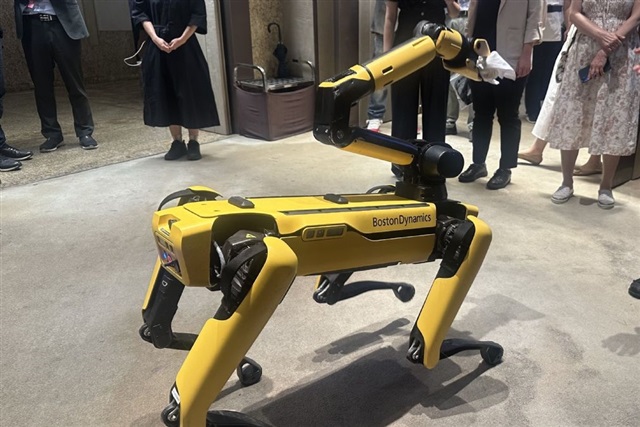
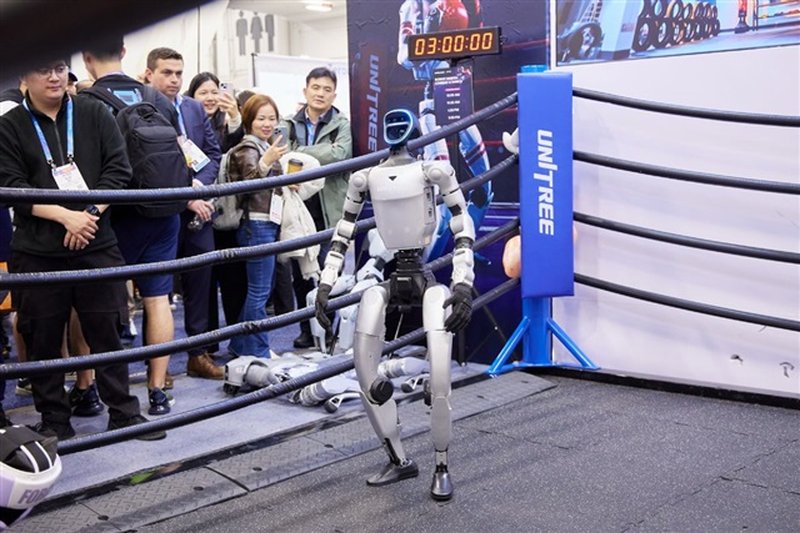
The humanoid robotics sector is experiencing a phase of intense innovation, with leading companies like Boston Dynamics exploring diverse approaches for developing increasingly autonomous and capable systems. This ferment is also fueled by strategic collaborations between key players in the technological landscape. A significant example is the partnership between Nvidia, a silicon and AI platform giant, and Unitree, known for its quadruped and humanoid robots. This synergy underscores the growing importance of robust hardware and software infrastructure to support the ambitions of advanced robotics.
Boston Dynamics, with its decades of experience, is at the center of this transformation, focusing on strategies aimed at overcoming current limitations in terms of mobility, perception, and interaction. The inherent complexity of humanoid robots, which must operate in dynamic and unstructured environments, requires high computational capabilities and sophisticated control systems.
Computational Demands and AI Infrastructure
The development and deployment of advanced humanoid robots entail extremely high computational requirements. Each robot must be able to process a massive amount of data in real-time from sensors (vision, lidar, proprioception), execute complex motion planning algorithms, and make autonomous decisions based on AI models. This scenario makes Nvidia GPUs, with their parallel computing capabilities, a critical component. Platforms like Nvidia Jetson or Orin are often used for AI inference directly on board the robot (edge computing), ensuring low latency and responsiveness.
However, training Large Language Models (LLM) or more complex perception and control models requires large-scale training infrastructures, often based on clusters of high-end GPUs (e.g., A100, H100). For companies developing these technologies, the choice between on-premise deployment and cloud solutions becomes crucial. A self-hosted approach offers complete control over hardware, data security, and can lead to a more advantageous Total Cost of Ownership (TCO) for intensive, long-term workloads, especially when dealing with extensive simulations or continuous fine-tuning of models.
Deployment Strategies: On-Premise, Edge, and Data Sovereignty
The diverse strategies adopted in humanoid robotics are also reflected in AI infrastructure deployment choices. For critical applications requiring immediate responses and operation in air-gapped environments or with limited connectivity, edge processing is indispensable. This means that a significant portion of AI inference must occur directly on the robot or on local servers. For training and managing sensitive data collected by robots, on-premise solutions offer advantages in terms of data sovereignty and regulatory compliance.
Companies operating in regulated sectors, or managing critical intellectual property, often prefer to maintain direct control over their technology stacks. This includes managing bare metal servers, optimizing development pipelines, and maintaining a secure environment for research and development. TCO evaluation, which includes hardware acquisition costs (CapEx), energy, cooling, and IT personnel, becomes a decisive factor in these decisions. For those evaluating on-premise deployment, AI-RADAR offers analytical frameworks at /llm-onpremise to assess the trade-offs between control, performance, and costs.
Future Prospects and Technological Convergence
The future of humanoid robotics will increasingly depend on the ability to integrate advanced hardware, sophisticated AI algorithms, and flexible deployment strategies. The collaboration between companies like Nvidia and Unitree is emblematic of this convergence, where innovation in silicon combines with robotic engineering to push the boundaries of what is possible. Boston Dynamics, with its "diverse strategies," is likely exploring how to balance software agility with hardware robustness, and how to optimize the entire pipeline from training to inference.
Significant challenges remain, from managing power and heat on board robots to creating AI models that can generalize reliably in unpredictable scenarios. For CTOs and infrastructure architects, this means that decisions regarding hardware, software, and the deployment model have never been more critical for long-term success in developing intelligent and autonomous humanoid robots.






💬 Comments (0)
🔒 Log in or register to comment on articles.
No comments yet. Be the first to comment!