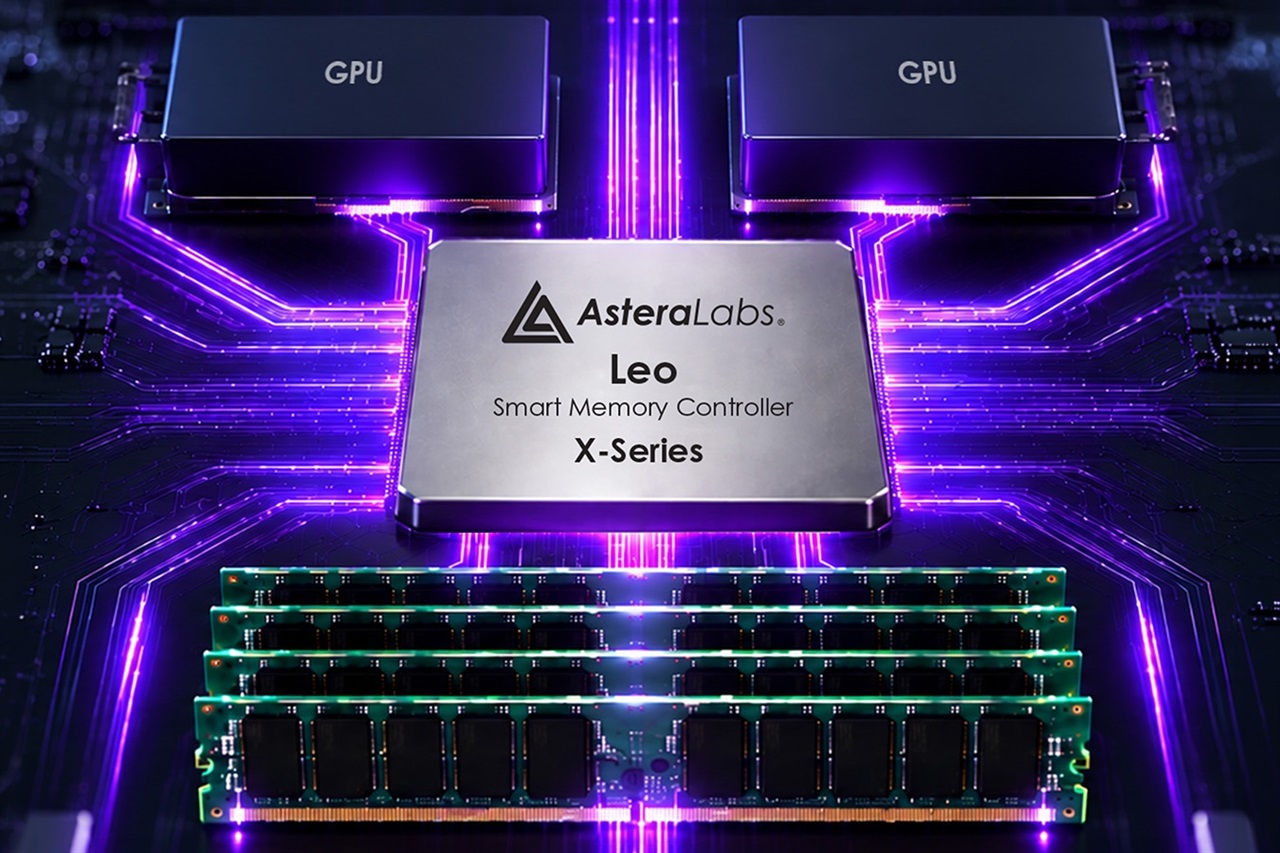
The signal: KV cache emerges from the shadows
Astera Labs has targeted a problem that many teams discover when moving from experimentation to operational use of LLMs: the KV cache. This is not an implementation detail, but a physical constraint that determines how many jobs can run in parallel, how much latency matters, and how much it impacts infrastructure TCO. The company's choice to focus on this bottleneck is a precise signal: the industry is revising its hardware priorities.
For years, AI hardware has been described primarily in terms of compute power and core throughput. GPUs have been evaluated based on peak FLOPS or the ability to train ever-larger models. But agentic workloads, which chain multiple calls and maintain shared state across turns, shift pressure toward memory and interconnects. The KV cache, which in transformer models stores intermediate representations for each token needed for attention, grows rapidly with long contexts and multi-agent conversations.
When VRAM runs out, options are few and each introduces compromises. You can reduce precision with quantization, limit context length, or move parts of the cache off the GPU. Each path has a cost in quality, latency, or operational complexity. Astera Labs' interest in this specific bottleneck is not accidental: it indicates that the problem cannot be solved simply by adding more GPUs. A broader and more coherent memory hierarchy is needed, where the KV cache can live beyond local VRAM limits without making inference unusable.
For those doing on-premise or self-hosted deployments, this signal has immediate implications. Infrastructure that keeps data local must be sized not only for compute peak but also for memory behavior in multi-turn and multi-agent scenarios. The choice of how much memory to keep near the GPU and how much to handle over the network determines power consumption, cooling, and operational complexity. It is no longer enough to look at throughput benchmarks; you need to understand how the KV cache behaves under real load.
Why KV cache is a structural constraint for agentic workloads
In transformer models, the KV cache stores for each token the keys and values required by the attention mechanism. During sequence generation, the model reuses these representations to avoid recomputing the entire context at each step. With short contexts, the cache occupies little VRAM and the problem is negligible. But with long contexts and agentic workloads, the number of tokens grows rapidly: more agents interact, more calls chain together, and more shared state is held in memory.
This VRAM consumption directly affects the ability to run jobs in parallel. Each inference instance maintaining a large KV cache subtracts memory that could be used for other processes. Latency increases because the system must handle more frequent memory accesses or move data between storage tiers. TCO rises because more hardware is needed to sustain the same useful load, or compromises on quality are accepted to save VRAM.
The available countermeasures are known but present clear trade-offs. Quantization reduces the precision of representations in the cache, saving memory but risking degradation in response quality. Limiting context length trims the cache but prevents leveraging long windows, which are essential for agents that need to maintain memory of past interactions. Moving parts of the cache off the GPU, perhaps to system memory or fast storage, relieves VRAM but introduces additional latency on the critical path of attention.
For an organization running LLMs locally, these trade-offs are not theoretical. Deciding how much VRAM to dedicate to the cache, how to handle spill-over, and which intermediate memory tiers to adopt directly impacts service quality, operational costs, and the ability to scale without structural interventions. The KV cache thus becomes a design parameter as important as the choice of model or GPU.
Memory hierarchy becomes the new battleground
Astera Labs' interest in the KV cache signals that the industry is shifting attention from compute power to memory hierarchy. Adding more GPUs can increase raw compute capacity, but if local VRAM remains the bottleneck, each additional GPU risks being underutilized. A broader vision is needed: memory close to cores, system memory, NVMe storage, and fast interconnects must work together coherently.
This vision has direct implications for on-premise and self-hosted deployments. Local infrastructure must be sized not only for compute peak but also for memory behavior in multi-turn and multi-agent scenarios. The choice of how much memory to keep near the GPU and how much to handle over the network determines power consumption, cooling, and operational complexity. Costs are not only CapEx: the energy required to move data between memory tiers, additional cooling, and managing heterogeneous components all contribute to the total cost of ownership.
For those operating under data sovereignty constraints, the issue is even more stringent. Keeping data local means not being able to delegate memory management to cloud services. The KV cache, which contains intermediate representations of input data, must be managed within the controlled perimeter. This requires careful design of data flows and memory, because any movement off the GPU must respect security and latency constraints.
Memory flexibility therefore becomes a fundamental selection criterion. It is not enough to look at the maximum VRAM capacity of a card: you need to evaluate how the system handles fallback, how interconnects support remote memory access, and how software takes advantage of intermediate cache tiers. Those designing local LLM infrastructure must adopt a holistic approach that includes these aspects; otherwise, they risk ending up with a system that works well in tests but collapses under real agentic loads.
Those who control data movement, not just compute
Astera Labs' move reinforces a strategic message: the next generation of LLM infrastructure will not be won by whoever has the fastest chip, but by whoever controls data movement better. Memory and connectivity solution providers can carve out a central role, while those focused only on compute risk losing relevance as the constraint shifts. This does not mean compute becomes irrelevant, but that the competitive differential moves toward the ability to orchestrate data flows across heterogeneous memory tiers.
For organizations evaluating local stacks, this shift requires revising selection criteria. Peak benchmarks, which measure throughput under ideal conditions, do not capture the KV cache behavior under multi-agent loads. Metrics related to memory access latency, the ability to handle long contexts without degradation, and flexibility in configuring the memory hierarchy must be included. Providers offering integrated solutions with memory and connectivity optimized for transformer access patterns may be better suited to on-premise deployments that require control and predictability.
Data sovereignty adds another layer of complexity. Local infrastructure must ensure that data, including intermediate representations in the KV cache, does not leave the controlled perimeter. This favors solutions that allow granular memory management, configurable spill-over policies, and no dependencies on external cloud services. Those who control data movement within their own data center have a tangible advantage in terms of compliance and security.
AI-RADAR dedicates analysis spaces on /llm-onpremise for those who want to explore these trade-offs without shortcuts. Complexity should not be hidden: every choice about memory and connectivity has repercussions on TCO, service quality, and scalability. Our goal is to provide analytical tools for informed decisions, not product rankings.
What to watch: signals to monitor evolution
Those following the evolution of LLM infrastructure must monitor specific signals. First, the adoption of emerging memory technologies that allow extending capacity beyond local VRAM without introducing prohibitive latencies. This is not about following a single standard, but observing how providers integrate system memory, fast storage, and high-bandwidth interconnects into coherent architectures.
Second, the development of software frameworks that manage the KV cache intelligently. The ability to selectively move parts of the cache to slower memory, apply adaptive quantization, or predict which tokens will be needed for the next steps can make the difference between a system that scales and one that collapses. Frameworks that expose granular controls over these aspects will become increasingly relevant for on-premise deployments.
A third signal concerns hardware-software co-design. Transformer memory access patterns are specific and predictable: solutions born from close collaboration between silicon designers and inference framework developers have a better chance of overcoming current trade-offs. Observing how GPU, memory, and interconnect vendors collaborate with LLM research teams can indicate where the next competitive advantages will emerge.
Finally, for those managing local infrastructure, it is important to monitor the evolution of agentic workloads. Increases in average context length, the number of agents cooperating in a single session, and the complexity of shared state are indicators that determine how soon the KV cache will become a critical bottleneck. Those who anticipate these trends and size their infrastructure accordingly will avoid costly and sudden interventions.
AI-RADAR perspective: trade-offs without shortcuts
The Astera Labs story is a reminder: in LLM infrastructure, bottlenecks shift and priorities change. For years compute was king, but agentic workloads are shifting attention toward memory and data movement. The KV cache, once considered an implementation detail, emerges as a determining factor for parallelism, latency, and TCO.
For those doing on-premise or self-hosted deployments, this means selection criteria cannot be limited to compute power. The ability to manage the KV cache efficiently, the flexibility of the memory hierarchy, and the coherence of interconnects are equally important. TCO is not reduced to the purchase price of GPUs: it includes energy consumption, cooling, operational complexity, and the need for future interventions.
Data sovereignty adds a non-negotiable constraint. Keeping everything local requires fine-grained control of memory flows, because the KV cache contains information derived from input data. Any solution that claims to solve the bottleneck must demonstrate that it does so without compromising security or introducing external dependencies.
Ultimately, Astera Labs' signal indicates that LLM infrastructure is entering a phase where controlling data movement matters as much as compute power. Those designing local stacks must adopt a holistic vision that includes memory, interconnects, and management software. AI-RADAR will continue to explore these trade-offs without shortcuts, because decisions made today will determine the sustainability of tomorrow's deployments.


💬 Comments (0)
🔒 Log in or register to comment on articles.
No comments yet. Be the first to comment!