Weekly Digest This week

๐Ÿ“– AI-Radar ยท 2026-W42

12 October โ€“ 18 October 2026  ยท  58 articles published

๐Ÿ“ LLM 26

Reflection's Beam: Token-Efficient Reasoning, 501B Memory Footprint

Reflection's Beam: Token-Efficient Reasoning, 501B Memory Footprint

Reflection has released Beam, an open LLM with a 501-billion total and 23-billion active parameter MoE architecture. It supports a 1 million token context and BF16, FP8, and NVFP4 precision. The focus is token-efficient reasoning: about one third of the inference tokens of leading open models. Benchmarks show strong coding and math results, but memory remains the key constraint for self-hosted deployments.

16 Oct #Hardware #LLM On-Premise #DevOps
Hybrid Reasoning Agents: Hidden Thinking Cuts Token Use and Reshapes Inference Economics

Hybrid Reasoning Agents: Hidden Thinking Cuts Token Use and Reshapes Inference Economics

A preprint from Stanford, Together AI, UIUC, and Meta introduces Hybrid Reasoning Agents: models that reason internally and emit text only for tool use and final answers. In reported tests they gain about 10%, use half the tokens, run twice as fast, and cost less. The structural shift moves reasoning out of the token stream, affecting verifiability, trust, and inference economics.

16 Oct #Hardware #LLM On-Premise #DevOps
Tencent Hy-Memory-30B-A3B: Why 3B Active Parameters Matter More Than 30B Total

Tencent Hy-Memory-30B-A3B: Why 3B Active Parameters Matter More Than 30B Total

The model card for Tencent Hy-Memory-30B-A3B sparks debate over a slippery claim: an architecture with 3 billion active parameters out of 30 billion total would beat Opus 5 on an unspecified memory test. The issue is not the benchmark but the structural signal for self-hosted deployments: fewer active parameters can reduce VRAM and inference costs without making the model easier to evaluate.

16 Oct #Hardware #LLM On-Premise #DevOps
Qwen Flash Next: a solo Q2 quant challenges ISTA Lab

Qwen Flash Next: a solo Q2 quant challenges ISTA Lab

A three-day empirical test of GYRO-M, a Q2 quantization of Qwen Flash Next, reports q3-level stability at reduced size. The project comes from a single contributor and holds up on long contexts, but shows weaknesses on Cyrillic text. The case reopens the discussion on quantization, loop resistance, and quality metrics for local deployments.

16 Oct #Hardware #LLM On-Premise #DevOps
Saturated Benchmarks Still Hold Signal in Model Transcripts

Saturated Benchmarks Still Hold Signal in Model Transcripts

When several models reach near-perfect scores, benchmarks lose their ability to differentiate them. A study shows that full task transcripts from saturated benchmarks retain predictive information. Pairwise judging reduced prediction error by 5.3 times compared with using saturated scores alone. The signal concentrates in reasoning and tool calls, but protocols do not always generalise across distribution shifts: early 2025 reasoning models were underestimated.

16 Oct #LLM On-Premise #DevOps
Bengali shatters English LLM benchmark certainties

Bengali shatters English LLM benchmark certainties

A zero-shot benchmark of eight LLMs shows that summarization quality does not transfer from English to Bengali. GPT-5.6 Luna leads several English lexical metrics, but LLaMA 3.3 70B achieves the best Bengali ROUGE and BLEU scores; Gemini 2.5 Flash posts the highest observed Bengali factuality. Different evaluation methods produce different rankings, underscoring the need for multilingual evaluation frameworks in low-resource languages.

15 Oct #Hardware #LLM On-Premise #Fine-Tuning
Inverse Models Turn Answer-Only Data Into Reasoning Distillation

Inverse Models Turn Answer-Only Data Into Reasoning Distillation

Researchers use an inverse LLM to reconstruct reasoning traces from answers alone. Trained once, the model generates intermediate steps offline for prompt-answer data, avoiding the multiple rollouts of reinforcement learning. On Qwen3-0.6B, a single distillation round roughly doubles pass@1 on hard prompts; the same inverse model also acts as a verifier, lifting best-of-n selection on Countdown from 0.753 to 0.969.

15 Oct #Hardware #LLM On-Premise #Fine-Tuning
LiquidAI LFM2.5-24-A2B: Robust Performance on AMD W7900 for On-Premise LLMs

LiquidAI LFM2.5-24-A2B: Robust Performance on AMD W7900 for On-Premise LLMs

A user reported a positive experience with LiquidAI's LFM2.5-24-A2B model (24B parameters), highlighting high performance (~95 tps) on an AMD W7900 GPU. The model, requiring 30GB of VRAM for Q8 quantization with a 128k token context, proves reliable for local workloads, suggesting significant potential for on-premise deployments and greater hardware diversification in LLM inference.

15 Oct #Hardware #LLM On-Premise #DevOps
Ling-3.1-flash: 560B Parameters, 25B Active, and a 1M-Token Context Window

Ling-3.1-flash: 560B Parameters, 25B Active, and a 1M-Token Context Window

inclusionAI's Ling-3.1-flash appears on Hugging Face with 560 billion total parameters, 25 billion active parameters per token, and a 1-million-token context window. The mixture-of-experts configuration reduces per-token compute, but shifts the focus to memory, VRAM, and KV cache management. For on-premise deployments, the gap between total and active parameters forces careful choices on quantization and workload distribution.

14 Oct #Hardware #LLM On-Premise #DevOps
China's open-weight models trail US closed models by 7 months, and data transparency matters more

China's open-weight models trail US closed models by 7 months, and data transparency matters more

An open-source leaderboard aggregates 22,113 benchmark results and shows China's open-weight models about seven months behind US closed models. The methodology separates 14,436 independent evaluations from 7,677 lab-reported scores. For on-prem deployment evaluations, the key point is not only the performance gap: open-weight enables self-hosting, but with VRAM, quantization, and TCO costs to assess.

14 Oct #Hardware #LLM On-Premise #Fine-Tuning
LiquidAI LFM2.5-24B-A2B: 24B parameters, 2B active for on-device

LiquidAI LFM2.5-24B-A2B: 24B parameters, 2B active for on-device

LiquidAI has introduced LFM2.5-24B-A2B, a reasoning model with 24 billion total parameters and 2.45 billion active. Built for private on-device agents, it claims to compete with Qwen3.6-35B-A3B and run up to 1.7 times faster than comparable MoEs, with 184 tokens per second on Apple M5 Max and 21,000 tokens per second on NVIDIA B300.

13 Oct #Hardware #DevOps
Google DeepMindโ€™s resident philosopher and the empirical turn in LLM ethics

Google DeepMindโ€™s resident philosopher and the empirical turn in LLM ethics

Henry Shevlin still works at Cambridge but now spends 80% of his time as a philosopher at Google DeepMind. In his IEEE Spectrum interview, he ties LLM creativity, slop, autonomy, human relationships and consciousness into one thread: model behavior changes with context, prompting and generation temperature. For on-prem deployments, the point is ongoing behavioral evaluation rather than static safety checklists.

13 Oct #LLM On-Premise #DevOps
AutoIndexer: When Models Rewrite Their Own Output Like in a Text Editor

AutoIndexer: When Models Rewrite Their Own Output Like in a Text Editor

AutoIndexer introduces a decoding mechanism based on a chain of edits: the model can insert, substitute, or delete tokens after generation, moving a cursor like in a text editor. Trained on perturbed sequences, it learns to correct erroneous contexts and handle non-causal dependencies. The technique promises post-generation editing capabilities without sacrificing benchmarks, with implications for code correction tools and interactive applications.

12 Oct #Hardware #LLM On-Premise #Fine-Tuning
AIQ, when LLM compression changes its mathematical base

AIQ, when LLM compression changes its mathematical base

A new compression format for LLMs uses algebraic integers instead of the usual floating-point or fixed-point formats. The research shows competitive accuracy with the MX format at equal bit-per-parameter budgets. For self-hosted inference, the potential benefit is lower pressure on VRAM and TCO, but dedicated runtime and kernel support are still needed. Generalizations beyond degree two remain a future direction.

12 Oct #Hardware #LLM On-Premise #DevOps

๐Ÿ“ Hardware 14

AMD W7900 and LFM2.5: A Concrete Signal for On-Premise LLM

AMD W7900 and LFM2.5: A Concrete Signal for On-Premise LLM

A 24-billion-parameter LLM tested on an AMD W7900 with a 128,000-token context and sustained speed around 95 tokens per second signals that on-premise inference is maturing beyond NVIDIA's ecosystem. AI-Radar explores trade-offs, data sovereignty, and TCO.

15 Oct
From Crescent Island to D Series: Intel Targets Enterprise Inference

From Crescent Island to D Series: Intel Targets Enterprise Inference

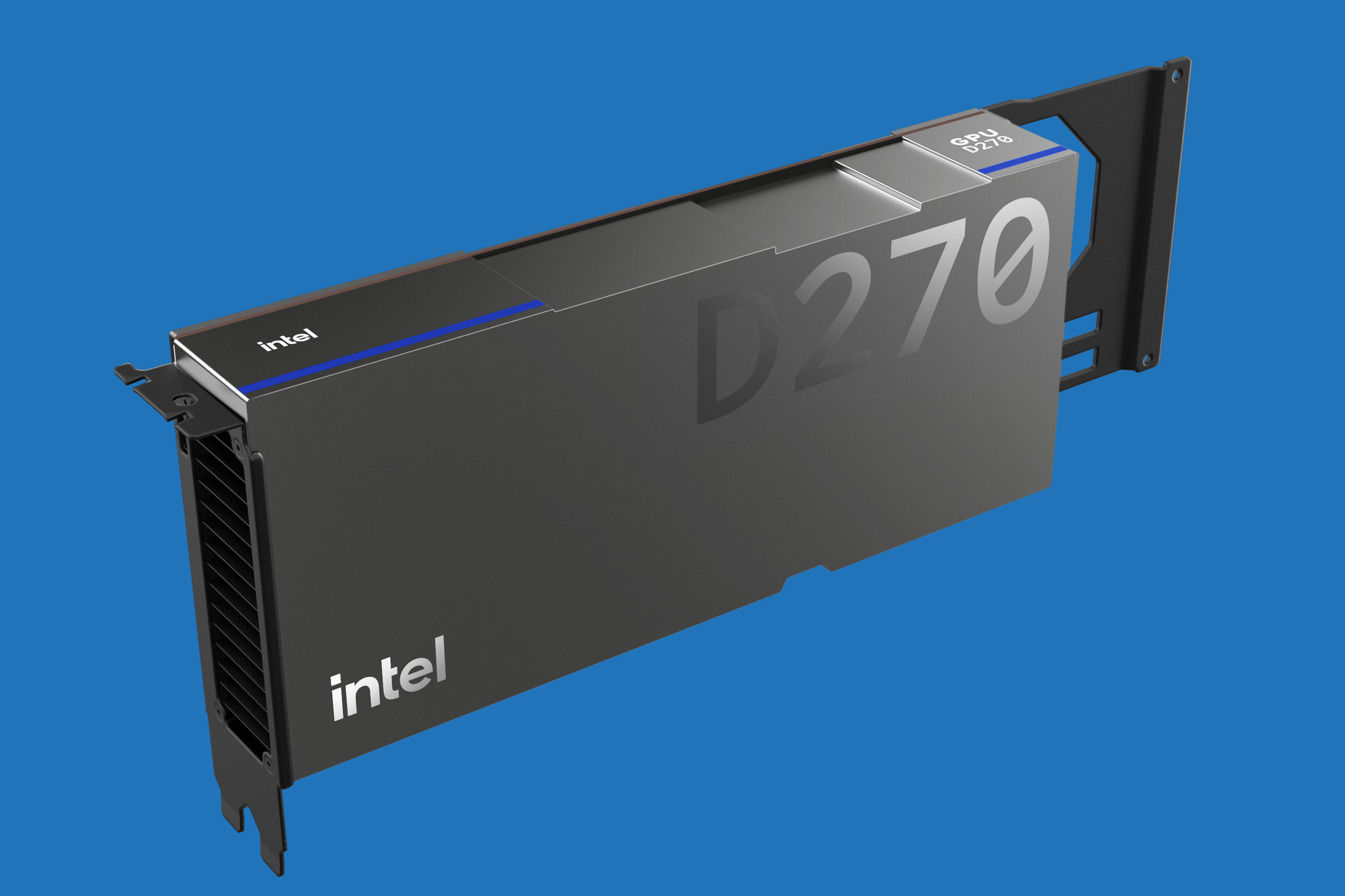
Intel has announced the GPU D Series, the successor to products known as Crescent Island and aimed at enterprise inference. The announcement lacks VRAM or performance details, but the renaming signals a more direct positioning in the market for on-premise LLM accelerators. For those evaluating local deployments, the immediate question is not benchmark comparisons but how Intel plans to compete on TCO and integration.

12 Oct #Hardware #LLM On-Premise #Fine-Tuning
A 'broken' RTX 4090 for $350 hides a fake GPU and swapped memory

A 'broken' RTX 4090 for $350 hides a fake GPU and swapped memory

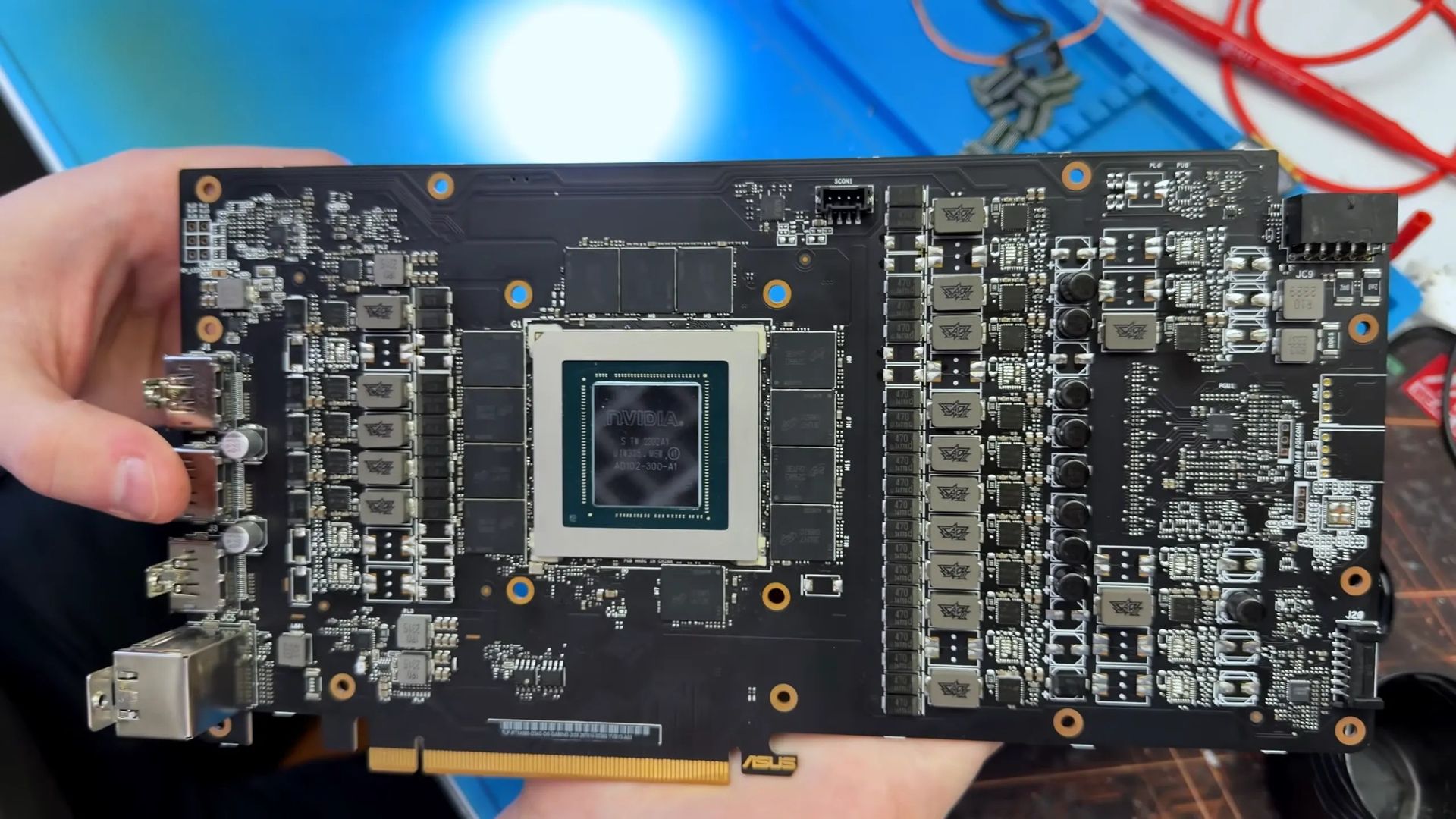
A buyer paid $350 for a broken RTX 4090, only for a technician to find a fake GPU die and swapped memory. The scam, documented by a Russian repair specialist, uses sophisticated dummy PCBs. For anyone building on-premise LLM infrastructure, the episode shows how the secondary market for high-performance GPUs has become a target for counterfeiters, with implications for TCO, pipeline reliability, and trust in sourcing channels.

12 Oct #Hardware #LLM On-Premise #Fine-Tuning

๐Ÿ“ Frameworks 5

PRISM: privileged information for multi-agent topology design

PRISM: privileged information for multi-agent topology design

PRISM recovers per-query signal from execution-verified graph corpora that lack rankings. A teacher reads a sibling graph via a zero-initialized low-rank branch; the student aligns per-decision targets on self-sampled trajectories. Across six benchmarks, the method beats topology-design baselines. The most interesting effect is on inference costs: fewer superfluous agent interactions, a concrete advantage for self-hosted infrastructure.

16 Oct #Hardware #LLM On-Premise #Fine-Tuning
DeepUnfolding Agent: Adaptive Control Becomes an External Service

DeepUnfolding Agent: Adaptive Control Becomes an External Service

The FastAPI platform described by DeepUnfolding Agent separates adaptive control from domain-specific execution. Executors register a schema, send round-level diagnostics, receive schema-bounded actions, and return feedback. SQLite persistence and Docker deployment support classical, quantum-aware, hybrid, Qiskit Aer, and IBM Quantum pathways. Tests span finance, healthcare, genomics, transport, noisy quantum simulation, and hardware-backed IBM Quantum execution, yielding a reusable and traceable control layer.

16 Oct #Hardware #LLM On-Premise #Fine-Tuning
Mesa Expands NPU Support: YOLOX and PyTorch Join the Open Driver Stack

Mesa Expands NPU Support: YOLOX and PyTorch Join the Open Driver Stack

Mesa's open-source driver stack extends NPU support: Tomeu Vizoso's work brings YOLOX via PyTorch to neural accelerators without proprietary SDKs. The structural signal is a shared driver that reduces lock-in, simplifies local deployment, and shifts attention to TCO and data sovereignty. For edge and on-premises deployments, the importance lies less in a single framework than in changing vendor incentives.

14 Oct #Hardware #LLM On-Premise #DevOps

๐Ÿ“ OnPremise 5

Mesa brings YOLOX to NPUs: the open driver reshapes local inference

Mesa brings YOLOX to NPUs: the open driver reshapes local inference

Mesa extends support to NPUs and demonstrates YOLOX via PyTorch, moving accelerator access outside proprietary toolchains. For edge and on-premise, the open driver reduces lock-in and porting costs, changing the TCO calculation. AI-Radar reads the structural signal: AI acceleration follows the GPU trajectory, where value shifts from simple hardware access to orchestration with shared frameworks and reproducible pipelines.

14 Oct
Reverse engineering CUDA with AI: the on-premise lock-in symptom

Reverse engineering CUDA with AI: the on-premise lock-in symptom

A Reddit post revives the idea of using LLMs to recreate open source CUDA and free AMD GPUs. The signal is not immediate technical feasibility, but structural tension between stack control, software compatibility, and TCO in self-hosted infrastructure. For those evaluating on-premise deployments, the debate shows how hardware choice is inseparable from ecosystems, frameworks, and migration constraints.

13 Oct
Receipts on-device: the signal for those controlling local inference

Receipts on-device: the signal for those controlling local inference

A 0.8B model reading receipts on the phone shows on-device inference as a concrete option for personal documents. The project combines fine-tuning on donated data, JSON output and a self-hosted release valve via an OpenAI-compatible server. For those evaluating local deployments, the signal is the trade-off between memory, data quality and TCO, with sovereignty as a constraint rather than a preference.

12 Oct

๐Ÿ“ Market 1

๐Ÿ“ Altro 7

Skeleton Technologies surpasses $1B valuation with Siemens backing for US AI power expansion

Skeleton Technologies surpasses $1B valuation with Siemens backing for US AI power expansion

Siemens invests in Skeleton, pushing its valuation above $1 billion. The goal: US manufacturing expansion and R&D in Silicon Valley for power systems that remove harmonics and rapid fluctuations in AI GPU clusters, delivering up to 40% energy savings and double-digit GPU performance gains. The move shifts the AI bottleneck from GPU supply to power infrastructure.

14 Oct #Hardware #LLM On-Premise #DevOps
On-device receipt scanning with a 0.8B vision model

On-device receipt scanning with a 0.8B vision model

A developer built a free Android app that uses a 0.8-billion-parameter vision model to read receipt photos and extract store, date, total, and line items into JSON. The model, fine-tuned on receipts, runs on the phone without sending data to third parties. The models will be open source and usable with an OpenAI-compatible server. A case of on-device inference designed for data sovereignty.

12 Oct #LLM On-Premise #Fine-Tuning #DevOps
OpenMed 3.0: On-Premise Clinical AI Securing Healthcare Data Sovereignty

OpenMed 3.0: On-Premise Clinical AI Securing Healthcare Data Sovereignty

OpenMed 3.0 is an Apache-2.0 open-source AI toolkit for the medical sector, designed to operate exclusively on-premise. Its core philosophy is to keep patient data on local machines, without any reliance on cloud services or external APIs, ensuring privacy and sovereignty. The new "Patient Journey" feature aggregates heterogeneous clinical data into a unified timeline, with a strict emphasis on data integrity and non-speculation, refusing silent cloud fallbacks.

12 Oct #Hardware #LLM On-Premise #DevOps
โ† 2026-W41 All news