
Cambricon: Revenue Growth Driven by AI Compute Demand
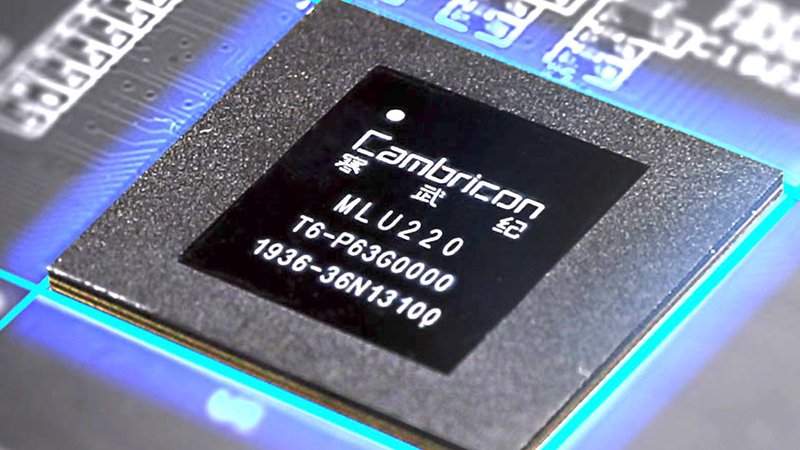
Chinese company Cambricon, specializing in artificial intelligence chips, has reported a significant increase in its revenues. This growth is directly linked to the rising global demand for AI-dedicated computing capacity, a trend that is redefining the infrastructural strategies of many organizations. This data highlights how the hardware market for artificial intelligence is rapidly expanding, with direct implications for silicio solution providers.
The push towards the adoption of Large Language Models (LLM) and other generative artificial intelligence applications is creating an unprecedented need for processing power. This scenario not only concerns cloud giants but also a growing number of companies seeking to implement AI capabilities internally, often for reasons of data sovereignty, cost control, or compliance requirements. Cambricon's performance reflects this market dynamic, where the availability of high-performance hardware has become a critical success factor.
The Context of AI Compute Demand
AI compute demand is not a homogeneous phenomenon; it manifests in various forms, from intensive training of complex models to large-scale Inference. For businesses, this translates into the need for infrastructures capable of handling workloads requiring high VRAM, Throughput, and low latency. The choice between cloud-based solutions and self-hosted or on-premise deployments becomes crucial, directly influencing the Total Cost of Ownership (TCO) and operational flexibility.
Implementing LLMs on-premise, for example, requires careful planning of hardware resources, including the selection of GPUs with adequate memory and high-speed interconnections. These environments allow organizations to maintain full control over their data and processing operations, a fundamental aspect for sectors such as finance, healthcare, or public administration, where confidentiality and security are paramount. The growth of companies like Cambricon indicates that the market is responding to this need for diversified and high-performance hardware solutions.
Implications for On-Premise Deployments
For CTOs, DevOps leads, and infrastructure architects, the surge in AI compute demand poses significant strategic questions. The decision to invest in on-premise AI infrastructures, rather than relying exclusively on the cloud, is often driven by the pursuit of a balance between performance, cost, and control. On-premise deployments offer advantages in terms of data sovereignty, allowing companies to operate in air-gapped environments or with stringent compliance requirements, such as GDPR.
However, these choices also entail direct management of hardware, power, cooling, and maintenance. TCO analysis thus becomes a complex exercise that must consider not only the initial CapEx for purchasing servers and GPUs but also the ongoing OpEx related to energy, personnel, and technological upgrades. The ability to optimize LLM Inference and Fine-tuning on local hardware, perhaps through techniques like Quantization, is a key factor in maximizing return on investment. For those evaluating on-premise deployments, AI-RADAR offers analytical frameworks on /llm-onpremise to assess these trade-offs.
Future Prospects and Strategic Trade-offs
Cambricon's revenue growth is a clear indicator of the direction the AI market is taking: a growing decentralization of computing capacity. Companies are not just looking for raw power but for solutions that integrate with their existing architectures and meet specific operational and regulatory constraints. This scenario fosters the development of a more diverse hardware and software ecosystem, where various providers compete to offer optimized solutions for specific AI workloads.
In this context, the choice of hardware and deployment strategy is never a matter of "better" or "worse" in absolute terms, but rather of identifying the solution that best aligns with an organization's strategic objectives and constraints. The trade-offs between cloud flexibility and on-premise control, between initial costs and long-term operational costs, and between performance and security requirements, will continue to be at the forefront of technology leaders' decisions. The demand for AI compute will continue to evolve, driving innovation in both silicio and deployment strategies.







💬 Comments (0)
🔒 Log in or register to comment on articles.
No comments yet. Be the first to comment!