
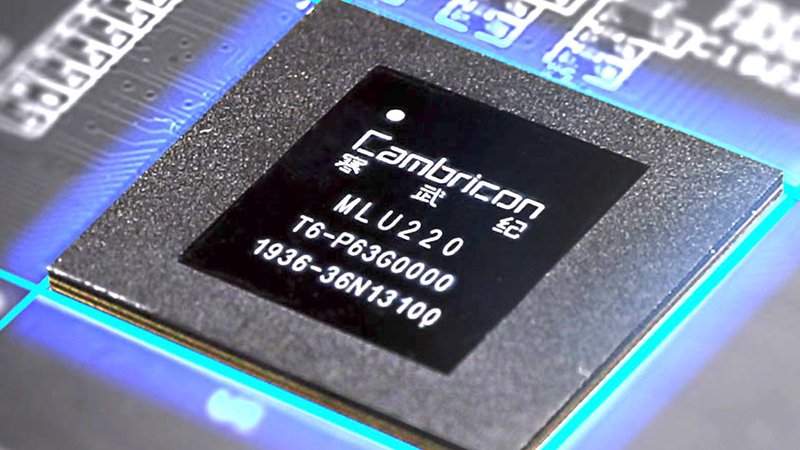
The news has a more political-industrial flavor than a purely technical one, but that is exactly the point. Cambricon, a Chinese AI chip maker, has gained a seat on the board of the PyTorch Foundation. The stated goal is to strengthen the software ecosystem for Chinese AI chips. Behind that formula lies a contest over how models run in production, especially when organizations do not want to depend on a single silicon supplier.
PyTorch has become one of the reference frameworks for training and inference of LLMs. Its governance is designed to be vendor-neutral, but neutrality is also built through board seats. Those at the table can steer development priorities, backend integration, documentation, and API stability. For an accelerator vendor, being inside this structure is not about prestige: it is a way to avoid having its chips remain compatible only with proprietary toolchains or modified versions of the framework.
Software as the bottleneck
The critical issue is not raw chip performance but the software that makes chips usable. An accelerator can have solid compute capacity, but if the framework does not recognize it natively, every deployment becomes a porting project. Training and inference pipelines break, quantization and fine-tuning require patches, and management costs rise. In a context where companies consider local servers to keep data within their own borders, software compatibility matters as much as VRAM or memory bandwidth.
Cambricon's board entry should also be read through the lens of technological sovereignty. China is investing in domestic accelerators to reduce exposure to supply restrictions. But a chip without an open software ecosystem is little more than a paperweight. PyTorch represents the bridge between silicon and the community of researchers and developers. Having a voice in its evolution means trying not to be cut off from mainstream LLM development, which largely travels on this framework.
There is also a second-order effect for organizations operating in Europe. If PyTorch becomes more hardware-agnostic, the market for inference accelerators becomes more contestable. Less dependence on a single proprietary stack means the ability to compare different solutions on TCO, power consumption, and data residency requirements. This does not imply that every Chinese accelerator automatically becomes a mature alternative: kernel quality, support for common operations, and long-term maintenance remain decisive variables. But the structural signal is clear: competition is shifting from the individual component to the ability to integrate into a shared framework.
For teams managing self-hosted deployments, the arrival of new vendors on the PyTorch board can reduce lock-in risk. It is not a performance guarantee, but an incentive to treat the software ecosystem as a hardware selection criterion rather than an afterthought. Those choosing an on-premise cluster today are not just buying GPUs or accelerators: they are buying the probability that their stack will stay updated and compatible with future versions of the framework. For those evaluating on-premise deployments, the trade-offs between software compatibility, TCO, and data control are exactly the kind of variables AI-RADAR covers in its /llm-onpremise section.
In short, the contest is not only in benchmarks. It plays out in governance meetings where decisions are made about which backends get supported, how updates are distributed, and how easy it is to move a model from a development environment to a production server. Cambricon's seat is one piece of that contest, and its weight will show up in future PyTorch releases.






💬 Comments (0)
🔒 Log in or register to comment on articles.
No comments yet. Be the first to comment!