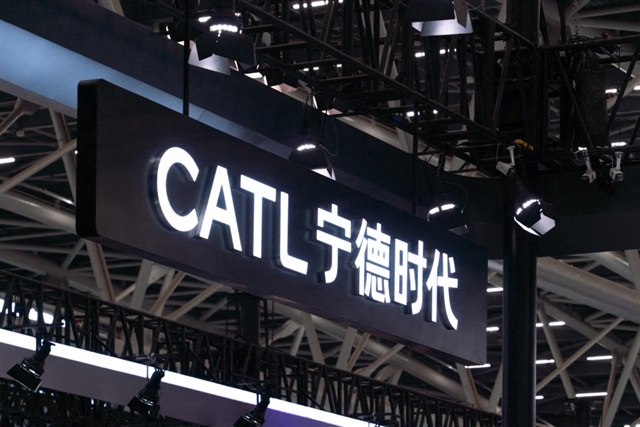
CATL and deepSeek: A Strategic Alliance in the AI Landscape
The global technology landscape is constantly evolving, with companies from traditional sectors increasingly looking to artificial intelligence as a driver of innovation. In this context, CATL, a world leader in electric vehicle battery production, is reportedly considering acquiring a stake in the AI startup deepSeek. This potential move signals a growing interest from established industrial players in the transformative capabilities of AI, not only to optimize their own processes but also to explore new market opportunities.
An investment in an AI startup like deepSeek, although specific details are not yet known, underscores the need for significant capital to fuel research and development in artificial intelligence. For a startup, access to fresh financial resources is crucial for scaling operations, attracting talent, and, most importantly, building the computational infrastructure essential for working with complex models.
The Infrastructural Needs of AI and the Deployment Dilemma
The development and deployment of Large Language Models (LLM) demand considerable computing power, which translates into a high requirement for specialized hardware, particularly high-performance GPUs with ample VRAM. AI startups often face a fundamental strategic choice: rely on cloud services for Inference and training, or invest in self-hosted infrastructure, opting for an on-premise or hybrid deployment.
The decision between cloud and on-premise is not trivial and involves a careful evaluation of the Total Cost of Ownership (TCO). While the cloud offers flexibility and immediate scalability, operational costs can escalate rapidly with intensifying AI workloads. On-premise infrastructure, on the other hand, requires a higher initial investment (CapEx) but can offer a lower TCO in the long run for stable and predictable workloads, in addition to ensuring total control over hardware and data.
Data Sovereignty and Control: Priorities for AI Companies
For many companies operating with sensitive or proprietary data, data sovereignty and regulatory compliance (such as GDPR) represent non-negotiable constraints. In these scenarios, on-premise or air-gapped deployment solutions often become the only viable option, allowing data to be kept within corporate boundaries and under the full control of the organization. This is particularly relevant for sectors such as finance, healthcare, or defense, where security and privacy are paramount.
The investment in deepSeek could therefore not only provide the necessary capital for advanced model development but also for building robust infrastructure that meets these requirements. For those evaluating on-premise deployment, AI-RADAR offers analytical frameworks on /llm-onpremise to assess the trade-offs between costs, performance, and control, helping companies make informed decisions without direct recommendations, but highlighting the constraints and opportunities of each approach.
Future Prospects in the AI Market
CATL's move is part of a broader trend of convergence between industrial sectors and artificial intelligence. AI is no longer an exclusive domain of tech companies but a strategic tool for innovation in every field, from manufacturing to energy. The injection of capital into specialized startups like deepSeek is fundamental for accelerating innovation, allowing them to push the boundaries of research and develop increasingly sophisticated AI solutions.
The future of the AI market will likely be characterized by a continuous pursuit of efficiency in Inference and training, with increasing attention to hardware and software optimization. Investment decisions like CATL's will have a direct impact on startups' ability to navigate this complex landscape, influencing not only model development but also the infrastructural architectures that will support them.







💬 Comments (0)
🔒 Log in or register to comment on articles.
No comments yet. Be the first to comment!