
The Evolution of AI Capabilities: ChatGPT Images 2.0
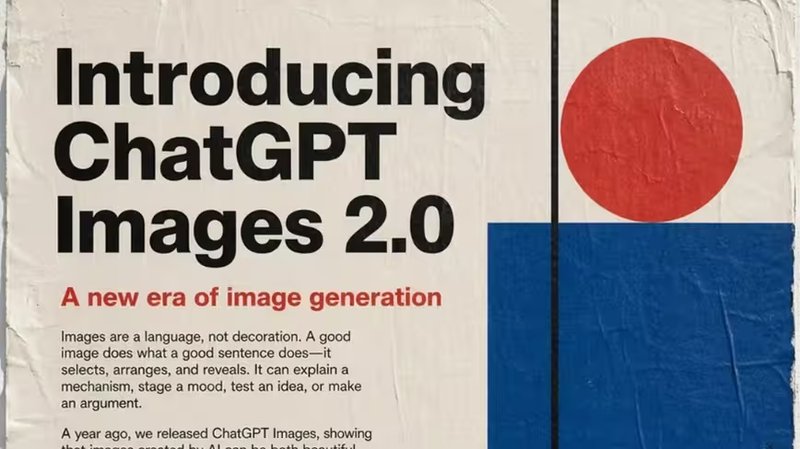
OpenAI recently introduced ChatGPT Images 2.0, its latest model dedicated to image generation. What has captured the attention of industry professionals is not just its primary capability, but a surprising secondary skill: text generation. This unexpected functionality from a model designed for computer vision tangibly highlights how much artificial intelligence capabilities have advanced in recent years.
The fact that a model primarily oriented towards visual creation can produce coherent and quality text is a significant indicator of the convergence and sophistication achieved by Large Language Models (LLMs) and multimodal models. For CTOs and infrastructure architects, this development is not merely a technological curiosity but a signal of the increasing complexities and opportunities that advanced AI systems present for enterprise deployments.
Technical Detail and Multimodal Implications
Traditionally, image generation models and text models operate on distinct architectures and datasets, optimized for their respective modalities. ChatGPT Images 2.0's ability to also excel in text generation suggests a deeper integration or a latent understanding of the relationships between visual and linguistic concepts. This phenomenon is typical of multimodal models, which are trained on data combining various forms (text, images, audio) to develop a more holistic understanding of the world.
To support such multimodal capabilities, the underlying infrastructure must be extremely robust. These models require significant computational resources, particularly in terms of VRAM and GPU computing power, for both training and inference. Managing complex pipelines that integrate different input and output modalities becomes a crucial challenge for DevOps teams and infrastructure engineers aiming to deploy advanced AI solutions in controlled environments.
Challenges for Enterprise Deployments and Data Sovereignty
The advancement of models like ChatGPT Images 2.0 raises important questions for companies evaluating the adoption of LLMs and generative AI. Deploying multimodal models on-premise or in air-gapped environments, while offering advantages in terms of data sovereignty and regulatory compliance (such as GDPR), entails significant infrastructural requirements. The need for specific hardware, such as latest-generation GPUs with high VRAM, and managing a TCO (Total Cost of Ownership) that includes CapEx and OpEx for energy and cooling, become decisive factors.
Choosing between self-hosted solutions and cloud services has never been more complex. While the cloud offers scalability and simplified management, on-premise deployments provide unprecedented control over data and the entire AI pipeline. For those evaluating on-premise deployments, AI-RADAR offers analytical frameworks on /llm-onpremise to explore these trade-offs and make informed decisions based on specific performance, security, and cost constraints.
Future Prospects and Strategic Decisions
The evolution of AI capabilities, exemplified by ChatGPT Images 2.0, indicates a clear trend towards increasingly versatile and integrated models. This versatility, while opening new frontiers for innovation and automation, simultaneously intensifies the pressure on corporate IT infrastructures. Technical decision-makers must prepare to manage AI workloads that not only demand more resources but may also present more complex operational and security requirements.
The ability of a single model to effectively handle both visual and textual tasks could simplify some pipelines, but at the same time requires careful resource planning and deployment strategies. Understanding the trade-offs between performance, cost, control, and compliance will be crucial for companies looking to fully leverage the potential of artificial intelligence while maintaining the resilience and security of their operations.






💬 Comments (0)
🔒 Log in or register to comment on articles.
No comments yet. Be the first to comment!