AI Infrastructure Growth Drives Server Demand
Chenbro Micom, a provider of server solutions, has issued a significant forecast for the hardware market. The company anticipates strong server demand in the second half of 2026, a trend directly connected to the continuous expansion of artificial intelligence infrastructures. This medium-term outlook underscores the industry's confidence in the sustained growth of AI workloads.
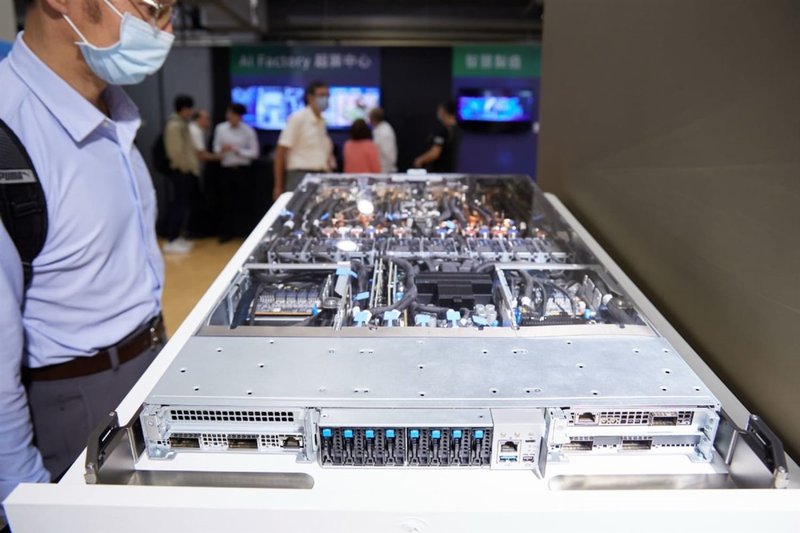
The forecast, reported by DIGITIMES, reflects a widespread expectation among hardware manufacturers: the implementation of Large Language Models (LLMs) and other AI applications will require substantial investments in high-performance servers. This scenario is particularly relevant for companies evaluating on-premise deployments, where long-term infrastructure planning is crucial to ensure scalability and control.
Specific Requirements of AI Workloads
The expansion of AI infrastructure is not limited to large hyperscalers. A growing number of enterprises are exploring self-hosted solutions to manage their artificial intelligence workloads, driven by needs for data sovereignty, regulatory compliance, and Total Cost of Ownership (TCO) optimization. These deployments require servers with very precise hardware specifications, particularly concerning GPU VRAM and compute capability.
Server demand is fueled by both intensive model training phases, which require GPU clusters with high-speed interconnects, and inference phases, which need servers optimized for high throughput and low latency. The choice between different hardware configurations, such as servers with NVIDIA A100 80GB or H100 SXM5 GPUs, depends strictly on the specific model requirements, context window size, and anticipated request volume. Model quantization, for example, can reduce VRAM requirements but may also affect precision and performance.
Implications for On-Premise Deployments
For organizations considering an on-premise LLM deployment, Chenbro Micom's forecast highlights the importance of a well-defined hardware acquisition strategy. Server availability and delivery times can significantly impact the implementation roadmap. Evaluating the overall TCO, which includes not only the initial hardware cost but also energy, cooling, and maintenance, becomes a determining factor for long-term sustainability.
The self-hosted approach offers unprecedented control over data and the operating environment, a fundamental aspect for sectors with stringent security and privacy requirements, such as finance or healthcare. However, it also demands significant internal expertise for infrastructure management, from configuring bare metal servers to optimizing inference pipelines. For those evaluating on-premise deployments, AI-RADAR offers analytical frameworks on /llm-onpremise to evaluate these trade-offs and support strategic decisions.
Future Prospects and Market Challenges
The projection extending to the second half of 2026 suggests that the AI server market is set for prolonged growth, with manufacturers preparing to meet increasingly sophisticated demand. Companies will need to balance technological innovation with supply chain stability, ensuring their infrastructures can scale efficiently and sustainably.
Today's hardware decisions will have a long-term impact on an organization's AI capabilities. Choosing flexible and scalable architectures, capable of supporting different generations of LLMs and techniques like quantization, will be crucial for remaining competitive in a rapidly evolving technological landscape. The ability to manage complex workloads, with varying memory and throughput requirements, will be a key differentiator in the near future.







💬 Comments (0)
🔒 Log in or register to comment on articles.
No comments yet. Be the first to comment!