Washington's regulatory pressure on the semiconductor supply chain is about to reach a new area: memory. Lawmakers are pushing to ban memory chips from China, even those that enter through allied countries' supply chains. Officials cite an 'unacceptable risk' to national, economic, and supply chain security.
This is not merely a tariff or a targeted restriction: it aims to sever every link, direct or indirect, to Chinese memory production. It extends technology controls well beyond cutting-edge processors, striking a fundamental building block for data centers and, especially, for on-premise AI infrastructure.
Why memory is strategic for on-prem AI
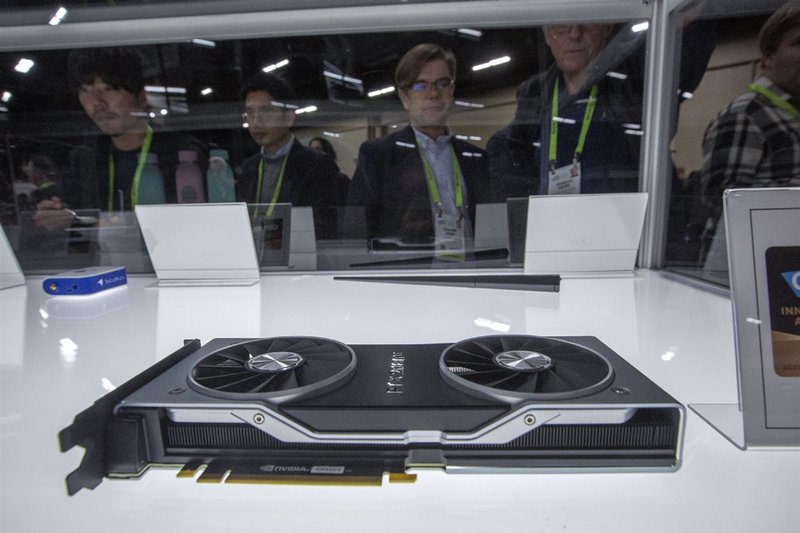
In the ecosystem of Large Language Models and local fine-tuning, VRAM is the most contested resource. Cards like NVIDIA's H100 or the upcoming B200 owe their ability to handle large models to on-board memory capacity and bandwidth. Memory chips (HBM and GDDR) are the costliest bottleneck for inference and training: any supply uncertainty translates into revised expansion plans, higher operational costs, and unpredictable planning for those who have chosen self-hosted stacks.
China, through companies like YMTC and CXMT, is progressively scaling NAND and DRAM production, presenting itself as an alternative to the Korean and American giants. A ban would not only close the tap on chips manufactured directly in China, but would also block components entering servers via resellers and integrators in friendly jurisdictions, effectively making an entire parallel supply chain unusable.
Winners and losers if the ban goes through
The first concrete effect would be a strengthening of the Samsung-SK Hynix duopoly, along with a competitive advantage for Micron, the only major US-headquartered memory manufacturer. But supply concentration among a few non-Chinese providers risks driving up prices and reducing procurement flexibility at a time when demand for high-performance memory is fueled by AI.
For those running on-premise architectures—government agencies, healthcare facilities, regulated industries—the restriction raises immediate compliance and supply chain review issues. It would no longer suffice to check the final assembler's origin: every memory module would need to be traced back to its foundry, with audit and certification costs that could make smaller vendors less attractive and commodity hardware adoption more difficult.
Geopolitically, the measure sends a clear signal to all interlocutors: technological dependency on China is no longer tolerated even in components once considered 'commodity.' For the AI industry, where hardware refresh cycles are short and memory capacity is often the key differentiator, the chip war escalation threatens to become the main exogenous variable in investment plans. The gap between those able to stockpile and those relying on just-in-time supply will widen, with direct repercussions on the Total Cost of Ownership of GPU clusters.







💬 Comments (0)
🔒 Log in or register to comment on articles.
No comments yet. Be the first to comment!