
Beijing Threatens Retaliation Over Huawei and ZTE Exclusion from EU Networks
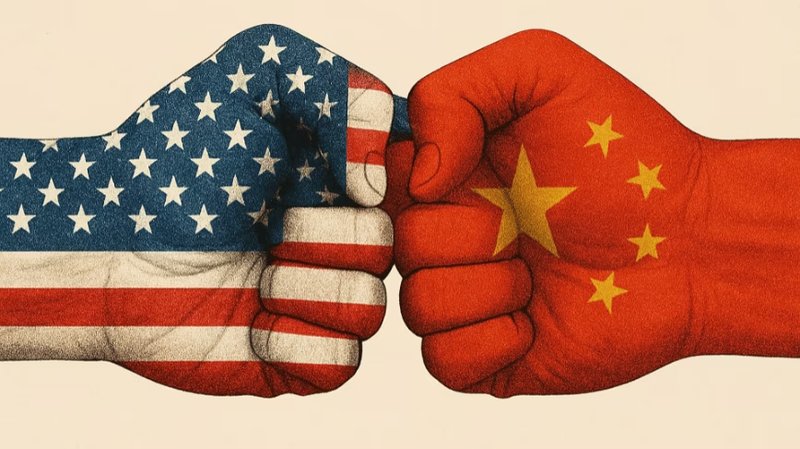
China's Ministry of Commerce has formally issued a severe warning to the European Commission, submitting a 30-page document outlining potential retaliatory measures. The dispute centers on the European Union's draft Cybersecurity Act, legislation that, if approved, would for the first time make the exclusion of specific technology vendors from European networks mandatory. This move by Beijing underscores the growing geopolitical tension permeating the digital infrastructure sector and the global technology supply chain.
The Chinese threat is clear: should companies like Huawei and ZTE be banned from European network infrastructures, China would adopt reciprocal measures against European businesses operating within its territory. This scenario introduces significant uncertainties for technology companies and critical infrastructure operators, who are forced to navigate an increasingly complex landscape where political decisions directly impact deployment strategies and operational continuity.
Data Sovereignty and Infrastructure Resilience: A Geopolitical Context
The issue raised by China is part of a broader debate on digital sovereignty and the security of critical infrastructures. For organizations managing sensitive workloads, including Large Language Models (LLM) and other artificial intelligence applications, vendor selection and data localization have become absolute priorities. Reliance on a single vendor or a supply chain with potential geopolitical vulnerabilities can entail significant risks for compliance, privacy, and service continuity.
In this context, an on-premise or hybrid deployment approach gains strategic relevance. The ability to maintain direct control over hardware, software, and data, even in air-gapped environments, offers a level of security and sovereignty that public cloud solutions might not fully guarantee in scenarios of international tension. Infrastructure decisions are no longer solely technical or economic but become intrinsically geopolitical, influencing the overall resilience of a company's digital ecosystem.
Implications for Deployment Decisions and TCO
For CTOs, DevOps leads, and infrastructure architects, threats of retaliation and potential government-imposed bans add another layer of complexity to evaluating deployment strategies. The choice between self-hosted solutions and cloud services can no longer ignore an in-depth analysis of the Total Cost of Ownership (TCO) that includes not only direct CapEx and OpEx but also risks related to supply chain disruptions, sanctions, or regulatory restrictions.
The need to ensure data sovereignty and compliance with local regulations, such as GDPR, prompts many organizations to consider options that offer granular control over the entire technology pipeline more carefully. This includes selecting hardware, frameworks, and LLMs that can be managed in controlled environments, reducing exposure to external risks and ensuring the flexibility needed to adapt to rapidly evolving regulatory and geopolitical scenarios.
Future Outlook and Strategic Trade-offs
The standoff between China and the European Union highlights a global trend towards technological fragmentation and the regionalization of supply chains. For technology decision-makers, this means facing increasingly complex trade-offs. On one hand, access to global innovation and economies of scale offered by large providers; on the other, the need to protect one's infrastructure, data, and operational continuity from external interference.
Evaluating these dynamics requires a holistic approach that considers not only performance and costs but also resilience, security, and sovereignty. For those evaluating on-premise deployment for AI/LLM workloads, AI-RADAR offers analytical frameworks on /llm-onpremise to understand and balance these trade-offs, providing the tools to make informed decisions in a constantly evolving technological and geopolitical landscape.








💬 Comments (0)
🔒 Log in or register to comment on articles.
No comments yet. Be the first to comment!