Artificial intelligence has a new battlefield, and it's cybersecurity. The latest tremor comes from across the ocean: China has reportedly matched Anthropic, one of the most advanced American companies in model protection, vulnerability management, and safeguards against data leaks. This parity reshuffles the deck and forces a rethinking not only of the tech race but also of the foundations of trust in AI systems we decide to bring inside our corporate perimeters.\n\nThe news, though lacking in verifiable technical details, tastes like a reset. It’s no longer just about who trains the most powerful model, but who protects it best. For those architecting on-premise inference stacks, the message is clear: the threat is no longer an abstract concept tied to cloud infrastructures, but a concrete factor inhabiting the same ecosystem where our self-hosted LLMs run.\n\n### AI cybersecurity equilibrium and the on-premise factor\nAnthropic’s work has long focused on alignment techniques, model constitutions, and resistance to adversarial attacks. Matching these capabilities means, for a state actor, being able to reverse-engineer others’ models, manipulate prompts to extract sensitive information, or, more simply, make unreliable a system used by enterprises for internal automation.\n\nFor on-premise deployments, this scenario raises questions of digital sovereignty and Total Cost of Ownership (TCO) updated to include the price of security. It’s no longer enough to lock down data with access policies: we need to rethink the hardware itself, adopting secure enclaves, GPUs with remote attestation, and inference pipelines that integrate continuous model validation. Air-gapped architectures, already used in defense and finance, become a reference even for companies evaluating whether to bring LLMs in-house to avoid exposing proprietary data.\n\nThe trade-off is well known: a completely isolated system reduces the attack surface, but complicates model updates and access to external monitoring tools. It becomes crucial to build deployment frameworks where every update passes a security audit that verifies its integrity, possibly with the support of lightweight cross-checking models on the original weights.\n\n### How the AI race changes and why it matters for enterprises\nThe “reset” evoked by this Chinese news is not just geopolitical. For those investing in private AI infrastructure, it means the competition shifts from performance to resilience. It’s no longer enough for a model to be accurate and fast: it must also be immune to manipulations that could come from players capable of competing with the world’s best defenders.\n\nThis introduces a variable in make-or-buy evaluations. Purchasing an LLM from an external provider and running it on-premise today requires a deeper due diligence, covering the provenance of the training set, the hardening measures adopted during fine-tuning, and the presence of anomaly detection mechanisms at the inference level. It’s no longer just a problem for security vendors: every team managing on-premise models must become aware of its own defensive perimeter.\n\nThe news, still without precise technical confirmation, resonates as a wake-up call. LLM cybersecurity ceases to be a commodity and becomes a strategic asset, and digital sovereignty will no longer be able to do without a control layer that starts from silicon and reaches the user interface.\n\n### The outlook: embedding security into model lifecycle\nGoing forward, the Chinese experience, whatever its real magnitude, shows that the frontier has moved. We can no longer separate research on models from protection. In on-premise environments, this translates into the need to adopt DevSecOps practices for AI teams as well: every model checkpoint, every serving container, every microservice update becomes a potential vector.\n\nIn this context, AI-RADAR will keep exploring analytical frameworks and deployment architectures that balance performance and security. The question is no longer “how powerful is the model,” but “how resistant is it to an adversary who knows our same tools.”
📁 Altro
AI generated
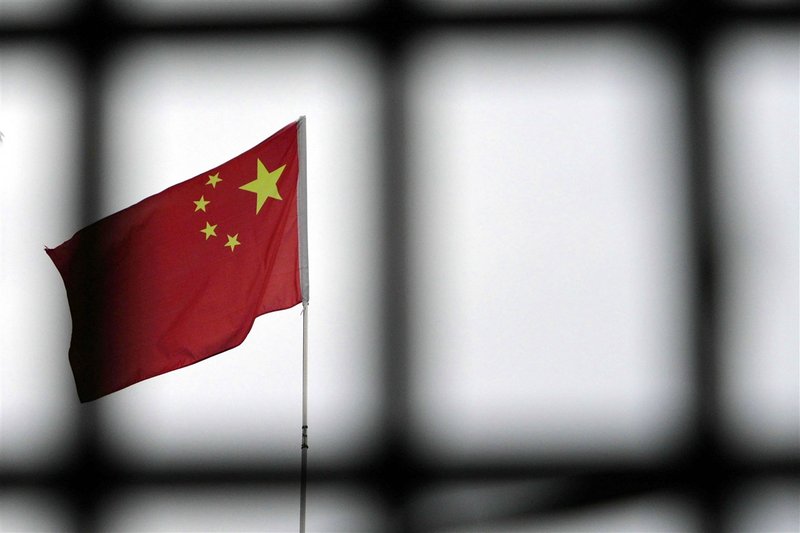
China Matches Anthropic in Cybersecurity, Resetting the AI Race
Automatically generated. This article was produced by AI-Radar's automated system from the source cited above — it was not written or fact-checked by a person. Always verify against the original source.
How this works

AI-Radar Takeaway
The news that China has matched Anthropic's cybersecurity capabilities rebalances the global AI race. For those running LLMs on-premise, where data sovereignty and access control are non-negotiable, this Chinese advance demands an urgent reassessment of defensive robustness, air-gapped architectures, and the risk of asymmetric escalation.
Want to dive deeper? Read the full article from the source:
📖 READ THE ORIGINAL ARTICLEAI-RADAR NEWSLETTER
Stay ahead — get AI signals in your inbox
Daily or weekly digest of the most important AI news. 160+ readers, no spam.








💬 Comments (0)
🔒 Log in or register to comment on articles.
No comments yet. Be the first to comment!