China Bets on AI for Industrial Upgrading
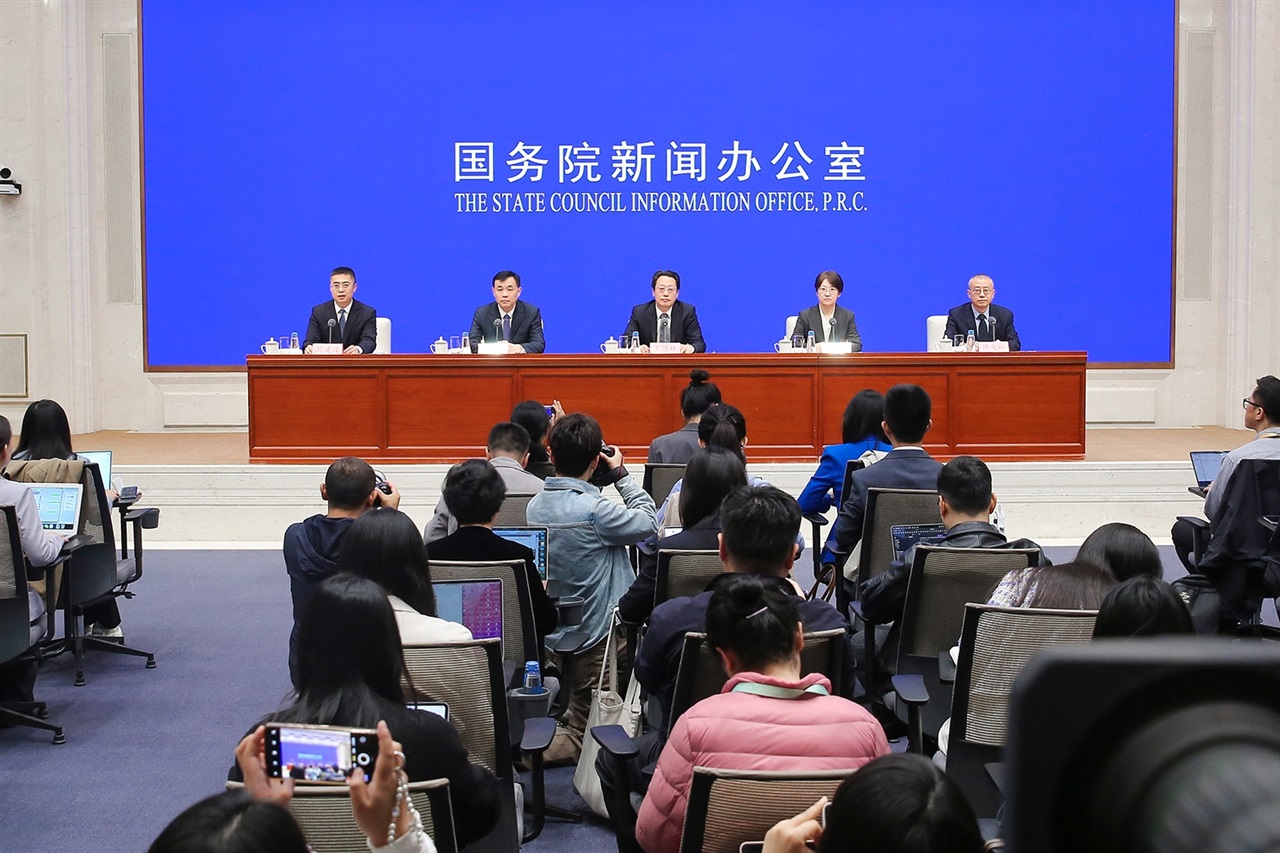
China has announced a new five-year plan framework that places artificial intelligence (AI) at the core of a significant investment push and a broad industrial upgrading strategy. This move reflects a growing global awareness of AI's transformative role in the economy and geopolitical competitiveness. China's initiative highlights a long-term vision to leverage AI capabilities not only for technological innovation but also to modernize key industrial sectors, while ensuring greater technological autonomy.
This national strategy is part of a global context where AI is recognized as a fundamental enabler for economic growth and security. China's approach, focused on a five-year plan, demonstrates a structured and coordinated commitment to integrate AI into all aspects of the economy, from advanced manufacturing to services, with the aim of consolidating its position as a global technological leader.
Strategy and Technological Implications for Deployment
The Chinese five-year plan, focused on AI, anticipates a substantial allocation of resources for developing advanced computing infrastructure. This includes the construction of large-scale data centers, the acquisition and domestic production of specialized AI silicio chips, such as high-performance GPUs, and investment in research and development for Large Language Models (LLM) and other AI models. The objective is to create a robust AI ecosystem capable of supporting the inference and training of complex models.
For companies and institutions operating in China, or looking at the Chinese market, this implies an acceleration in AI solution adoption and a need to carefully evaluate deployment options. The national drive towards technological autonomy may favor self-hosted or on-premise solutions for data sovereignty and compliance reasons. This scenario requires technical decision-makers to carefully consider hardware specifications, such as GPU VRAM and throughput capacity, to ensure that infrastructures can handle the most demanding AI workloads.
Deployment Context and Total Cost of Ownership (TCO)
The emphasis on industrial upgrading through AI raises crucial questions regarding the Total Cost of Ownership (TCO) of AI infrastructures. A national investment of this magnitude suggests an approach that balances initial CapEx for building dedicated infrastructures with long-term operational costs. For enterprises, the choice between on-premise deployment and cloud solutions for AI workloads becomes even more complex within a national strategy context.
Self-hosted infrastructures offer greater control over data sovereignty and can be optimized for specific workloads, but require significant upfront investment and in-house expertise for management. Conversely, cloud solutions offer flexibility and scalability but can lead to escalating operational costs and raise concerns about data residency and compliance. For those evaluating on-premise deployments, AI-RADAR offers analytical frameworks on /llm-onpremise to help assess these trade-offs, considering factors such as latency, security, and customization capabilities.
Future Outlook and Global Competition
China's strategy is set within a context of increasing global competition for AI leadership. Similar investment plans are being developed or are already active in many other nations, all eager to capitalize on AI's potential for economic growth and national security. This global scenario prompts companies to carefully consider their AI strategies, not only in terms of technology but also supply chain resilience and regulatory compliance.
The ability to efficiently and securely develop, deploy, and manage LLMs and other AI applications, whether on-premise or in hybrid environments, will become a critical success factor for long-term innovation and competitiveness. Infrastructure decisions made today, in the context of ambitious national plans, will have a lasting impact on organizations' ability to fully leverage the transformative potential of artificial intelligence.








💬 Comments (0)
🔒 Log in or register to comment on articles.
No comments yet. Be the first to comment!