
Southeast Asia’s cloud landscape is changing shape. It is no longer just about cutthroat pricing or raw compute capacity: the new frontier in the region is the ability to deliver advanced AI, respect data sovereignty, and provide cost control that goes beyond simple pay-per-use savings. Industry analysts note a competition increasingly untethered from price lists and more focused on strategic assets such as LLM workloads, physical data residency, and TCO models designed for local mid-size enterprises.
In Vietnam, Indonesia, and Thailand, regulatory pressure is redefining what cloud means. Ever-stricter data localization laws force companies to store sensitive information within national borders. This is not a bureaucratic detail: it means that to win a government or banking contract, a global hyperscaler must guarantee in-country data centers and manage the entire inference cycle without data ever crossing a border. This fundamentally shifts the offering from a one-size-fits-all model to a distributed architecture game that rewards those with physical infrastructure on the ground and established local partnerships.
At the same time, demand for AI — both training and inference — is exploding in sectors like manufacturing, retail, and healthcare. But this is not about replicating Silicon Valley: here, companies have tighter IT budgets and low tolerance for latency. A production plant using computer vision for quality control cannot wait for frames to travel to a remote data center. It needs on-premise or edge compute power, and it needs LLMs optimized to run on less exotic hardware. That is why the discussion is no longer “cloud versus on-prem,” but a pragmatic hybrid where critical workloads stay local, with self-hosted software and quantized models, while the public cloud handles occasional spikes or centralized training.
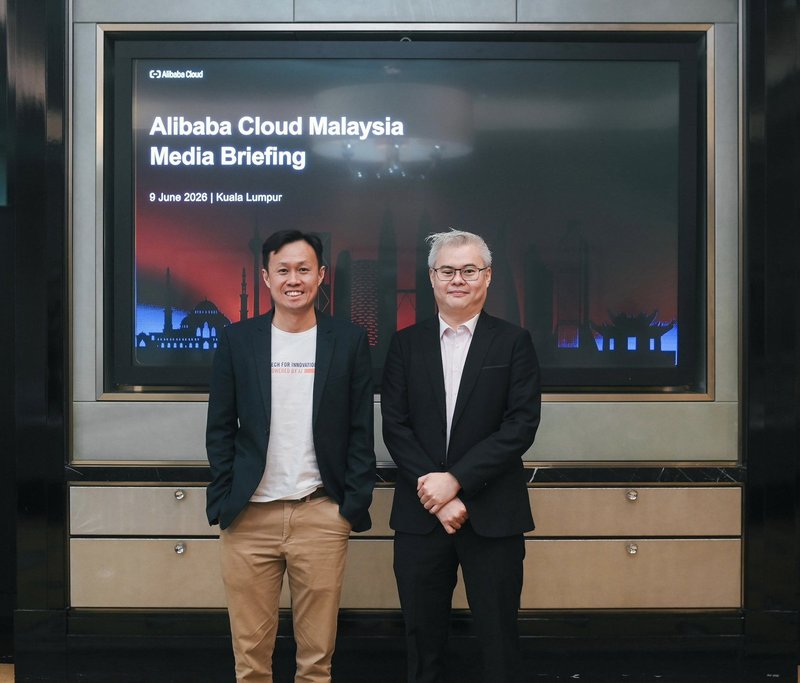
This scenario is already redrawing the provider map. If yesterday the AWS-Azure duopoly seemed unbeatable, today regional players are emerging (such as Alibaba Cloud in some ASEAN markets or telecom operators with their own platforms) leveraging regulatory compliance and proximity. For the open-source ecosystem, it is a golden opportunity: frameworks like vLLM and Ollama make it possible to serve models on consumer GPUs or bare metal servers, bypassing dependency on costly specialized chips. Sovereignty, in short, becomes a matter of software stack as well.
Looking at structural implications, today’s game heralds a global realignment. If Southeast Asia — with over 600 million people and a booming digital economy — decisively moves toward distributed architectures and residency constraints, the same will happen in other regions with similar sensitivities, from Latin America to Africa. Companies already experimenting with on-premise LLM deployment for cost or control reasons will face greater complexity: multi-site orchestration, model updates, data-at-rest security. But they will also have the opportunity to build a competitive advantage based on genuine ownership of AI infrastructure, not on pay-as-you-go rentals.
The message for those designing AI workloads is clear: the choice is not binary. There is no one right answer forever between public, private, or on-premise cloud. The key variable is the perimeter of sovereignty: where data resides, on which hardware models run, with what latency decisions are taken. And in a region like Southeast Asia, where each nation has its own rules and networks, success is measured by the ability to orchestrate fragments of infrastructure coherently, without ever losing control.







💬 Comments (0)
🔒 Log in or register to comment on articles.
No comments yet. Be the first to comment!